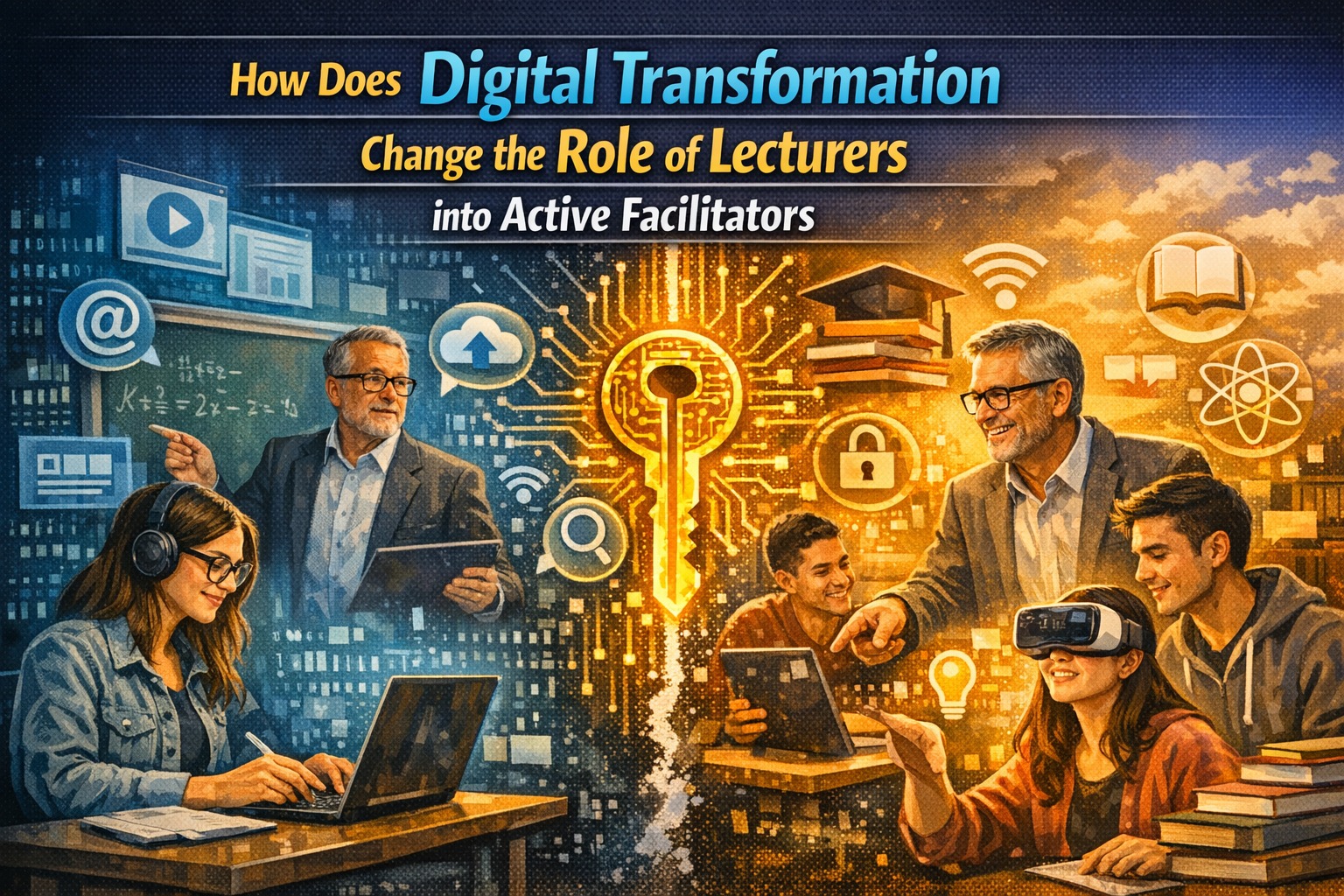
Digital transformation has significantly reshaped the landscape of higher education. The integration of technology into teaching and learning processes has not only changed how students access information but also redefined the role of lecturers. In this evolving environment, lecturers are no longer seen as the sole source of knowledge. Instead, they are becoming active facilitators who guide, support, and inspire students in their learning journey.
FROM KNOWLEDGE PROVIDERS TO LEARNING GUIDES
Traditionally, lecturers were viewed as the primary providers of knowledge in the classroom. Students relied heavily on lectures, textbooks, and direct instruction to gain understanding. However, digital transformation has made information widely accessible through online platforms, digital libraries, and educational resources.
As a result, lecturers now focus more on guiding students in how to learn rather than simply delivering content. They help students navigate information, understand complex concepts, and apply knowledge in meaningful ways.
INTEGRATING TECHNOLOGY INTO TEACHING
Digital tools such as learning management systems, virtual classrooms, and interactive applications have become essential components of modern education. Lecturers are expected to incorporate these tools into their teaching strategies to create more engaging and effective learning experiences.
By using multimedia content, online discussions, and digital assessments, lecturers can make learning more interactive and student-centered. This approach encourages active participation and deeper understanding.
PROMOTING ACTIVE AND COLLABORATIVE LEARNING
As facilitators, lecturers play a key role in promoting active and collaborative learning. Instead of one-way communication, they encourage discussions, group work, and problem-solving activities.
Digital platforms enable students to collaborate beyond the classroom, share ideas, and work together on projects. Lecturers guide these interactions, ensuring that students remain focused and engaged while developing critical thinking and teamwork skills.
SUPPORTING PERSONALIZED LEARNING
Digital transformation allows for more personalized learning experiences. Lecturers can use data from digital platforms to understand students’ progress, strengths, and areas for improvement.
With this information, they can provide targeted support and adapt their teaching methods to meet individual needs. This personalized approach helps students learn more effectively and feel more supported in their academic journey.
DEVELOPING DIGITAL AND PEDAGOGICAL SKILLS
To become effective facilitators, lecturers must continuously develop both digital and pedagogical skills. They need to stay updated with new technologies and understand how to integrate them into teaching in meaningful ways.
This ongoing development ensures that lecturers can create innovative learning environments that align with the needs of modern students.
CHALLENGES IN THE TRANSFORMATION PROCESS
Despite its benefits, the shift from traditional teaching to facilitation is not without challenges. Some lecturers may face difficulties adapting to new technologies or changing long-established teaching methods.
Additionally, limited access to digital resources and varying levels of student readiness can affect the effectiveness of this transformation. Institutions must provide adequate support and training to ensure a smooth transition.
CONCLUSION
Digital transformation changes the role of lecturers from knowledge providers to active facilitators by emphasizing guidance, interaction, and personalized learning. By integrating technology and adopting student-centered approaches, lecturers can create more engaging and effective educational experiences. This shift not only enhances student learning but also prepares them for the demands of the modern world.
Tentang Penulis
Gusti Ayu Tita
Penulis — Universitas STEKOM
Penulis aktif yang berfokus pada isu-isu akademik, teknologi pendidikan, dan pengembangan sumber daya manusia di lingkungan kampus.