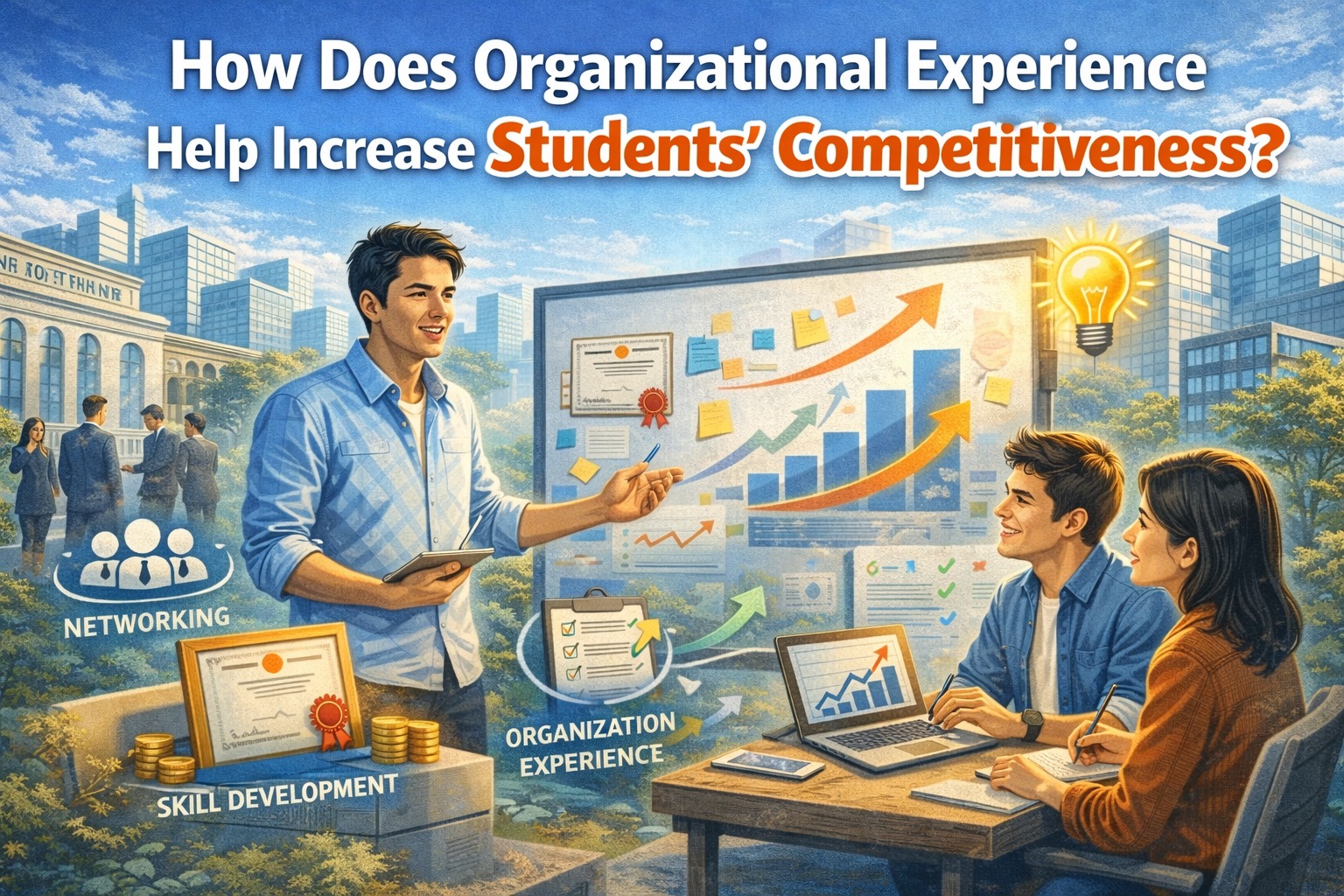
In today’s competitive job market, students are expected to possess more than just academic knowledge. Employers increasingly look for candidates who demonstrate leadership, teamwork, communication skills, and real-world experience. One effective way for students to develop these qualities is through organizational experience. Participating in student organizations, clubs, or community groups provides valuable opportunities for personal and professional growth.
Organizational experience helps students build practical skills, expand networks, and strengthen their character, all of which contribute significantly to increasing their competitiveness in the job market.
1. Developing Leadership Skills
One of the most valuable benefits of organizational involvement is the opportunity to develop leadership skills. In student organizations, members often take on responsibilities such as managing teams, organizing events, and making important decisions.
These experiences help students learn how to lead others, manage conflicts, and guide a group toward achieving common goals. Leadership abilities are highly valued by employers because they indicate that a candidate can take initiative and handle responsibilities effectively.
2. Improving Communication Abilities
Organizational activities require frequent communication between members, leaders, and external partners. Students involved in organizations regularly participate in meetings, discussions, presentations, and collaborations.
Through these interactions, students learn how to express their ideas clearly, listen to others, and communicate effectively in different situations. Strong communication skills are essential in almost every profession and significantly increase a student’s employability.
3. Strengthening Teamwork and Collaboration
Most organizational projects require teamwork. Students must work with people who have different personalities, perspectives, and skills.
This environment teaches students how to cooperate, share responsibilities, and respect diverse opinions. Learning how to collaborate effectively prepares students for professional workplaces where teamwork is often necessary to achieve organizational goals.
4. Gaining Practical Problem-Solving Experience
Organizations often face challenges such as limited resources, tight deadlines, or unexpected obstacles during events and projects. Students involved in these activities must find creative solutions to overcome such challenges.
This problem-solving experience helps students develop critical thinking and decision-making skills. Employers appreciate candidates who can analyze situations and find practical solutions to problems.
5. Building Professional Networks
Another significant advantage of organizational involvement is the opportunity to build professional networks. Student organizations often collaborate with external partners, alumni, lecturers, and industry professionals.
These connections can provide valuable mentorship, career advice, and potential job opportunities in the future. Networking also helps students gain insights into different industries and career paths.
6. Enhancing Time Management Skills
Balancing academic responsibilities with organizational activities requires strong time management. Students involved in organizations must plan their schedules carefully to ensure that both their studies and organizational duties are completed successfully.
This ability to manage time efficiently is a highly desirable skill in the workplace, where employees must often handle multiple tasks and deadlines.
Conclusion
Organizational experience plays a crucial role in increasing students’ competitiveness. Through participation in student organizations, individuals develop leadership, communication, teamwork, problem-solving, networking, and time management skills.
These valuable experiences complement academic knowledge and prepare students for the challenges of the professional world. By actively engaging in organizations during their academic years, students can significantly improve their readiness for the job market and build a strong foundation for future career success.
Tentang Penulis
Gusti Ayu Tita
Penulis — Universitas STEKOM
Penulis aktif yang berfokus pada isu-isu akademik, teknologi pendidikan, dan pengembangan sumber daya manusia di lingkungan kampus.