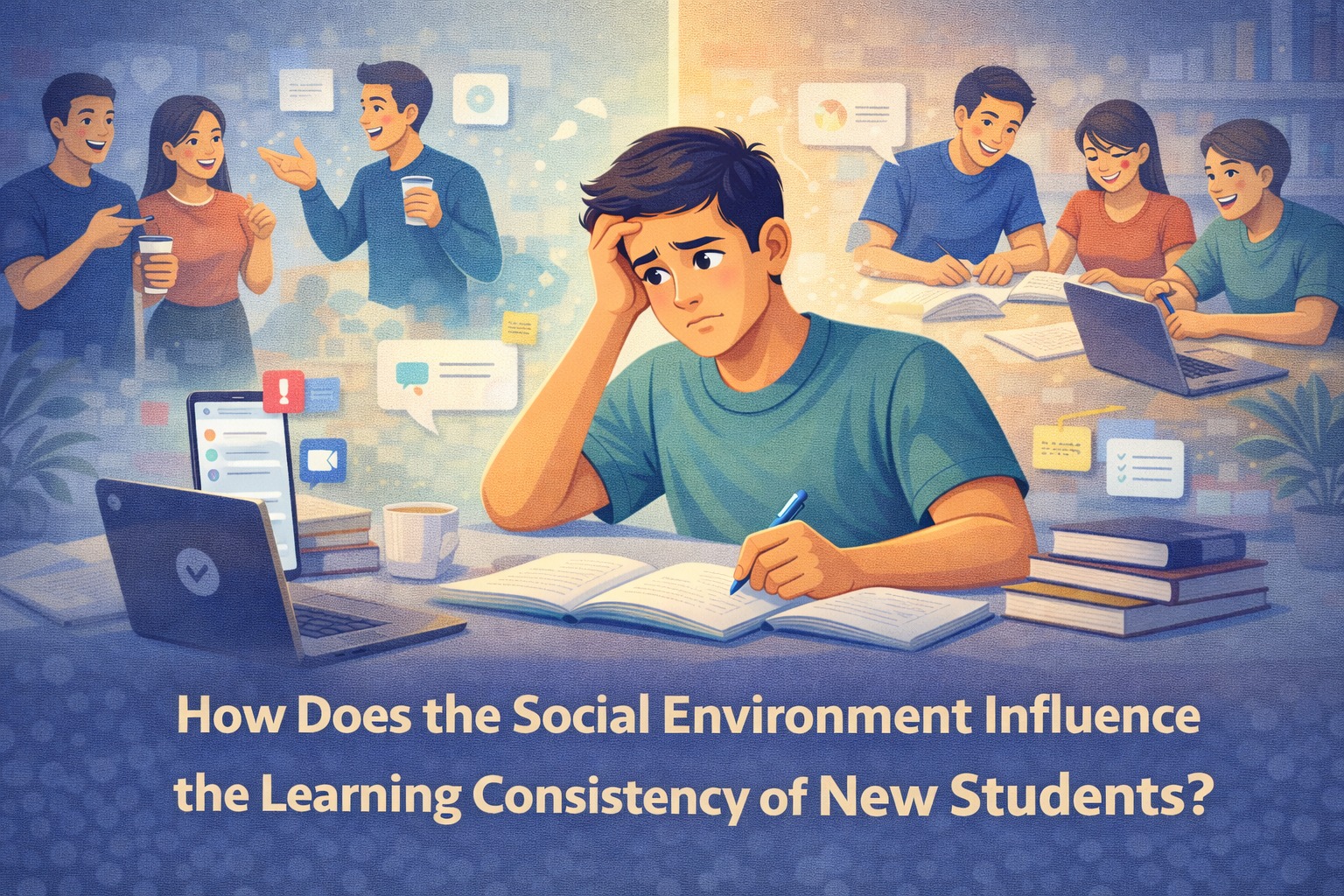
For new university students, academic success is not determined solely by intelligence or study skills. The social environment also plays a crucial role in shaping learning habits, motivation, and consistency. During the early stages of university life, students are highly influenced by their surroundings, including friends, peer groups, and campus culture.
THE ROLE OF PEER INFLUENCE IN LEARNING HABITS
One of the strongest social factors affecting learning consistency is peer influence. Friends can either encourage positive study habits or distract students from academic responsibilities. Students who are surrounded by peers who value learning are more likely to develop consistent study routines.
On the other hand, social circles that prioritize entertainment over academics may lead students to neglect their study schedules.
SOCIAL SUPPORT AND ACADEMIC MOTIVATION
A supportive social environment can significantly improve academic motivation. Friends who offer encouragement, share learning resources, or study together can help new students stay focused and motivated.
This sense of belonging reduces feelings of stress and isolation, making it easier for students to maintain consistent learning habits throughout the semester.
NEGATIVE SOCIAL PRESSURE AND DISTRACTIONS
Not all social influences are positive. Social pressure to socialize excessively, participate in non-academic activities, or follow group behavior can disrupt learning consistency.
New students who struggle to set boundaries may find it difficult to balance social life and academic responsibilities, leading to procrastination and inconsistent study patterns.
ADAPTATION TO A NEW SOCIAL ENVIRONMENT
Entering university often means adjusting to a new social environment. Students must build new relationships, adapt to diverse personalities, and manage social expectations.
This adjustment process can affect emotional stability. When students feel socially uncomfortable or disconnected, their focus and learning consistency may decrease.
BUILDING A BALANCED SOCIAL ENVIRONMENT
To maintain learning consistency, students need to create a balanced social environment. Choosing supportive friends, managing social time wisely, and setting personal academic goals can help students stay on track.
Universities can also support students by promoting positive campus cultures and providing spaces for collaborative learning.
CONCLUSION
The social environment has a significant influence on the learning consistency of new students. Positive peer support can strengthen motivation and discipline, while negative social pressure can disrupt academic focus.
By building supportive social networks and maintaining clear academic priorities, students can develop consistent learning habits that contribute to long-term academic success.
Tentang Penulis
Gusti Ayu Tita
Penulis — Universitas STEKOM
Penulis aktif yang berfokus pada isu-isu akademik, teknologi pendidikan, dan pengembangan sumber daya manusia di lingkungan kampus.