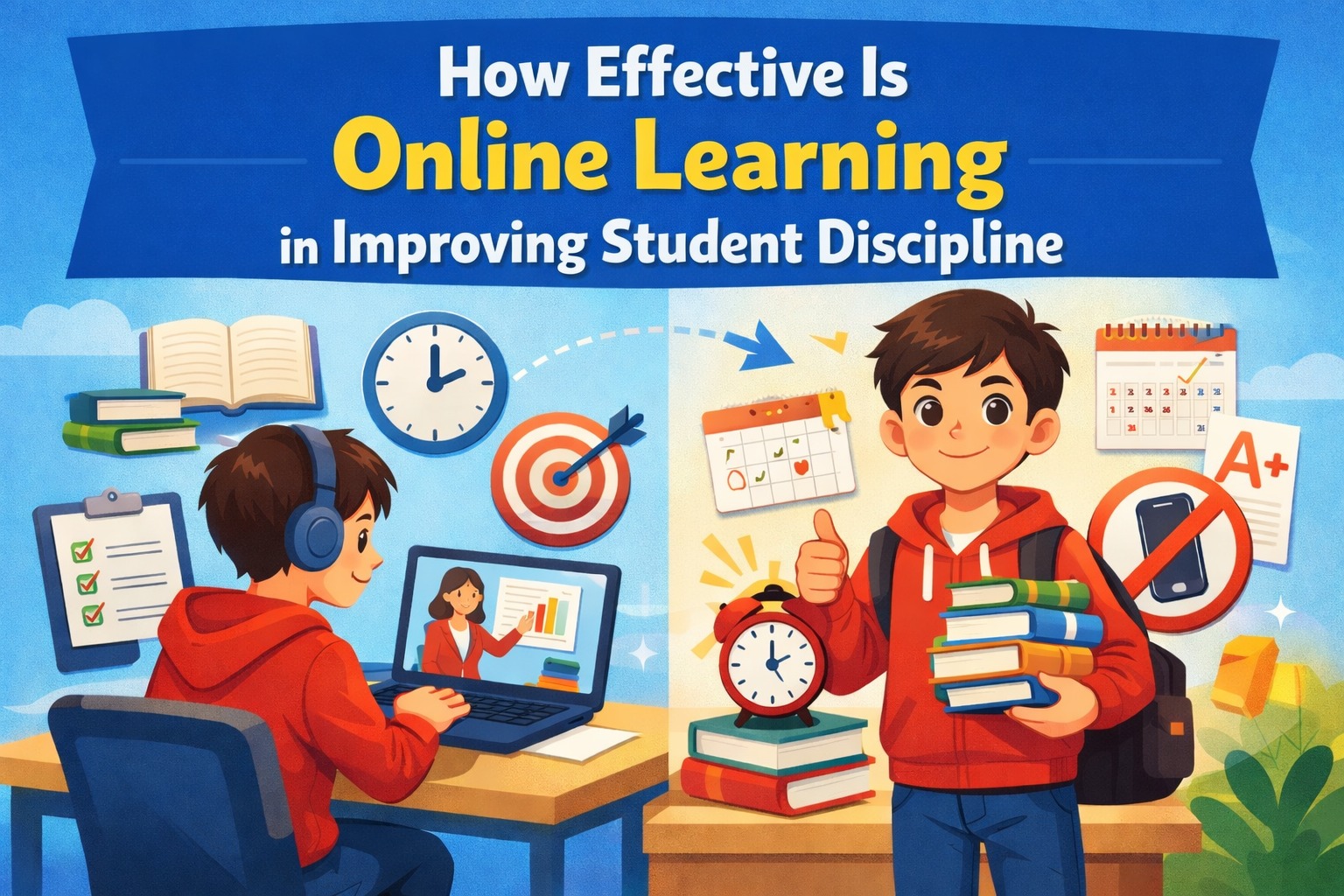
The rapid growth of digital technology has transformed modern education. Online learning is no longer just an alternative option but has become a primary method of instruction in many institutions. While flexibility and accessibility are often highlighted as its main advantages, an important question remains: how effective is online learning in improving student discipline?
Student discipline is closely related to time management, responsibility, focus, and commitment to completing academic tasks. To evaluate the effectiveness of online learning in this area, it is essential to examine both its strengths and challenges.
FLEXIBILITY AND SELF-REGULATION
One of the defining features of online learning is flexibility. Students can access course materials at any time and from any location. This freedom encourages learners to manage their own schedules and set personal study routines.
In this context, online learning can strengthen self-regulation skills. Students must decide when to study, how long to focus, and how to prioritize assignments. Without direct supervision, they learn to take responsibility for their academic progress. For highly motivated students, this independence can significantly improve discipline.
However, flexibility can also become a weakness. Without strong self-control, some students may procrastinate or fail to complete tasks on time. Therefore, the effectiveness of online learning in building discipline largely depends on individual commitment.
TIME MANAGEMENT SKILLS
Online learning environments often include clear deadlines, digital calendars, and automated reminders. These tools help students organize their academic responsibilities more efficiently. By consistently meeting deadlines, students develop better time management habits.
In addition, recorded lectures allow learners to review lessons at their own pace. This feature can reduce stress and give students more control over their learning process. When students plan their study sessions carefully, they build structured routines that support long-term discipline.
On the other hand, the absence of fixed classroom schedules may reduce external pressure. Some students perform better when they follow a strict timetable in a physical classroom.
DISTRACTIONS AND DIGITAL CHALLENGES
While online learning promotes independence, it also exposes students to digital distractions. Social media, entertainment platforms, and household interruptions can easily disrupt concentration. Managing these distractions requires a high level of personal discipline.
Students who successfully overcome these challenges often develop stronger focus and self-control. In this sense, online learning can serve as a training ground for real-world responsibility, where individuals must manage competing priorities independently.
However, without proper guidance and parental or institutional support, some learners may struggle to maintain consistent study habits.
ROLE OF TEACHERS AND LEARNING DESIGN
The effectiveness of online learning in improving discipline is also influenced by course design and teacher involvement. Structured modules, interactive activities, and regular feedback can encourage accountability. Clear expectations and consistent evaluation systems help students stay on track.
When teachers actively monitor progress and provide constructive feedback, students are more likely to remain disciplined. A well-designed online course can combine flexibility with structure, creating a balanced environment that supports responsible behavior.
CONCLUSION
Online learning has significant potential to improve student discipline, particularly in areas such as self-regulation and time management. By requiring learners to take responsibility for their schedules and assignments, it encourages independence and accountability.
However, its effectiveness depends on individual motivation, course structure, and the ability to manage digital distractions. For some students, online learning strengthens discipline, while others may benefit more from the structured environment of offline education. Ultimately, the success of online learning in building discipline lies in how well students adapt to its demands and opportunities.
Tentang Penulis
Gusti Ayu Tita
Penulis — Universitas STEKOM
Penulis aktif yang berfokus pada isu-isu akademik, teknologi pendidikan, dan pengembangan sumber daya manusia di lingkungan kampus.