
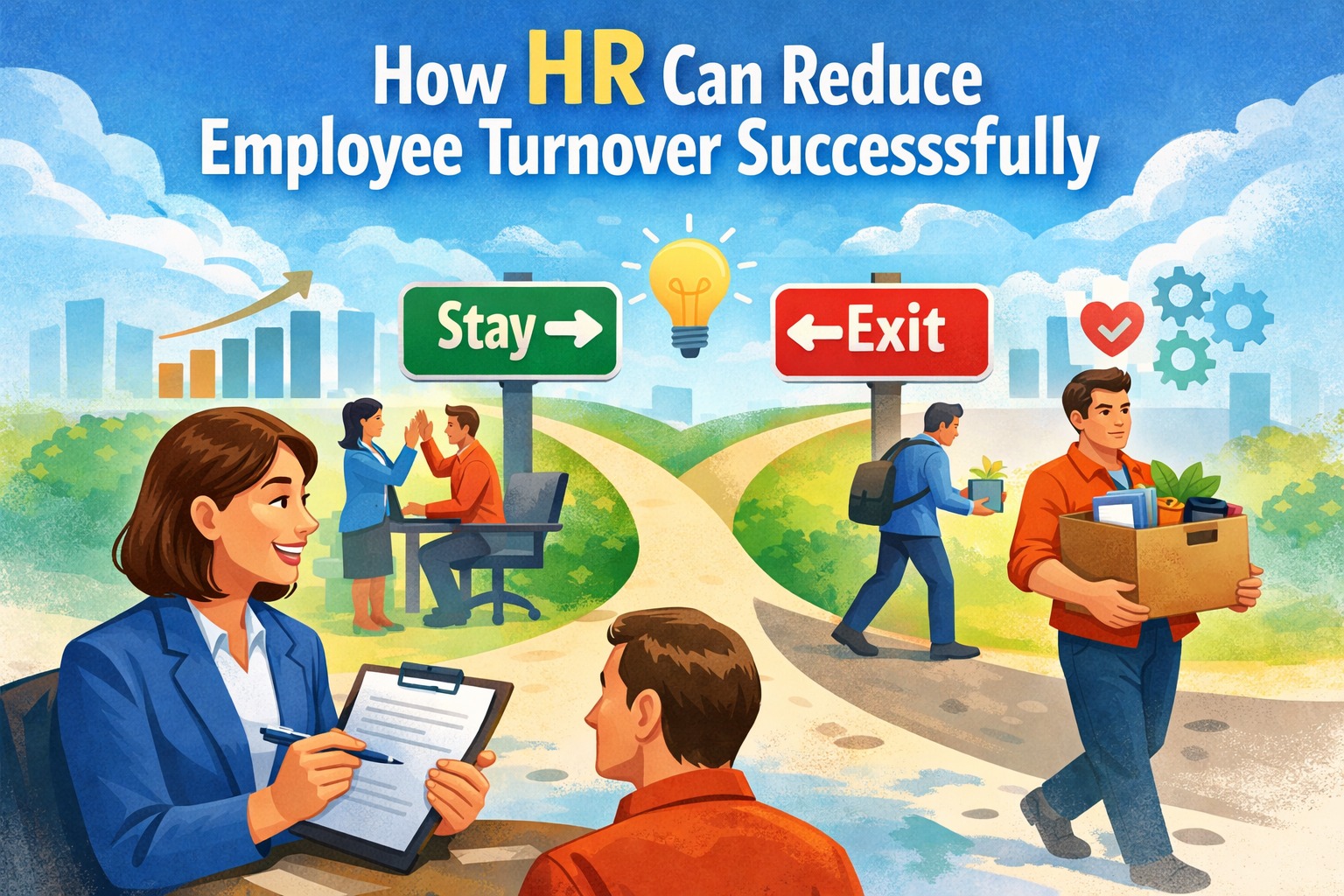
Employee turnover is one of the most challenging issues faced by modern organizations. High turnover rates not only increase recruitment and training costs but also reduce productivity, disrupt team dynamics, and weaken company culture. Human Resources (HR) plays a critical role in addressing this problem through strategic planning, employee engagement, and long-term retention programs. This article explores how HR can effectively reduce employee turnover and build a more stable workforce.
UNDERSTANDING THE ROOT CAUSES OF EMPLOYEE TURNOVER
Before implementing solutions, HR must first understand why employees leave. Turnover is rarely caused by a single factor; instead, it is often the result of multiple issues that accumulate over time.
One of the most common reasons is poor job satisfaction. When employees feel undervalued, overworked, or disconnected from their role, they are more likely to seek opportunities elsewhere. Another major factor is lack of career development. Employees want to see a clear growth path, and without it, they may feel stuck or unmotivated.
Workplace relationships also play a significant role. Toxic environments, ineffective communication, or poor leadership can quickly push employees to resign. Additionally, compensation and benefits that are not competitive with the market often lead employees to explore better-paying opportunities.
HR departments must collect and analyze employee feedback regularly through surveys, exit interviews, and performance reviews. This data helps identify patterns and allows organizations to address problems before they lead to resignations.
BUILDING A POSITIVE WORKPLACE CULTURE
A strong workplace culture is one of the most effective tools for reducing turnover. Employees who feel respected, included, and appreciated are far more likely to stay with an organization long-term.
HR should focus on creating an environment where communication is open and transparent. Employees need to feel safe expressing their ideas, concerns, and feedback without fear of negative consequences. Regular team meetings, one-on-one check-ins, and feedback sessions can help build trust between management and staff.
Recognition is also essential. Simple actions such as acknowledging achievements, celebrating milestones, or rewarding outstanding performance can significantly improve morale. Employees who feel seen and valued are more emotionally connected to their workplace.
In addition, promoting work-life balance is crucial in today’s competitive job market. Flexible working hours, remote work options, and mental health support programs can reduce burnout and increase employee satisfaction. A healthy balance between work and personal life contributes directly to higher retention rates.
IMPLEMENTING EFFECTIVE RETENTION STRATEGIES
Beyond culture, HR must also implement structured retention strategies that support long-term employee commitment. One of the most important strategies is career development planning. Organizations should provide training programs, workshops, and mentorship opportunities that allow employees to grow their skills and advance in their careers.
Competitive compensation packages are also essential. While salary is not the only factor influencing retention, it remains a major consideration. HR should regularly review market standards to ensure that employees are being fairly compensated.
Another effective strategy is improving onboarding processes. A strong onboarding experience helps new employees feel welcomed and prepared, reducing the likelihood of early turnover. Clear role expectations, proper training, and mentorship during the first few months can significantly improve retention rates.
HR can also use performance management systems to align employee goals with company objectives. When employees understand how their work contributes to the organization’s success, they are more likely to stay motivated and engaged.
Lastly, leadership development should not be overlooked. Managers play a key role in employee satisfaction. Training leaders to communicate effectively, manage teams fairly, and support employee growth can greatly reduce turnover across departments.
CONCLUSION
Reducing employee turnover requires a combination of understanding, strategy, and continuous improvement. HR departments must first identify the root causes of turnover, then build a supportive workplace culture, and finally implement structured retention strategies that focus on growth, satisfaction, and engagement.
When organizations invest in their employees, they create a stronger, more loyal workforce that contributes to long-term success. Effective HR practices not only reduce turnover but also enhance productivity and strengthen the overall stability of the company.
Tentang Penulis
Gusti Ayu Tita
Penulis — Universitas STEKOM
Penulis aktif yang berfokus pada isu-isu akademik, teknologi pendidikan, dan pengembangan sumber daya manusia di lingkungan kampus.



