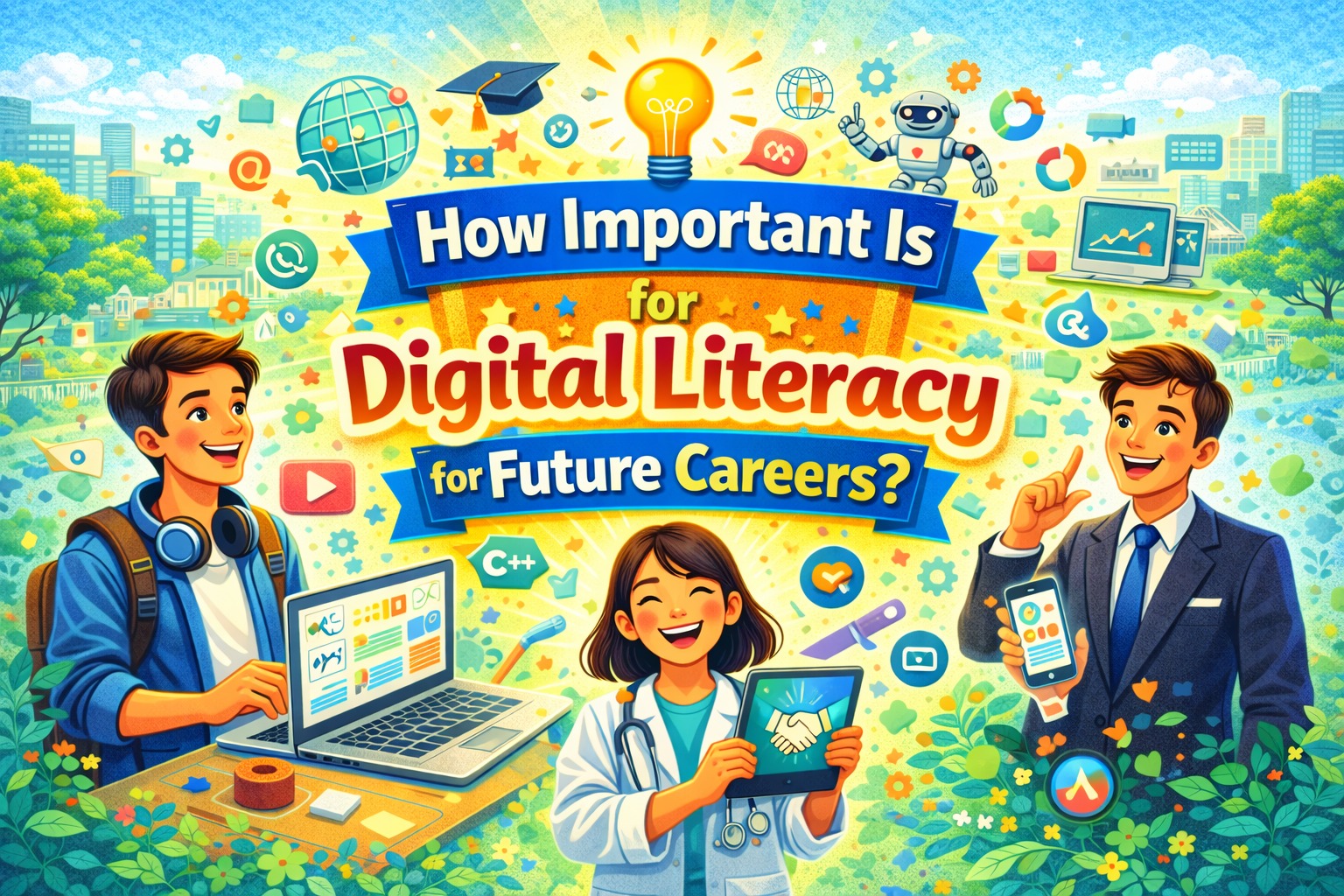
Digital transformation is changing how people work and communicate in modern society. Future careers will require more than academic knowledge. Employers increasingly value digital literacy because it supports efficiency, communication, and innovation in the workplace.
Digital literacy is becoming a fundamental skill for long-term career success.
DIGITAL TECHNOLOGY TRANSFORMATION IN THE WORKPLACE
Many industries are shifting toward technology-based operations. Business communication, marketing, and data management are now heavily supported by digital systems.
Workers who understand basic technology can adapt more easily to workplace changes. Digital literacy helps employees use software, online platforms, and information systems effectively.
IMPROVING WORK PRODUCTIVITY
Digital literacy contributes to better productivity in professional environments. Employees can complete tasks faster using digital tools such as project management software and cloud storage.
Automation and digital workflows reduce repetitive work. This allows workers to focus more on strategic tasks and creative problem solving.
ENHANCING CAREER COMPETITIVENESS
Future job markets will be highly competitive. Candidates with digital skills have better chances of getting hired.
Basic understanding of data analysis, online communication, and digital marketing becomes an important advantage. Digital competence is now considered a professional necessity rather than an additional skill.
REDUCING DIGITAL RISKS
Digital literacy also helps individuals avoid online risks. Understanding cyber threats, misinformation, and data privacy is essential in the digital era.
People who are digitally literate can protect personal information and maintain professional credibility.
SUPPORTING CONTINUOUS LEARNING
Technology allows people to access global knowledge resources easily. Online courses, tutorials, and digital libraries support lifelong learning.
Continuous learning is important because technology keeps evolving.
CONCLUSION
Digital literacy is highly important for future careers because it improves productivity, competitiveness, and adaptability. The modern workforce requires individuals who can use technology wisely and responsibly.
Developing digital literacy early will help prepare people for future professional challenges.
Tentang Penulis
Gusti Ayu Tita
Penulis — Universitas STEKOM
Penulis aktif yang berfokus pada isu-isu akademik, teknologi pendidikan, dan pengembangan sumber daya manusia di lingkungan kampus.