
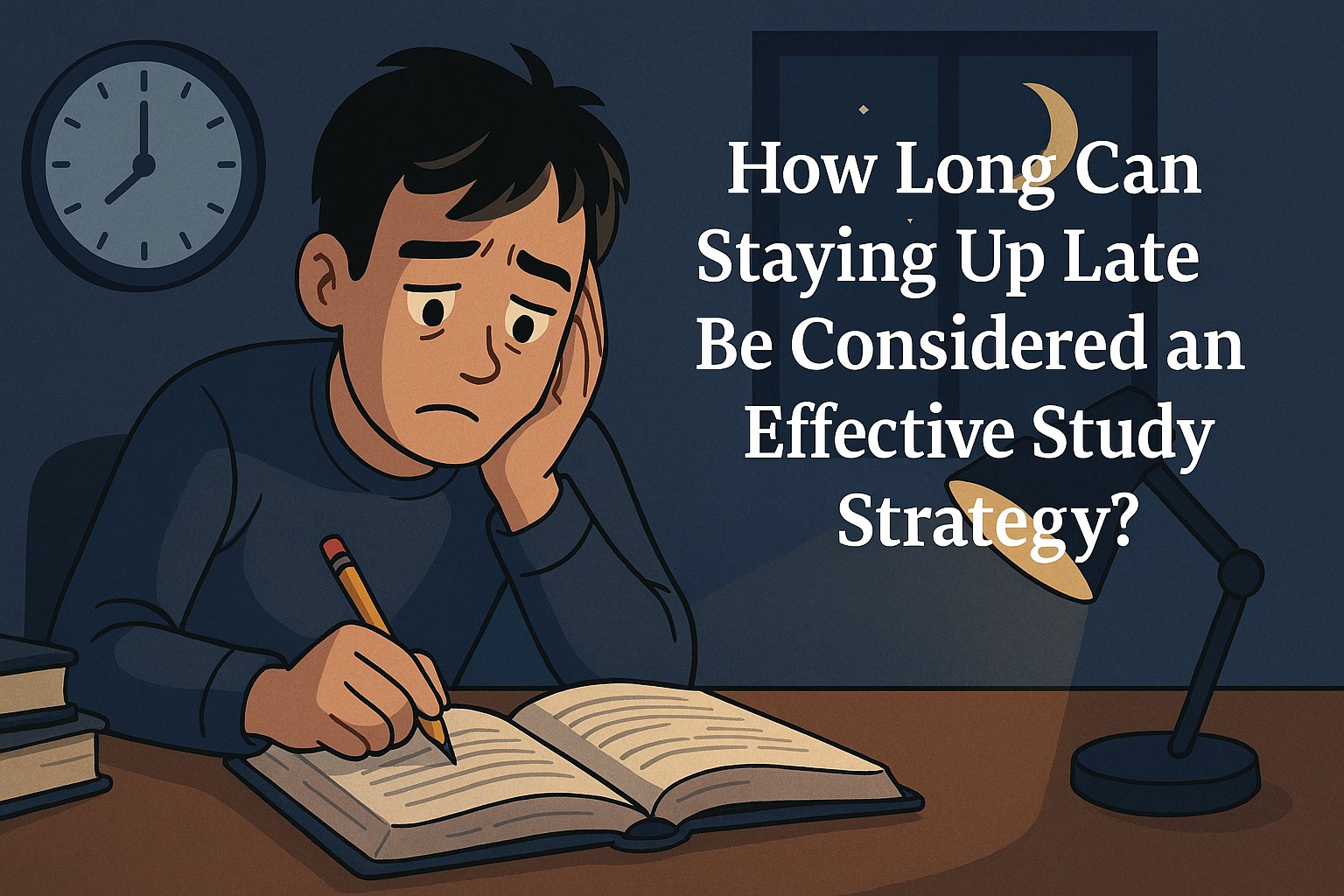
Staying up late to study is often seen as a quick strategy to catch up on missed material. Many students are willing to reduce sleep time to understand exam topics or finish important assignments. However, the question is: until when can staying up late be considered an effective study strategy?
Does this habit truly improve understanding, or does it quietly reduce academic performance in the long run?
WHY DOES STAYING UP LATE SEEM EFFECTIVE?
Studying at night often feels more focused because the atmosphere is quieter. With fewer distractions, it becomes easier to concentrate on learning materials. In addition, pressure before exams or deadlines can trigger instant motivation to study harder.
In certain conditions, staying up late can help achieve study targets in a short time. Material that was previously delayed can finally be covered all at once. This is why many people consider staying up late an effective solution.
However, short-term effectiveness does not always align with long-term results.
THE IMPACT OF LACK OF SLEEP ON MEMORY
Sleep plays an important role in the memory consolidation process. During sleep, the brain processes and stores the information that has been learned. If sleep time is reduced, this process does not work optimally.
As a result, material studied during late-night sessions may be forgotten more quickly. Concentration also decreases the next day, so understanding becomes less effective. In the long run, the habit of insufficient sleep can reduce overall learning ability.
THE REASONABLE LIMIT OF STAYING UP LATE FOR STUDYING
Staying up late occasionally in urgent situations may still be tolerable. However, if it is done regularly, this strategy turns into a harmful habit.
An effective study strategy should be consistent and sustainable. If the body is constantly forced to work without enough rest, the risk of fatigue and academic stress will increase. Eventually, study performance may drop drastically.
HEALTHIER AND MORE PRODUCTIVE STUDY STRATEGIES
Instead of relying on staying up late, here are several more effective strategies to improve study outcomes:
1. Create a structured study schedule from the beginning of the semester.
2. Break materials into small sections so they are easier to understand.
3. Use active learning techniques such as summarizing and practicing questions.
4. Manage rest time so the brain stays fresh.
5. Maintain a sleep schedule of at least 7–8 hours every night.
With a planned approach, learning results can be more optimal without sacrificing health.
CONCLUSION
Staying up late may feel effective in emergencies, but it is not an ideal long-term study strategy. Lack of sleep can disrupt memory, concentration, and emotional stability. If it continues, the impact will reduce learning quality.
A proper study strategy is one that maintains balance between productivity and health. So, until when can staying up late be considered effective? The answer: only occasionally, not as a habit.
Tentang Penulis
Gusti Ayu Tita
Penulis — Universitas STEKOM
Penulis aktif yang berfokus pada isu-isu akademik, teknologi pendidikan, dan pengembangan sumber daya manusia di lingkungan kampus.



