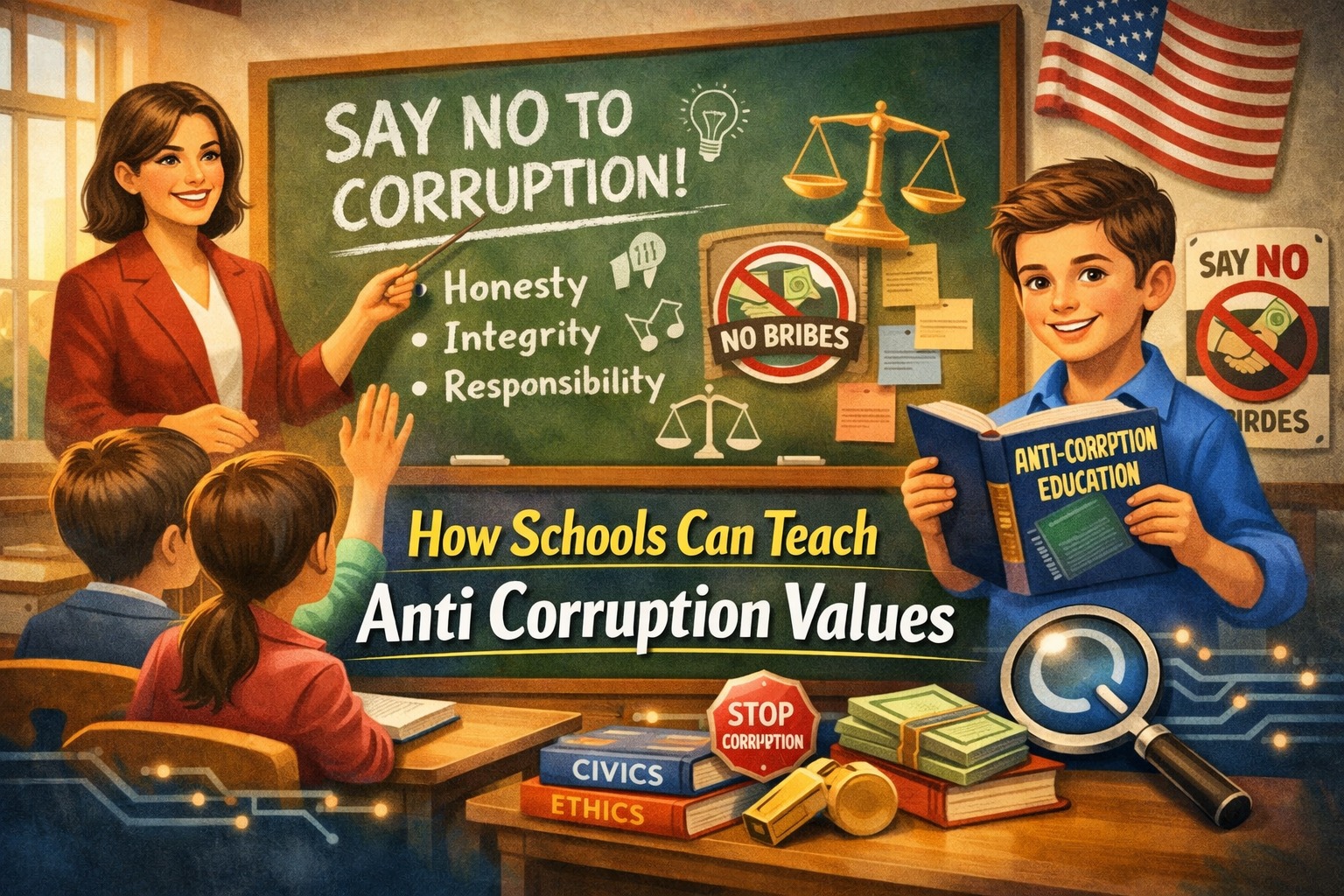
Corruption remains one of the biggest challenges faced by societies around the world. It damages public trust, weakens institutions, and slows economic and social development. Because of this, teaching anti corruption values from an early age has become increasingly important. Schools play a major role in shaping students’ character, ethics, and sense of responsibility. By integrating honesty, integrity, and accountability into education, schools can help create a generation that rejects corruption in all forms.
WHY ANTI CORRUPTION EDUCATION MATTERS
Anti corruption education is not only about explaining laws or punishments. It is about building moral awareness and encouraging ethical behavior in everyday life. Students who understand the negative effects of corruption are more likely to grow into responsible citizens who value fairness and transparency.
Corruption can appear in simple actions such as cheating on exams, lying, or abusing trust. If these behaviors are ignored during childhood, they may continue into adulthood. Schools therefore have an important responsibility to teach students that honesty and integrity are essential values in both personal and professional life.
THE ROLE OF TEACHERS IN BUILDING INTEGRITY
Teachers are among the strongest role models for students. The way teachers behave inside and outside the classroom can influence how students understand ethical values. When teachers act fairly, respect rules, and treat students honestly, they provide real examples of integrity.
Teachers can also introduce anti corruption lessons through discussions, storytelling, and group activities. Students may learn more effectively when they are encouraged to analyze real situations and think critically about the consequences of dishonest behavior.
In addition, rewarding honesty and responsible actions in school can motivate students to practice good values consistently.
INTEGRATING ANTI CORRUPTION VALUES INTO SCHOOL SUBJECTS
Schools do not always need a separate subject for anti corruption education. These values can be integrated into many existing lessons.
For example:
- Civic education can discuss justice, democracy, and public responsibility.
- History classes can examine the impact of corruption on societies and governments.
- Literature lessons can explore stories that highlight honesty and moral courage.
- Religious education can strengthen ethical teachings related to integrity and accountability.
This approach allows students to understand that anti corruption values are connected to everyday life and many areas of society.
ENCOURAGING A CULTURE OF HONESTY IN SCHOOLS
Creating an honest school environment is one of the most effective ways to teach anti corruption values. Students learn better when ethical behavior becomes part of school culture.
Schools can encourage honesty by:
- Applying rules fairly to all students
- Promoting transparent decision making
- Preventing cheating during exams
- Encouraging students to report unfair behavior
- Organizing campaigns about integrity and responsibility
Student organizations and leadership programs can also help learners practice accountability and teamwork in real situations.
THE IMPORTANCE OF PARENTAL INVOLVEMENT
Parents play an essential role in supporting anti corruption education. Values taught at school should also be reinforced at home. When parents encourage honesty, discipline, and responsibility, children are more likely to develop strong moral principles.
Good communication between schools and families can strengthen character education. Workshops, seminars, and school activities involving parents may help create consistent ethical guidance for students.
USING MODERN METHODS TO TEACH ETHICS
Technology and creative learning methods can make anti corruption education more interesting. Schools can use videos, educational games, debates, and social campaigns to help students understand ethical issues in engaging ways.
Interactive learning encourages students to participate actively rather than simply memorizing theories. This method can help them develop critical thinking and moral decision making skills.
Social media campaigns created by students can also spread positive messages about integrity and honesty among young people.
CONCLUSION
Schools have a powerful role in shaping future generations with strong moral values. By teaching honesty, integrity, accountability, and fairness, educational institutions can help reduce corruption in society. Anti corruption education should not only focus on theory but also on creating a culture where ethical behavior is practiced every day.
When schools, teachers, parents, and communities work together, students can grow into responsible individuals who contribute to a cleaner and more transparent future.
Tentang Penulis
Gusti Ayu Tita
Penulis — Universitas STEKOM
Penulis aktif yang berfokus pada isu-isu akademik, teknologi pendidikan, dan pengembangan sumber daya manusia di lingkungan kampus.