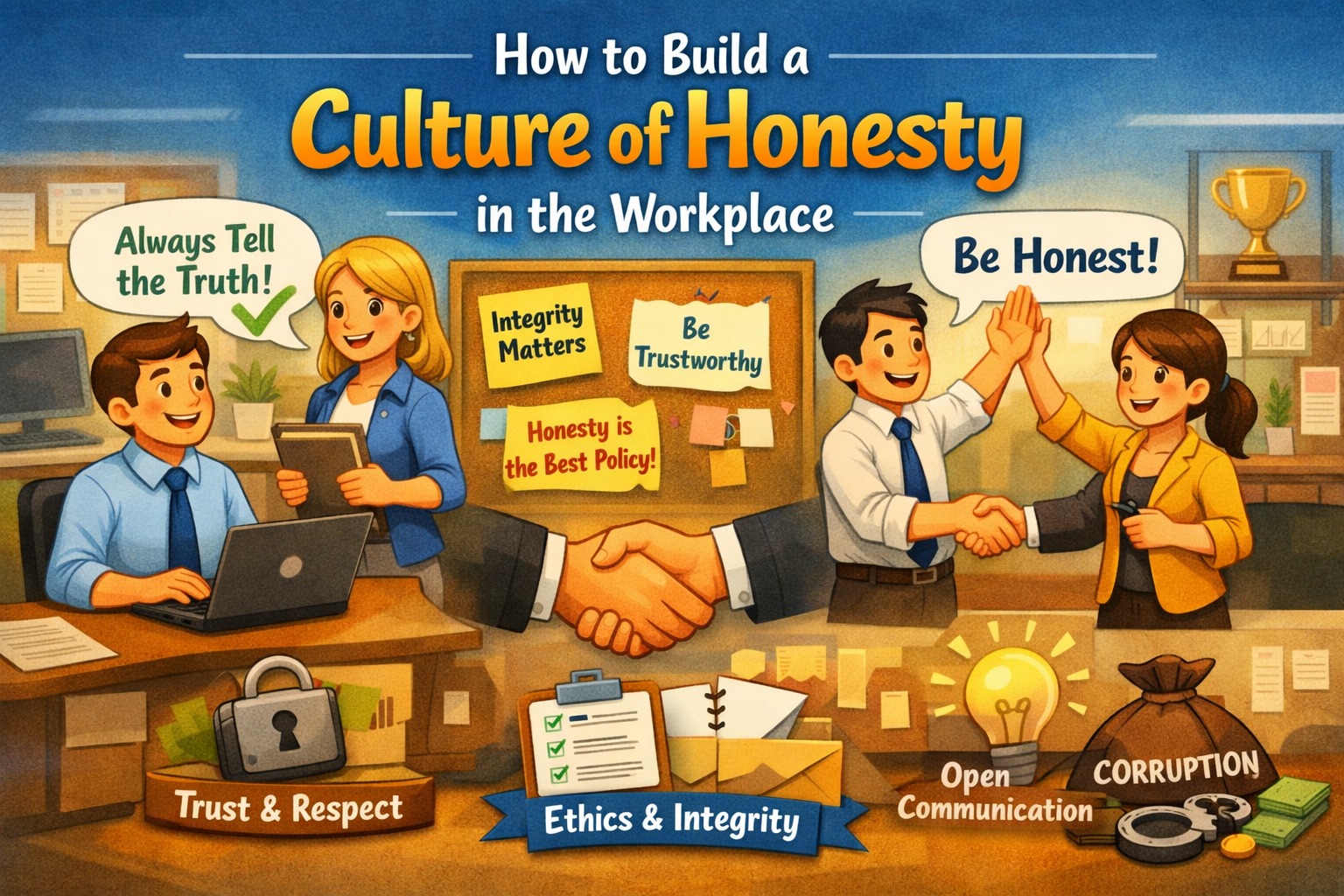
In today’s competitive business environment, honesty is more than just a moral value. It is a foundation for trust, teamwork, and long-term success. Companies that promote honesty in the workplace often experience better communication, stronger employee engagement, and improved productivity. Employees feel safer expressing ideas, admitting mistakes, and collaborating openly when transparency becomes part of the company culture.
Building a culture of honesty does not happen overnight. It requires consistent leadership, clear communication, and daily commitment from everyone within the organization. This article explains practical ways businesses can create and maintain an honest workplace culture.
WHY HONESTY MATTERS IN THE WORKPLACE
Honesty creates trust between employees, managers, and clients. When trust exists, teamwork becomes more effective because people feel respected and valued. Employees are also more likely to stay loyal to organizations that prioritize transparency and fairness.
A workplace built on honesty can also reduce conflicts and misunderstandings. Open communication helps teams solve problems faster and prevents harmful rumors or misinformation from spreading. In addition, honest companies often gain stronger reputations among customers and business partners.
LEAD BY EXAMPLE
Leaders play the biggest role in shaping workplace culture. Employees usually follow the behavior demonstrated by managers and executives. If leaders communicate openly, admit mistakes, and act ethically, employees are more likely to do the same.
Managers should avoid hiding important information or blaming others when problems occur. Instead, they should encourage accountability and show that honesty is respected, even during difficult situations. Leadership transparency helps employees feel secure and motivated.
CREATE OPEN COMMUNICATION CHANNELS
A culture of honesty grows when employees feel comfortable sharing opinions and concerns. Organizations should provide clear communication channels where staff members can speak openly without fear of punishment.
Regular team meetings, feedback sessions, and anonymous suggestion systems can help employees express ideas honestly. Listening carefully to employee concerns also demonstrates respect and encourages more open communication in the future.
ENCOURAGE ACCOUNTABILITY
Honesty and accountability go hand in hand. Employees should understand that taking responsibility for actions is an important part of professional growth. Instead of punishing every mistake harshly, companies should focus on learning and improvement.
When employees know they can admit errors without humiliation, they are more likely to report issues early. This can prevent larger problems and strengthen trust within the organization.
DEVELOP CLEAR ETHICAL GUIDELINES
Every workplace should have clear rules and ethical standards. Employees need to understand what behaviors are acceptable and what actions violate company values. A strong code of ethics can guide decision-making and reduce confusion.
Training sessions about workplace ethics and integrity can also help employees recognize the importance of honesty in daily operations. Consistent enforcement of company policies ensures fairness for everyone.
RECOGNIZE HONEST BEHAVIOR
Positive reinforcement is one of the most effective ways to strengthen workplace values. Companies should recognize employees who demonstrate honesty, responsibility, and integrity.
Recognition does not always need to involve financial rewards. Simple appreciation, public acknowledgment, or career opportunities can motivate employees to continue practicing honest behavior. Celebrating integrity also sends a clear message about company priorities.
BUILD TRUST THROUGH FAIRNESS
Employees are more likely to be honest when they believe they are treated fairly. Favoritism, inconsistent rules, or unfair treatment can damage trust and encourage dishonest behavior.
Organizations should apply policies equally to all employees regardless of position or background. Fair performance evaluations, transparent promotions, and equal opportunities help create a respectful work environment.
HANDLE DISHONESTY APPROPRIATELY
Even in positive workplaces, dishonest behavior may still occur. Companies should address these situations quickly and professionally. Ignoring unethical behavior can weaken trust and harm workplace morale.
However, discipline should remain fair and constructive. The goal should be to protect company values while encouraging personal improvement whenever possible.
CONCLUSION
Building a culture of honesty in the workplace requires commitment from leaders and employees alike. Honest communication, accountability, ethical leadership, and fairness all contribute to a healthier work environment. Organizations that prioritize honesty often enjoy stronger teamwork, higher employee satisfaction, and better long-term success.
By creating an atmosphere where transparency and integrity are valued, businesses can build lasting trust and achieve sustainable growth in today’s evolving professional world.
Tentang Penulis
Gusti Ayu Tita
Penulis — Universitas STEKOM
Penulis aktif yang berfokus pada isu-isu akademik, teknologi pendidikan, dan pengembangan sumber daya manusia di lingkungan kampus.