
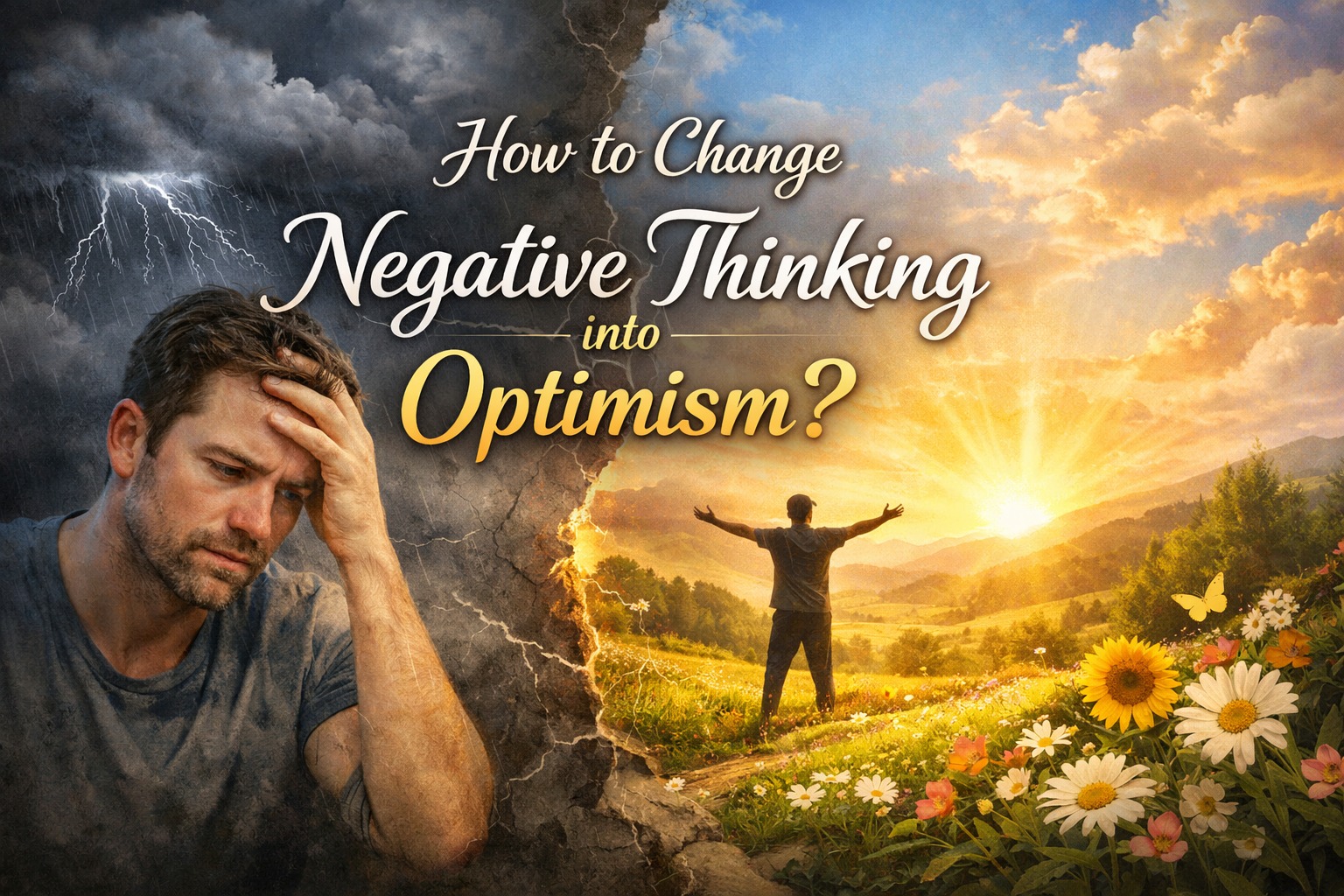
Negative thinking can quietly affect daily life, relationships, and personal growth. Many people often focus on failure, fear, or disappointment without realizing how deeply these thoughts influence their mindset. The good news is that optimism is not something people are born with naturally—it is a habit that can be developed over time. Learning how to change negative thinking into optimism can improve mental health, increase motivation, and create a more positive future.
UNDERSTANDING THE ROOT OF NEGATIVE THINKING
Negative thoughts usually come from past experiences, fear of failure, stress, or self-doubt. When someone repeatedly focuses on problems, the brain begins to treat negativity as a normal pattern. Over time, this habit can lower confidence and make situations feel more difficult than they really are.
One important step in changing this mindset is becoming aware of negative self-talk. Sentences like “I can’t do this” or “Nothing ever works for me” can slowly damage self-belief. Replacing these thoughts with more balanced and hopeful statements helps train the mind to see opportunities instead of obstacles.
Surrounding yourself with positive influences also plays a major role. Spending time with supportive people, reading inspiring content, and limiting exposure to toxic environments can help reduce negative thinking patterns.
SIMPLE WAYS TO BUILD A MORE OPTIMISTIC MINDSET
Building optimism starts with small daily habits. Gratitude is one of the easiest and most effective practices. Writing down a few things to be thankful for each day can shift attention away from problems and toward positive experiences.
Another helpful strategy is focusing on solutions instead of dwelling on mistakes. Optimistic people do not ignore difficulties, but they believe challenges can be managed and improved. This mindset encourages growth and resilience during hard times.
Practicing self-care is equally important. Regular exercise, healthy sleep, and relaxation activities help reduce stress and improve emotional balance. A healthy body often supports a healthier mind.
Setting realistic goals can also increase optimism. Achieving small milestones creates confidence and motivates people to keep moving forward. Over time, these successes strengthen positive thinking habits.
THE LONG-TERM BENEFITS OF POSITIVE THINKING
Optimism offers many long-term benefits for both mental and physical well-being. People with positive thinking habits tend to manage stress more effectively and recover faster from setbacks. They are also more likely to maintain healthy relationships because they communicate with greater confidence and emotional stability.
In professional life, optimism can improve productivity and creativity. Individuals who believe in their abilities are often more willing to take risks, learn new skills, and pursue opportunities. This attitude can lead to greater career success and personal satisfaction.
Positive thinking also influences overall happiness. When people focus on hope and possibility, they become more motivated to enjoy life and appreciate personal progress.
CONCLUSION
Learning how to change negative thinking into optimism is a gradual process that requires awareness, patience, and consistency. By replacing harmful thoughts, practicing gratitude, and focusing on positive habits, anyone can develop a healthier mindset. Optimism does not mean ignoring problems—it means believing that challenges can be overcome with effort and persistence. A positive mindset can open the door to better mental health, stronger relationships, and a more fulfilling future.
Tentang Penulis
Gusti Ayu Tita
Penulis — Universitas STEKOM
Penulis aktif yang berfokus pada isu-isu akademik, teknologi pendidikan, dan pengembangan sumber daya manusia di lingkungan kampus.



