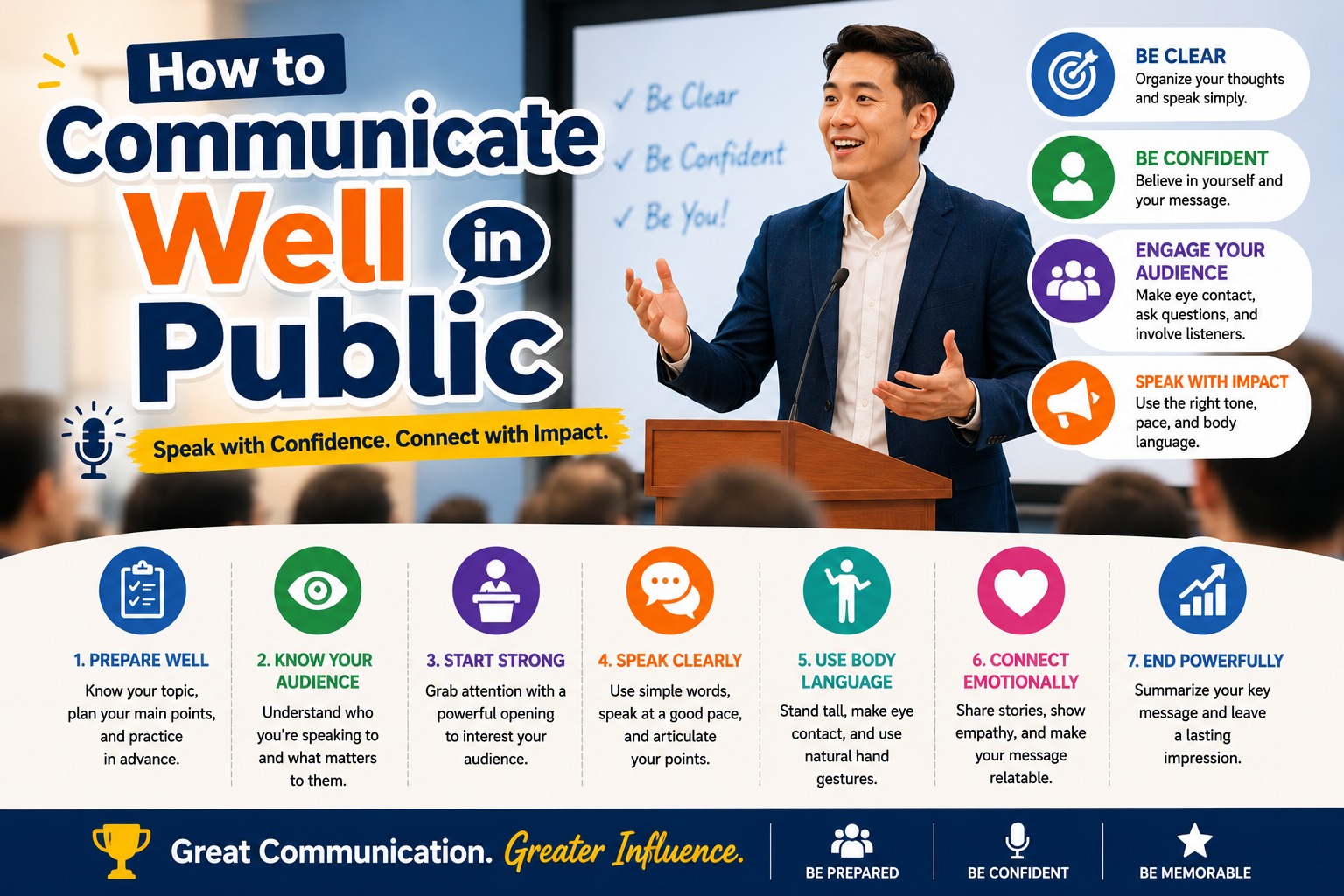
Public communication is an important skill in everyday life. Whether speaking in front of a classroom, attending a meeting, giving a presentation, or participating in social events, the ability to communicate well in public can improve confidence and create positive impressions. Good public communication helps people express ideas clearly and connect effectively with others.
Many people feel nervous when speaking in public because they fear making mistakes or being judged. However, public communication skills can improve through practice, preparation, and confidence-building habits. Anyone can learn how to communicate effectively in front of others with consistent effort.
WHY PUBLIC COMMUNICATION SKILLS ARE IMPORTANT
Strong public communication skills are useful in education, work, business, and social interaction. People who communicate confidently in public often appear more professional, trustworthy, and capable.
Good public communication can help individuals:
- Express ideas clearly
- Build self-confidence
- Improve leadership abilities
- Create positive impressions
- Increase career opportunities
- Strengthen social relationships
Effective communication also helps audiences understand messages more easily.
PREPARE BEFORE SPEAKING
Preparation is one of the most important steps for communicating well in public. People who prepare carefully usually feel more confident and organized during presentations or conversations.
Helpful preparation methods include:
- Understanding the topic clearly
- Organizing main points in advance
- Practicing important information
- Predicting possible questions
- Preparing examples or supporting details
Preparation reduces nervousness and improves speaking performance.
SPEAK CLEARLY AND CONFIDENTLY
Clear speaking helps audiences understand messages more effectively. Speaking too quickly or too softly can make communication difficult.
To communicate clearly in public:
- Speak at a comfortable pace
- Use simple and understandable language
- Pronounce words clearly
- Pause briefly between important points
- Use a confident tone of voice
Confident speaking becomes easier with regular practice and experience.
MAINTAIN GOOD BODY LANGUAGE
Body language plays a major role in public communication. Positive body language can make speakers appear more confident and engaging.
Good body language habits include:
- Maintaining eye contact with the audience
- Standing with good posture
- Smiling naturally
- Using hand gestures appropriately
- Avoiding nervous movements
Strong body language helps audiences feel more connected to the speaker.
PRACTICE ACTIVE LISTENING
Communication in public is not only about speaking. Listening carefully is also important, especially during discussions, meetings, or question-and-answer sessions.
Active listening shows respect and helps speakers respond appropriately. Good listeners often become better communicators because they understand audience reactions and conversation flow more effectively.
Listening carefully can also improve confidence during public interaction.
CONTROL NERVOUSNESS
Feeling nervous before speaking in public is normal. Even experienced speakers sometimes feel anxious. The key is learning how to manage nervousness effectively.
Ways to reduce nervousness include:
- Taking deep breaths before speaking
- Practicing regularly
- Thinking positively
- Focusing on the message instead of fear
- Starting with smaller audiences
Confidence usually improves after gaining more public speaking experience.
USE SIMPLE AND ORGANIZED MESSAGES
Public communication becomes more effective when messages are simple and organized. Complicated explanations may confuse audiences and reduce engagement.
Good speakers usually:
- Focus on key points
- Use examples when necessary
- Avoid unnecessary details
- Explain ideas step by step
Clear organization helps audiences follow information more easily.
INTERACT WITH THE AUDIENCE
Good public communicators create interaction with their audience. Asking questions, making eye contact, and responding to audience reactions can make communication more engaging.
Audience interaction helps speakers appear more approachable and confident. It also keeps listeners interested and involved during presentations or discussions.
Building connection with the audience improves overall communication quality.
PRACTICE PUBLIC SPEAKING REGULARLY
Public communication skills improve through consistent practice. The more often people speak in front of others, the more comfortable and confident they become.
Useful ways to practice include:
- Joining speaking clubs
- Participating in class presentations
- Practicing speeches at home
- Speaking during meetings
- Recording and reviewing performances
Regular practice helps reduce fear and strengthen communication abilities over time.
LEARN FROM FEEDBACK
Feedback is valuable for improving public communication skills. Listening to suggestions from teachers, friends, coworkers, or mentors can help identify areas for improvement.
Constructive feedback may help improve:
- Speaking clarity
- Body language
- Confidence
- Presentation structure
- Audience engagement
Accepting feedback positively supports long-term communication growth.
CONCLUSION
Communicating well in public requires preparation, confidence, and consistent practice. Speaking clearly, maintaining positive body language, listening actively, and controlling nervousness can significantly improve public communication abilities.
Strong public communication skills can increase self-confidence, improve relationships, and create better opportunities in education, work, and social life. With patience and regular practice, anyone can become a confident and effective public communicator.
Tentang Penulis
Gusti Ayu Tita
Penulis — Universitas STEKOM
Penulis aktif yang berfokus pada isu-isu akademik, teknologi pendidikan, dan pengembangan sumber daya manusia di lingkungan kampus.