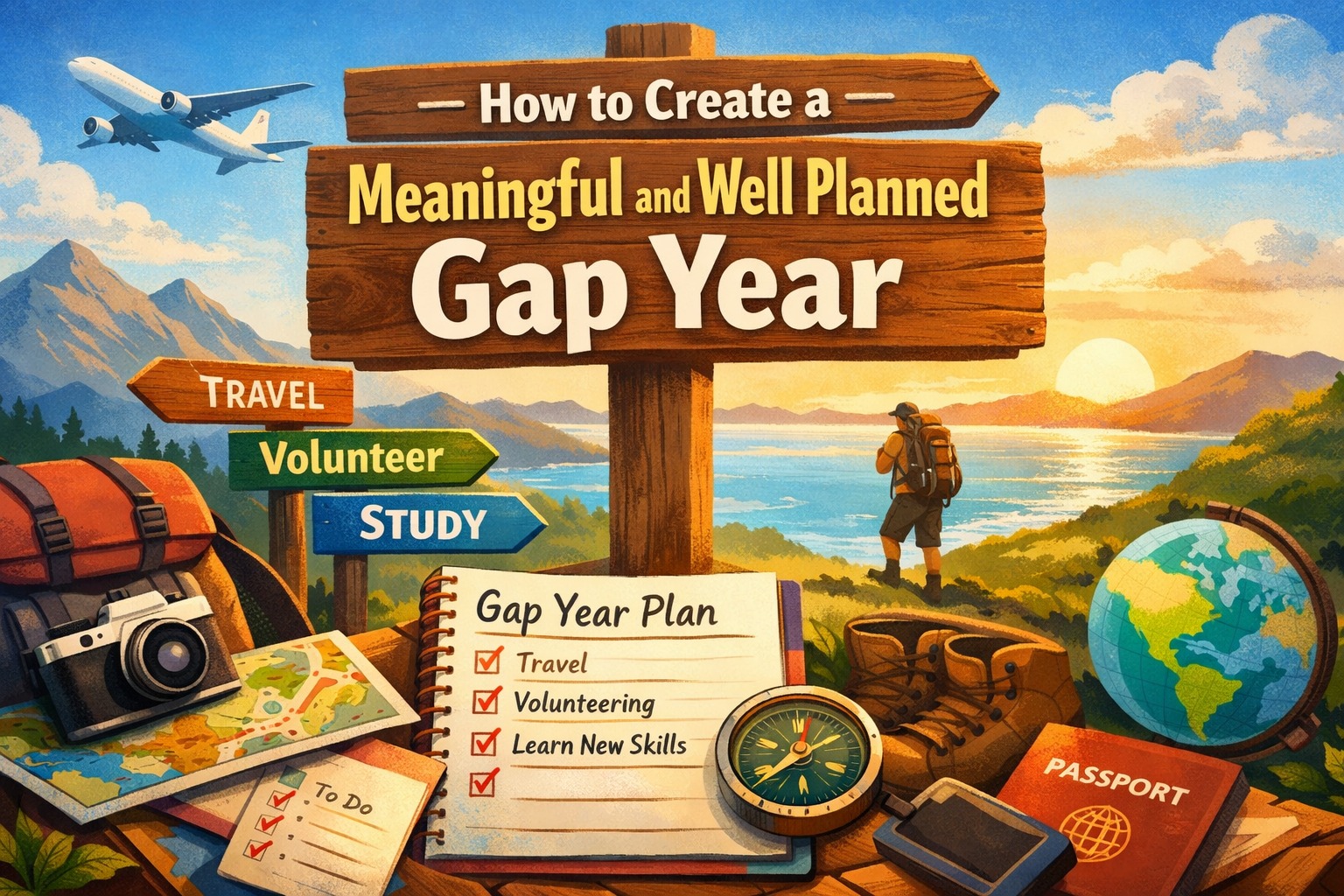
Taking a gap year is no longer seen as a delay in education or career growth. In today’s fast-changing world, many students and young professionals use a gap year to explore new experiences, develop practical skills, and prepare for future opportunities. A meaningful and well planned gap year can become one of the most valuable periods in a person’s life when managed with clear goals and good preparation.
WHY A GAP YEAR CAN BE BENEFICIAL
A gap year offers time to step away from academic pressure and focus on personal development. Many people use this period to travel, volunteer, work part-time, build digital skills, or discover their passions. Instead of wasting time, a structured gap year can improve confidence, independence, and career readiness.
In addition, a gap year allows individuals to understand themselves better. By trying new activities and facing real-world challenges, they gain experiences that are difficult to learn inside a classroom.
SET CLEAR GOALS BEFORE STARTING
The first step to creating a successful gap year is defining your purpose. Without goals, it is easy to lose direction and waste valuable time. Ask yourself what you truly want to achieve during this period.
Some common gap year goals include:
- Learning a new language
- Improving professional skills
- Building a portfolio
- Traveling and exploring cultures
- Volunteering for social causes
- Starting a small business
- Preparing for university or future careers
When goals are specific, planning becomes easier and more effective.
CREATE A REALISTIC PLAN
A well planned gap year requires a clear schedule and realistic expectations. Divide your year into several phases so you can manage activities more efficiently.
For example:
- First three months for skill development
- Next four months for internships or volunteering
- Remaining months for travel or personal projects
Having a timeline helps maintain productivity while still allowing flexibility for unexpected opportunities.
DEVELOP NEW SKILLS
One of the biggest advantages of a gap year is the opportunity to gain practical skills. In the digital era, online learning platforms make education more accessible than ever.
Useful skills to learn during a gap year include:
- Graphic design
- Digital marketing
- Public speaking
- Coding and programming
- Content creation
- Financial management
- Leadership skills
These abilities can strengthen your resume and increase future career opportunities.
MANAGE YOUR FINANCES WISELY
Financial planning is essential during a gap year. Without proper budgeting, expenses can quickly become overwhelming. Before starting, calculate your estimated costs for transportation, accommodation, courses, and daily needs.
To support your finances, consider:
- Freelance work
- Part-time jobs
- Online businesses
- Scholarships or volunteer programs
Managing money responsibly also teaches valuable life skills that will benefit you in the future.
BUILD MEANINGFUL CONNECTIONS
Networking is another important part of a productive gap year. Meeting people from different backgrounds can open doors to new opportunities and perspectives.
Join communities, workshops, internships, or volunteer organizations to expand your connections. Positive relationships can provide inspiration, mentorship, and career opportunities later in life.
DOCUMENT YOUR JOURNEY
Keeping track of your experiences can make your gap year more meaningful. You can create a blog, personal journal, social media portfolio, or video diary to record your achievements and lessons learned.
Documentation is also useful for future applications to universities or jobs because it shows initiative, creativity, and personal growth.
STAY BALANCED AND MOTIVATED
While productivity is important, maintaining balance is equally necessary. A gap year should also include time for rest, reflection, and self-care. Avoid overloading yourself with activities that create unnecessary stress.
Staying motivated can be easier when you regularly evaluate your progress and celebrate small achievements along the way.
CONCLUSION
A meaningful and well planned gap year can become a life-changing experience filled with growth, discovery, and valuable learning opportunities. By setting clear goals, managing time wisely, developing new skills, and maintaining financial stability, you can turn your gap year into an investment for your future success.
Rather than being a pause in life, a gap year can become the perfect bridge toward a brighter and more prepared future.
Tentang Penulis
Gusti Ayu Tita
Penulis — Universitas STEKOM
Penulis aktif yang berfokus pada isu-isu akademik, teknologi pendidikan, dan pengembangan sumber daya manusia di lingkungan kampus.