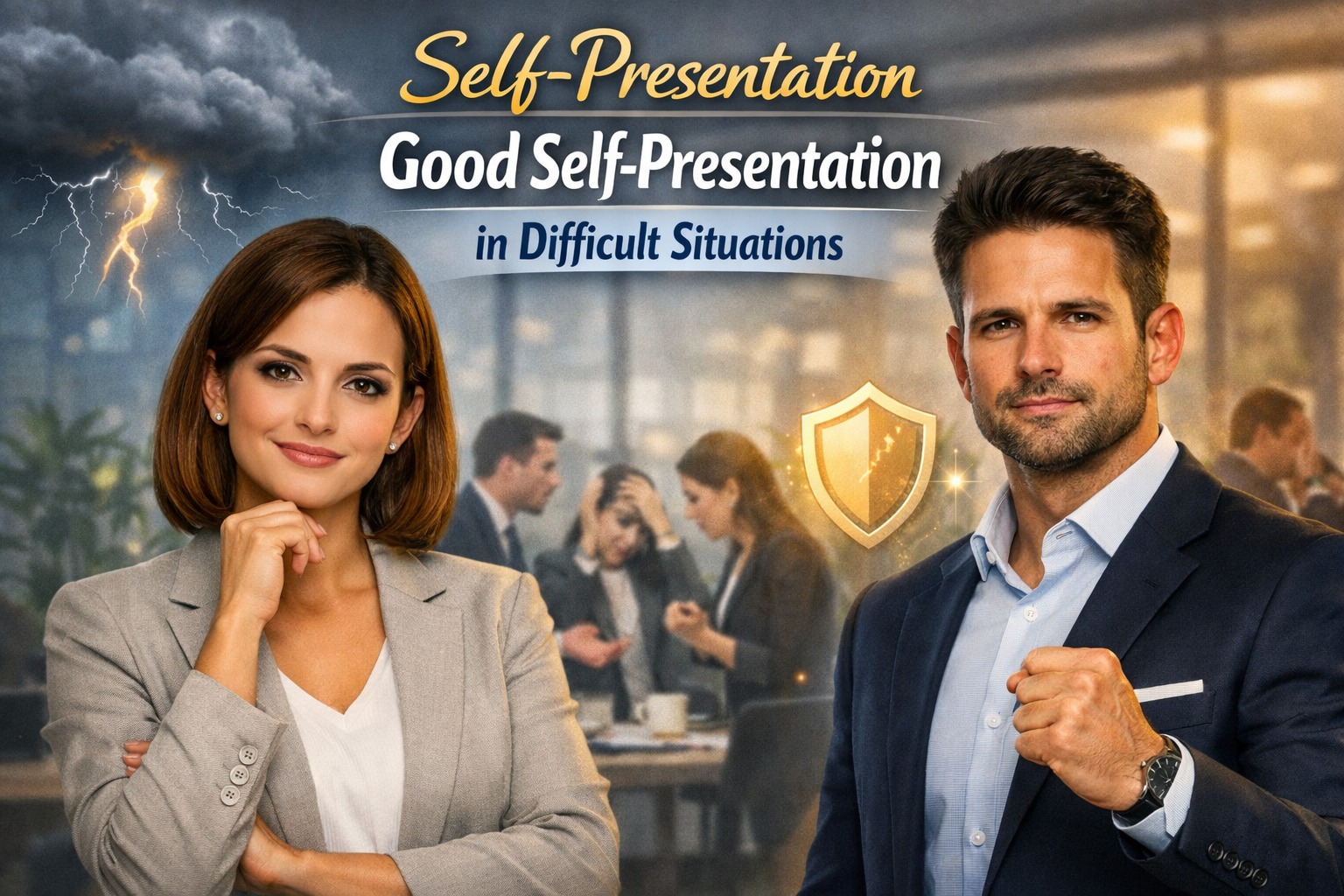
Difficult situations are a part of life, whether in the workplace, social environments, or personal relationships. Stressful moments such as conflicts, criticism, public pressure, or unexpected problems can challenge the way people present themselves. In these moments, maintaining good self-presentation becomes extremely important because it reflects emotional control, professionalism, and maturity.
People who can remain calm and respectful during difficult situations are often viewed as more confident, reliable, and emotionally intelligent. Good self-presentation under pressure can strengthen relationships, improve communication, and protect professional reputation.
WHAT IS SELF-PRESENTATION?
Self-presentation is the way individuals express themselves through communication, behavior, body language, appearance, and attitude. It influences how others perceive your confidence, personality, and professionalism.
Positive self-presentation includes:
- Calm communication
- Respectful behavior
- Positive body language
- Emotional control
- Professional appearance
Maintaining these qualities during difficult situations can create a strong and lasting positive impression.
WHY SELF-PRESENTATION MATTERS IN DIFFICULT SITUATIONS
Many people can appear confident and professional when everything goes smoothly. However, true character often becomes visible during stressful moments. The ability to stay composed under pressure shows emotional strength and maturity.
Good self-presentation during difficult situations can:
- Prevent unnecessary conflict
- Protect professional relationships
- Build trust and respect
- Improve problem-solving
- Reduce misunderstandings
People often remember how someone behaved during challenging moments more than during easy situations.
STAY CALM BEFORE RESPONDING
One of the most important habits in difficult situations is remaining calm. Emotional reactions such as anger, panic, or frustration can negatively affect communication and self-presentation.
Ways to stay calm include:
- Taking deep breaths
- Pausing before responding
- Slowing down your speech
- Focusing on solutions instead of emotions
- Avoiding impulsive reactions
Calmness helps you think more clearly and communicate more effectively.
CONTROL YOUR BODY LANGUAGE
Body language often reveals emotions even when words do not. Negative body language can make tense situations worse.
To maintain positive body language:
- Keep a relaxed posture
- Maintain appropriate eye contact
- Avoid aggressive gestures
- Control facial expressions
- Use calm hand movements
Confident body language can help create a more stable and professional atmosphere.
COMMUNICATE RESPECTFULLY
Respectful communication is essential during stressful conversations. Even when disagreements occur, maintaining professionalism and politeness helps reduce tension.
Healthy communication habits include:
- Speaking calmly and clearly
- Listening actively
- Avoiding insults or blame
- Choosing words carefully
- Respecting different opinions
Respectful communication helps maintain trust and positive relationships.
MANAGE EMOTIONS EFFECTIVELY
Emotional control is one of the strongest signs of mature self-presentation. People who can manage frustration and pressure often appear more confident and emotionally intelligent.
To improve emotional control:
- Recognize emotional triggers
- Practice patience
- Focus on facts rather than assumptions
- Avoid reacting immediately
- Learn healthy stress-management techniques
Emotional stability allows you to handle difficult situations more professionally.
AVOID DEFENSIVE BEHAVIOR
Criticism and disagreements can make people defensive. However, excessive defensiveness may damage communication and create negative impressions.
Instead of reacting defensively:
- Listen carefully to feedback
- Ask questions calmly
- Accept constructive criticism
- Stay open-minded
- Focus on improvement
Mature responses show confidence and professionalism.
MAINTAIN PROFESSIONAL APPEARANCE
Appearance can influence confidence and perception even during stressful moments. Looking organized and professional helps maintain composure and credibility.
Professional appearance includes:
- Wearing neat clothing
- Maintaining good hygiene
- Keeping posture confident
- Presenting yourself calmly
A polished appearance supports positive self-presentation under pressure.
FOCUS ON PROBLEM-SOLVING
Difficult situations often become worse when people focus only on emotions instead of solutions. Problem-solving attitudes create a more productive environment.
Helpful problem-solving habits:
- Stay objective
- Identify practical solutions
- Work collaboratively
- Remain patient
- Focus on long-term outcomes
People appreciate individuals who stay constructive during challenges.
PRACTICE ACTIVE LISTENING
Listening carefully can reduce misunderstandings and help de-escalate conflict. Many difficult situations improve when people feel heard and respected.
Active listening involves:
- Giving full attention
- Avoiding interruptions
- Showing empathy
- Clarifying misunderstandings
- Responding thoughtfully
Good listening skills strengthen communication and emotional connection.
BUILD SELF-CONFIDENCE THROUGH EXPERIENCE
Confidence in difficult situations develops over time through experience and self-improvement. Each challenge becomes an opportunity to strengthen emotional resilience.
Ways to build confidence include:
- Reflecting on past experiences
- Learning from mistakes
- Practicing communication skills
- Developing emotional intelligence
- Staying open to growth
The more experience you gain, the more naturally calm and confident you become.
SURROUND YOURSELF WITH POSITIVE INFLUENCES
Supportive environments can help improve emotional stability and confidence. Positive people often encourage healthier communication and better stress management.
Healthy support systems can:
- Provide constructive advice
- Reduce emotional stress
- Encourage self-improvement
- Strengthen confidence
The people around you can strongly influence your mindset during difficult moments.
CONCLUSION
Maintaining good self-presentation in difficult situations is a valuable skill that reflects confidence, professionalism, and emotional intelligence. Staying calm, controlling body language, communicating respectfully, and focusing on solutions can help you handle pressure more effectively.
Good self-presentation is not about pretending to be perfect or emotionless. It is about responding to challenges with maturity, self-awareness, and respect for others. With consistent practice and emotional growth, anyone can develop a calm and professional presence even during the most difficult situations.
Tentang Penulis
Gusti Ayu Tita P
Penulis — Universitas STEKOM
Penulis aktif yang berfokus pada isu-isu akademik, teknologi pendidikan, dan pengembangan sumber daya manusia di lingkungan kampus.