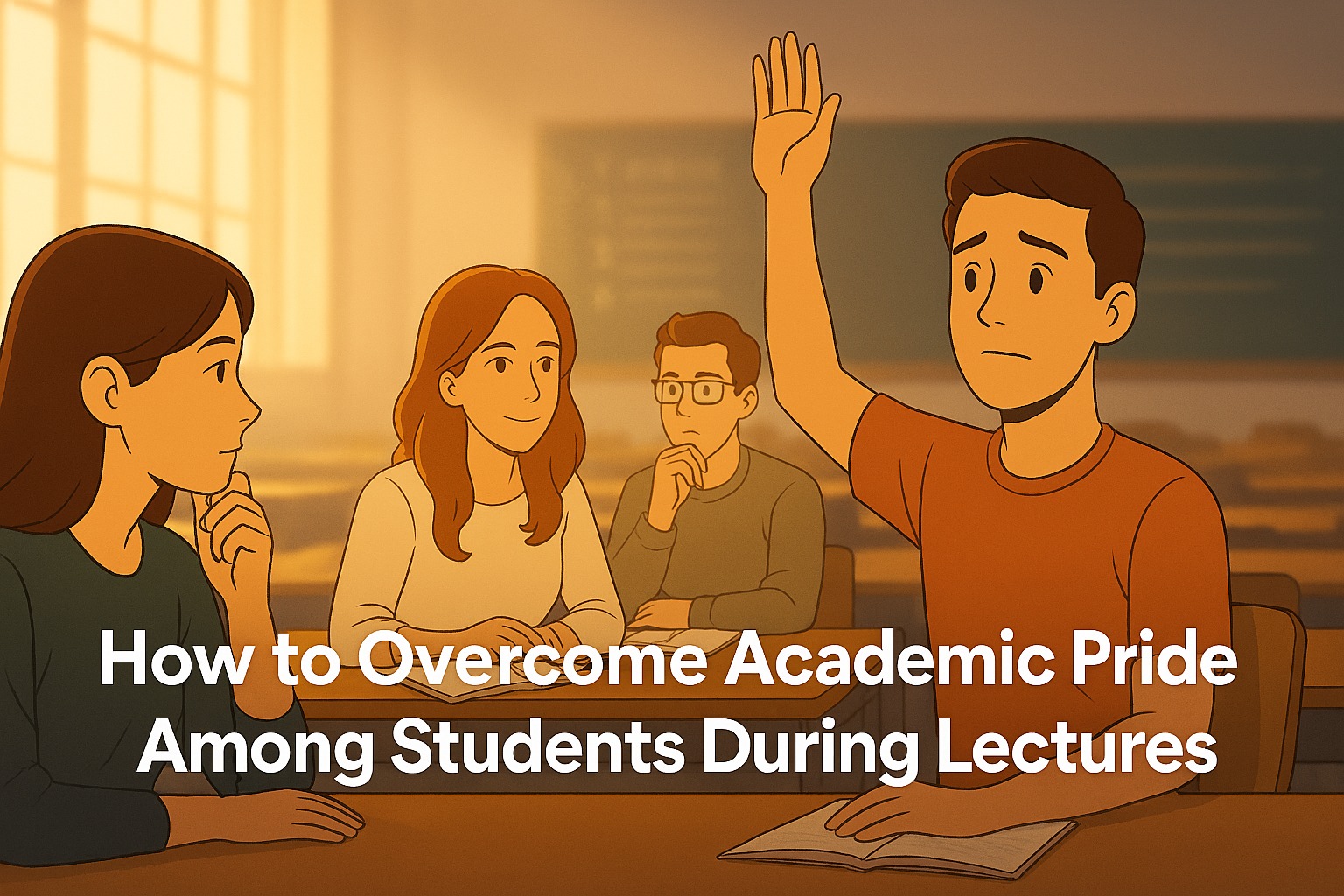
In many classrooms, confidence is often celebrated as a key factor in academic success. However, when confidence turns into academic pride, it can quietly interfere with meaningful learning. Academic pride refers to an excessive concern with maintaining an image of intelligence, competence, or superiority in front of lecturers and peers. During lectures, this attitude may prevent students from asking questions, admitting confusion, or engaging authentically in discussions. Understanding how to overcome academic pride among students during lectures is essential for creating a healthier academic environment. When students shift their focus from protecting their image to improving their understanding, lectures become more interactive, reflective, and impactful.
UNDERSTANDING THE ROOT OF ACADEMIC PRIDE
Before overcoming academic pride, it is important to understand where it comes from. Academic pride is often rooted in fear—fear of being judged, fear of appearing less intelligent, or fear of losing status among peers. In competitive academic environments, students may feel pressure to consistently demonstrate competence.
For high-achieving students, academic pride may stem from a long history of success. They become accustomed to being seen as capable, and admitting confusion feels threatening to their identity. For other students, pride may act as a defense mechanism to mask insecurity or self-doubt.
Recognizing that academic pride is frequently a protective response rather than arrogance allows both educators and students to address it with empathy rather than criticism.
SHIFTING FROM PERFORMANCE TO LEARNING ORIENTATION
One effective way to overcome academic pride during lectures is to shift from a performance-oriented mindset to a learning-oriented mindset. In a performance mindset, students focus on how they appear to others. They aim to avoid mistakes and protect their academic reputation.
In contrast, a learning mindset prioritizes growth, curiosity, and improvement. Students who adopt this perspective understand that confusion is part of the educational process. Instead of asking, “How do I look?” they begin asking, “What can I learn?”
This shift requires intentional reflection. Students can remind themselves that lectures are designed for exploration, not perfection. By reframing participation as an opportunity for growth rather than evaluation, academic pride gradually loses its influence.
NORMALIZING MISTAKES IN THE CLASSROOM
A major driver of academic pride is the belief that mistakes signal weakness. Overcoming this belief requires normalizing mistakes as an essential part of intellectual development.
Lecturers play a crucial role in shaping this culture. When instructors openly acknowledge complex topics, admit when something requires clarification, or encourage diverse viewpoints, they reduce the stigma around not knowing. Students begin to see that uncertainty is not a flaw but a stage in understanding.
When mistakes are treated as learning opportunities rather than failures, students feel safer expressing doubts. This safety weakens the need to maintain a flawless academic image.
ENCOURAGING ACTIVE PARTICIPATION AND QUESTIONS
Academic pride often leads to silence. Students may hesitate to ask questions even when they do not fully understand the material. To overcome this, structured participation strategies can help.
Small group discussions, think-pair-share activities, or anonymous question submissions can reduce social pressure. When students realize that others also have questions, they feel less isolated in their uncertainty.
On an individual level, students can challenge themselves to ask at least one question during lectures, even if it feels uncomfortable at first. Gradual exposure to vulnerability builds confidence rooted in authenticity rather than image management.
DEVELOPING EMOTIONAL INTELLIGENCE
Overcoming academic pride also involves strengthening emotional intelligence. Students who are aware of their emotional triggers—such as embarrassment, competitiveness, or fear of judgment—are better equipped to manage them.
Self-awareness allows students to pause and reflect before choosing silence. Instead of reacting defensively, they can consciously decide to prioritize understanding over appearance.
Practicing humility is part of this process. Humility in academics does not mean underestimating oneself. Rather, it means recognizing that learning is continuous and that everyone, regardless of ability, encounters challenges.
BUILDING CONFIDENCE THROUGH AUTHENTIC UNDERSTANDING
True confidence comes from mastery, not from maintaining appearances. Students who consistently seek clarification and engage deeply with material develop stronger comprehension over time.
As understanding grows, the need for academic pride naturally decreases. Students no longer rely on image to feel capable; they rely on knowledge and experience. This authentic confidence supports long-term academic performance and personal development.
Encouraging reflection after lectures can reinforce this growth. Students can ask themselves what concepts remain unclear and take proactive steps to review them. This habit transforms lectures into active learning experiences.
CONCLUSION
Overcoming academic pride among students during lectures requires both internal reflection and supportive classroom structures. By shifting from performance to learning orientation, normalizing mistakes, encouraging active participation, developing emotional intelligence, and reducing excessive competition, students can move beyond the need to protect their academic image.
When academic pride is replaced with curiosity and humility, lectures become spaces of genuine exploration. Students engage more openly, ask meaningful questions, and build confidence grounded in real understanding. Ultimately, the goal of education is not to appear knowledgeable, but to continuously grow in knowledge—and that growth begins with the courage to admit what we do not yet know.
Tentang Penulis
Gusti Ayu Tita
Penulis — Universitas STEKOM
Penulis aktif yang berfokus pada isu-isu akademik, teknologi pendidikan, dan pengembangan sumber daya manusia di lingkungan kampus.