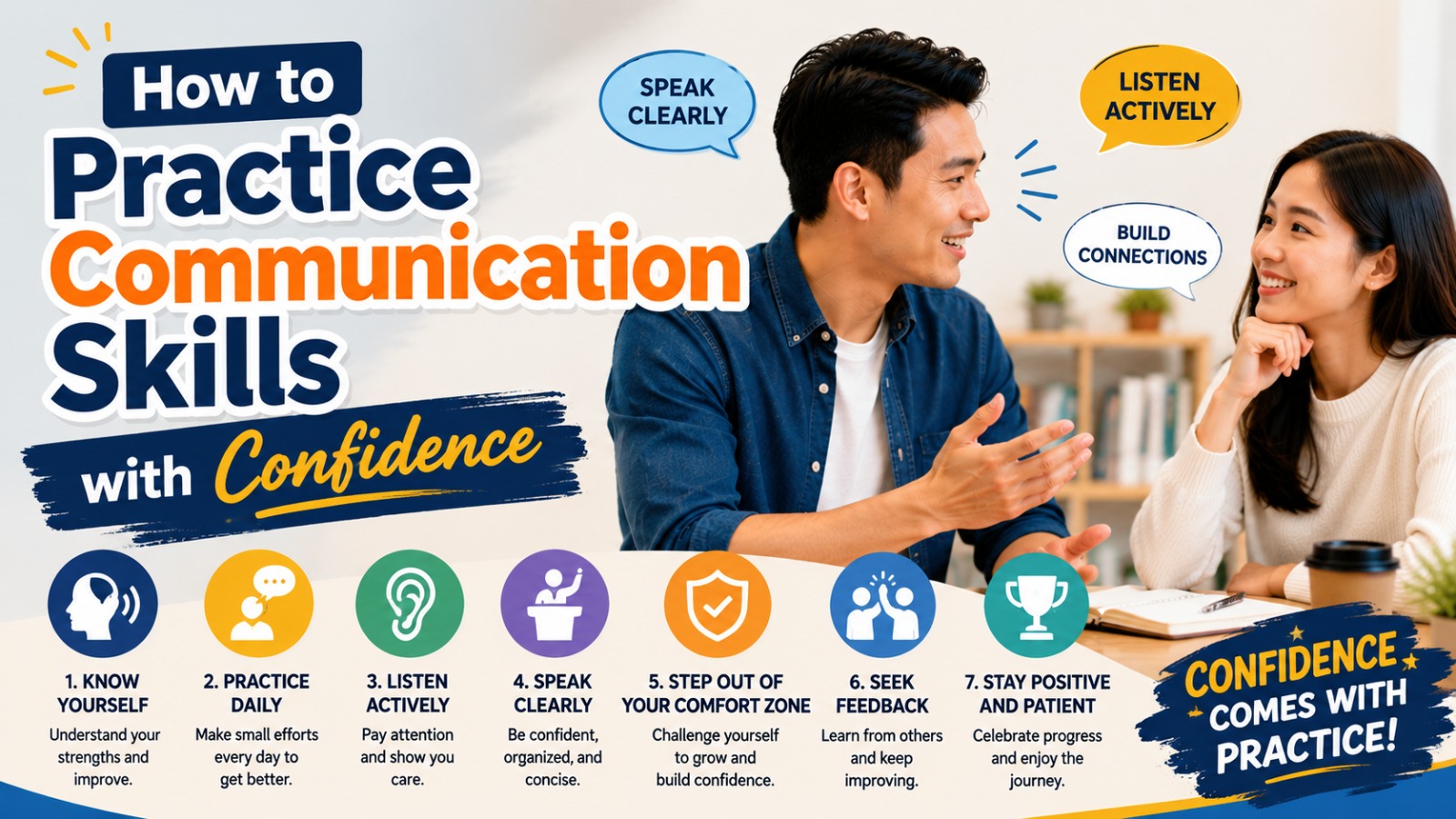
Communication skills are important in almost every part of life. From school and work to friendships and business relationships, the ability to communicate clearly can improve confidence and create better opportunities. However, many people feel nervous when speaking to others, especially in public or professional situations.
The good news is that communication skills can be practiced and improved over time. Confidence in communication does not appear instantly. It develops through consistent practice, positive habits, and real-life experience. Anyone can become a confident communicator by learning simple techniques and applying them daily.
WHY CONFIDENT COMMUNICATION IS IMPORTANT
Confident communication helps people express ideas clearly and build trust with others. It also improves relationships, teamwork, and problem-solving abilities.
People who communicate confidently often:
- Share opinions without fear
- Handle conversations calmly
- Build stronger personal connections
- Perform better in interviews and presentations
- Create positive impressions in social situations
Confidence in communication can also reduce anxiety and help people feel more comfortable during interactions.
START WITH SMALL CONVERSATIONS
One of the easiest ways to practice communication skills is by starting small conversations every day. Simple interactions can help reduce nervousness and improve speaking confidence gradually.
Talking with neighbors, classmates, coworkers, or cashiers can build comfort in everyday communication. These short conversations help people practice speaking naturally without too much pressure.
Small communication habits create a strong foundation for larger discussions and public speaking situations.
PRACTICE ACTIVE LISTENING
Good communication is not only about speaking well. Listening carefully is equally important. Active listening helps people understand conversations better and respond more effectively.
To practice active listening:
- Focus fully on the speaker
- Avoid interrupting
- Maintain eye contact
- Respond thoughtfully
- Show interest through facial expressions
People who listen well often become better communicators because they understand how conversations flow naturally.
SPEAK CLEARLY AND SLOWLY
Speaking too quickly can make communication unclear and increase nervousness. Confident communicators usually speak at a calm and comfortable pace.
Practicing clear pronunciation and organized speech can improve understanding during conversations. Taking short pauses while speaking also helps people think more clearly and appear more confident.
Simple and direct language is often more effective than using complicated words.
IMPROVE BODY LANGUAGE
Body language strongly affects communication. Positive body language can make people appear more confident even when they feel nervous inside.
Helpful body language tips include:
- Maintain eye contact
- Stand or sit with good posture
- Smile naturally
- Use hand gestures appropriately
- Avoid crossing arms excessively
Confident body language creates better impressions and helps conversations feel more comfortable.
PRACTICE IN FRONT OF A MIRROR
Mirror practice is a simple but effective way to improve communication confidence. Speaking in front of a mirror allows people to observe facial expressions, posture, and speaking style.
This method can help identify habits such as poor eye contact, unclear pronunciation, or nervous gestures. Repeating presentations or conversations in front of a mirror also builds familiarity and reduces anxiety.
Regular mirror practice can significantly improve speaking confidence over time.
JOIN GROUP DISCUSSIONS
Participating in group discussions is another excellent way to practice communication skills. Group conversations teach people how to express opinions, respond to others, and communicate in social settings.
Joining clubs, online communities, or discussion groups can provide valuable speaking opportunities. The more often people participate in conversations, the more confident they become.
Group discussions also improve listening skills and teach people how to communicate respectfully with different personalities.
LEARN TO HANDLE MISTAKES
Fear of making mistakes often prevents people from communicating confidently. In reality, mistakes are a normal part of learning.
Even skilled communicators sometimes forget words, mispronounce sentences, or feel nervous. The important thing is to continue speaking and learning from experience.
Accepting mistakes as part of improvement can reduce fear and increase confidence in future conversations.
USE TECHNOLOGY FOR PRACTICE
Technology offers many tools for communication practice. Video calls, online courses, podcasts, and speaking applications can help people improve communication skills from home.
Recording your own voice or video while speaking can also help identify areas that need improvement. Listening to professional speakers and practicing pronunciation regularly can strengthen speaking abilities.
Technology makes communication learning more accessible and flexible for everyone.
STAY POSITIVE AND CONSISTENT
Confidence develops through consistency. Practicing communication only once in a while may slow progress. Daily communication practice helps build stronger habits and reduce nervousness naturally.
Positive thinking is also important. Instead of focusing on fear or mistakes, focus on improvement and learning opportunities. Every conversation can become valuable practice for developing better communication skills.
Patience and persistence are key to becoming a confident communicator.
CONCLUSION
Practicing communication skills with confidence requires time, effort, and regular practice. Starting with small conversations, improving body language, speaking clearly, and participating in discussions can help build stronger communication abilities.
Confidence grows through experience and consistent learning. By practicing daily and staying positive, anyone can become a more confident and effective communicator in both personal and professional life.
Tentang Penulis
Gusti Ayu Tita
Penulis — Universitas STEKOM
Penulis aktif yang berfokus pada isu-isu akademik, teknologi pendidikan, dan pengembangan sumber daya manusia di lingkungan kampus.