
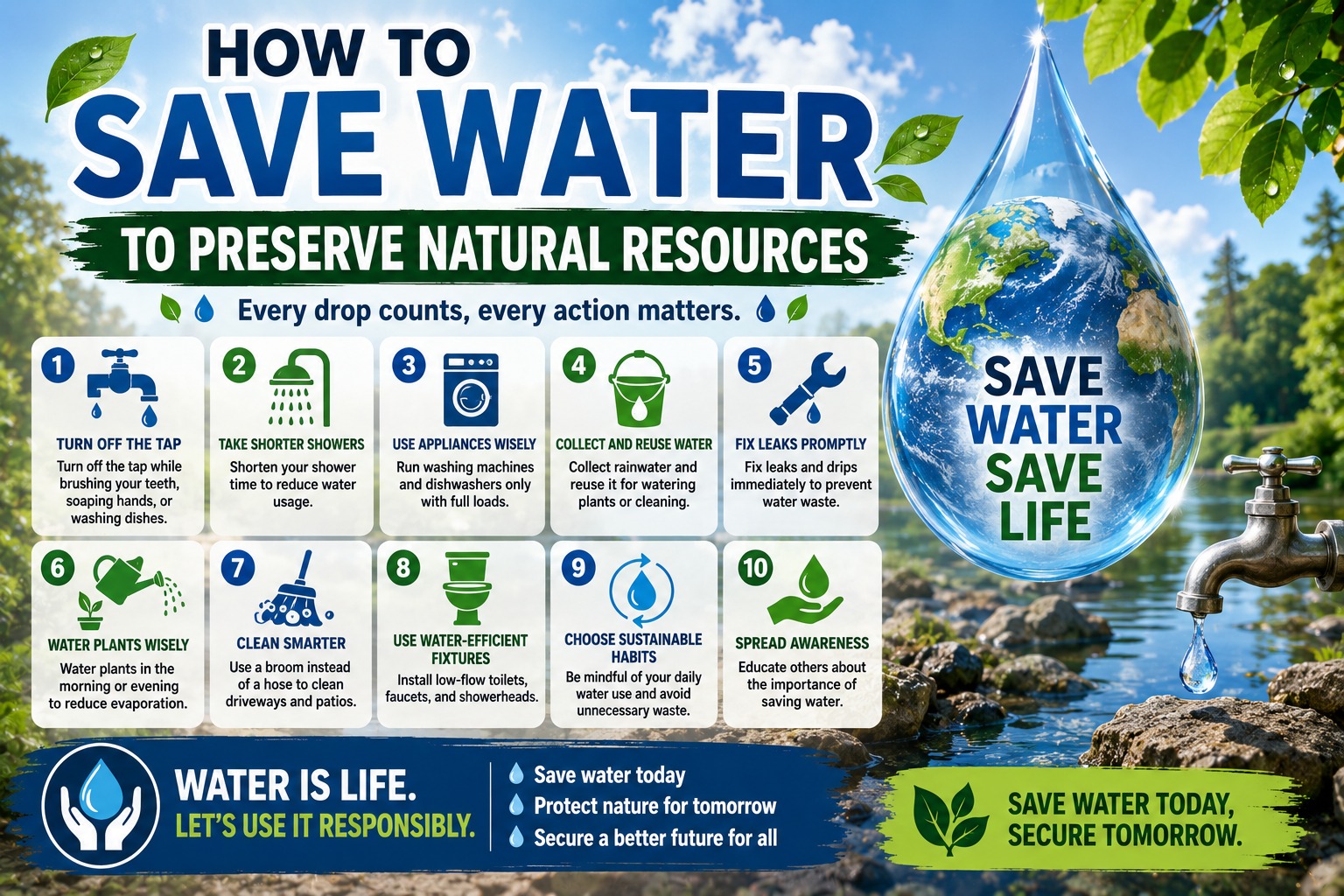
Water is one of the most valuable natural resources on Earth. It is essential for human survival, agriculture, industry, and environmental balance. However, increasing population growth, climate change, and excessive water consumption have caused serious concerns about water shortages in many parts of the world. Because of this, saving water has become an important responsibility for individuals, communities, and governments.
Conserving water not only helps protect the environment but also ensures that future generations will continue to have access to clean and safe water. By adopting simple water-saving habits, people can make a significant contribution to preserving natural resources and maintaining ecological balance.
WHY WATER CONSERVATION IS IMPORTANT
Water conservation is important because freshwater resources are limited. Although water covers most of the Earth’s surface, only a small percentage is suitable for drinking and daily use. Rapid urban development, pollution, and wasteful habits continue to reduce the availability of clean water.
Saving water also helps reduce energy consumption. Water treatment and distribution require large amounts of electricity. When people use less water, energy demand decreases, which can help reduce greenhouse gas emissions and environmental pollution.
In addition, conserving water protects rivers, lakes, wetlands, and other ecosystems that depend on stable water supplies. Healthy ecosystems support biodiversity and provide essential benefits for humans and wildlife.
SIMPLE WAYS TO SAVE WATER AT HOME
There are many practical ways to reduce water usage in daily life. Small actions performed consistently can lead to significant water savings over time.
Turn Off Taps Properly
Many people waste water by leaving taps running while brushing teeth, washing dishes, or cleaning. Turning off the tap when water is not needed can save a large amount of water every day.
Fix Leaking Pipes and Faucets
Small leaks may seem harmless, but they can waste hundreds of liters of water over time. Regularly checking and repairing leaking pipes, faucets, and toilets helps prevent unnecessary water loss.
Use Water-Efficient Appliances
Modern appliances such as washing machines, dishwashers, and low-flow showerheads are designed to reduce water consumption. Choosing water-efficient products can lower household water usage significantly.
Collect Rainwater
Rainwater harvesting is an effective method for conserving water. Collected rainwater can be used for watering plants, cleaning outdoor areas, or other non-drinking purposes.
Reuse Water When Possible
Some household water can be reused for other activities. For example, water used to wash vegetables can be utilized for watering plants. Reusing water reduces unnecessary waste and supports sustainable living.
THE ROLE OF AGRICULTURE IN WATER CONSERVATION
Agriculture is one of the largest consumers of water worldwide. Inefficient irrigation systems often result in excessive water waste. Farmers can help conserve water by adopting modern irrigation techniques such as drip irrigation and sprinkler systems.
Planting drought-resistant crops and improving soil management also contribute to better water efficiency. Sustainable farming practices help preserve water resources while maintaining food production.
HOW INDUSTRIES CAN HELP SAVE WATER
Industries play a major role in water consumption and pollution. Factories and manufacturing companies can reduce water waste by recycling industrial water, improving production efficiency, and treating wastewater properly before releasing it into the environment.
Businesses that prioritize sustainable water management not only protect the environment but also improve their reputation and reduce operational costs in the long term.
THE IMPACT OF WATER WASTE ON THE ENVIRONMENT
Excessive water use and poor water management can cause serious environmental problems. Water shortages may lead to dry rivers, damaged ecosystems, and reduced agricultural productivity. In some regions, lack of clean water can also create health and sanitation problems.
Overusing groundwater can lower water tables and damage natural habitats. Pollution from untreated wastewater further threatens aquatic life and human health. Conserving water is therefore essential for maintaining environmental sustainability.
BUILDING WATER-SAVING HABITS FOR THE FUTURE
Creating long-term water-saving habits requires education and public awareness. Schools, communities, and environmental organizations can encourage people to use water responsibly through campaigns and educational programs.
Parents can also teach children simple habits such as turning off taps, using water carefully, and appreciating the importance of clean water. These lessons help build environmentally responsible behavior from an early age.
CONCLUSION
Saving water is a simple yet powerful way to preserve natural resources and protect the environment. Every drop of water is valuable, and small daily actions can make a significant difference in reducing water waste.
By practicing water conservation at home, supporting sustainable agriculture, and encouraging responsible industrial practices, society can help ensure a stable water supply for future generations. Protecting water resources today is an important step toward creating a healthier and more sustainable world.
Tentang Penulis
Gusti Ayu Tita
Penulis — Universitas STEKOM
Penulis aktif yang berfokus pada isu-isu akademik, teknologi pendidikan, dan pengembangan sumber daya manusia di lingkungan kampus.



