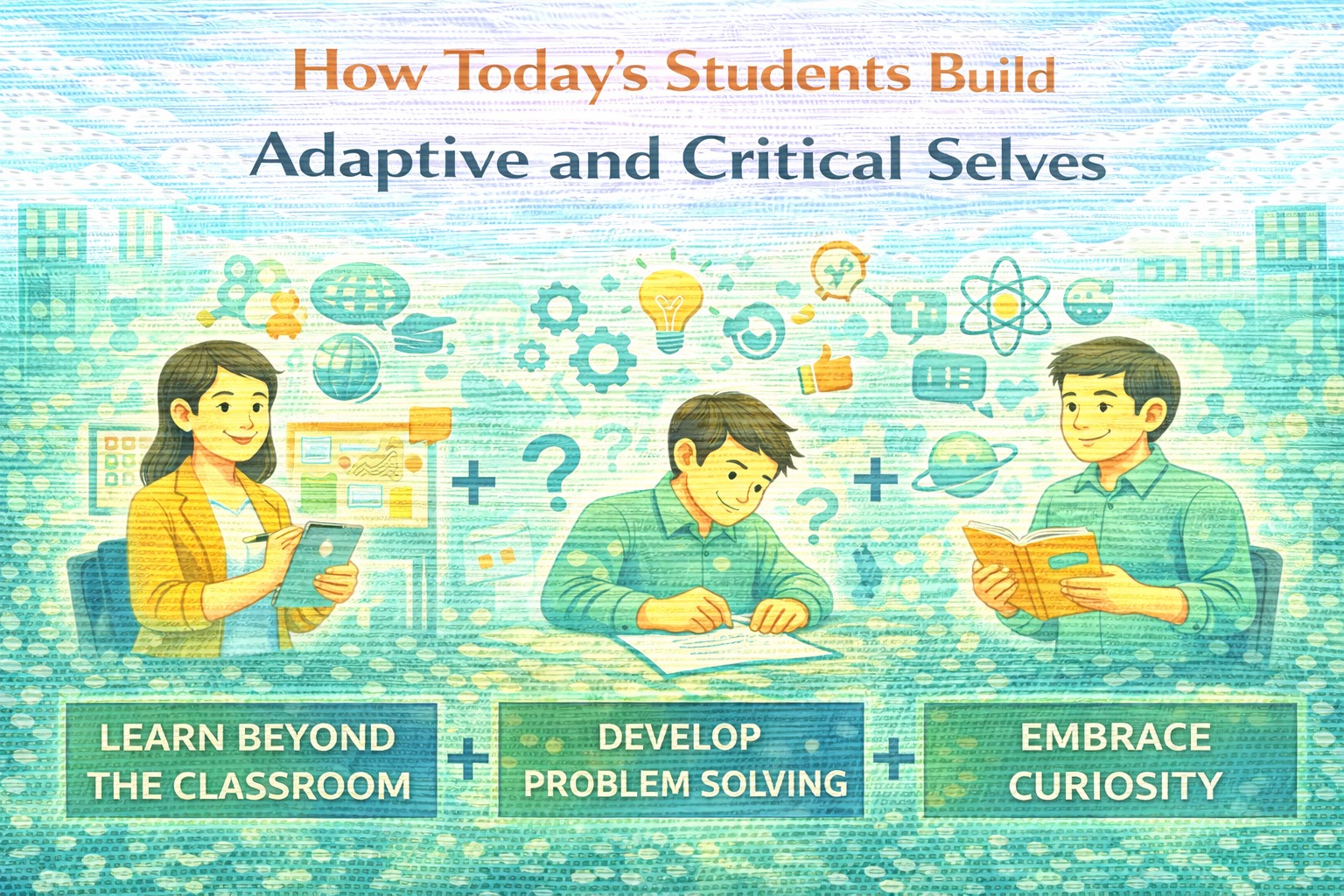
Adaptive and Critical Thinking Skills for Students in the Modern Era
Rapid developments in today’s world require students not only to excel academically, but also to adapt quickly and think critically. Modern students face continuous technological, social, and cultural changes that shape the way they learn and live. Therefore, adaptive and critical thinking skills have become essential assets for students to remain relevant and competitive.
Understanding the Challenges of the Modern Era
Social and Technological Changes
Fast-paced social and technological developments significantly influence how students study, interact, and make decisions. Students are expected to read situations accurately, understand the impact of change, and adjust their attitudes and mindsets to keep up with the times.
Awareness and flexibility are crucial in responding to rapid social and technological shifts.
Academic and Non-Academic Challenges
In addition to academic demands, students face non-academic challenges such as global competition, information overload, and increasing expectations for job-related skills. These conditions require students to develop strong adaptability in order to manage pressure while seizing available opportunities.
High adaptability helps students balance academic responsibilities and external demands.
Building an Adaptive Mindset from an Early Stage
Being Open to Change
An adaptive attitude begins with openness to change and innovation. Students who are willing to learn new things, accept differences, and adjust to new conditions are better prepared to face the uncertainty of the modern era.
Openness to change strengthens students’ readiness for future challenges.
Developing Critical Thinking Skills
Courage to Question and Analyze
Critical students do not accept information at face value. Instead, they question, analyze, and evaluate the accuracy and impact of information they receive. This mindset enables students to understand issues more deeply and make rational decisions.
Critical thinking encourages thoughtful analysis and informed decision-making.
Connecting Theory with Real-World Contexts
Critical thinking also involves linking academic theories with real-life situations. By doing so, students can recognize the relevance of knowledge in practical contexts and contribute solutions that address real-world problems.
Applying theory to reality enhances meaningful learning and problem-solving.
Actualizing Oneself in a Positive Way
Actively Engaging in Self-Development Activities
Participation in organizations, discussions, and social activities provides students with opportunities to develop adaptive and critical skills. These experiences foster social awareness and teamwork in diverse situations.
Active involvement supports personal growth and social competence.
Conclusion
In the modern era, students are required to go beyond academic excellence by developing adaptive and critical thinking skills. Through openness to change, analytical thinking, and active self-development, students can navigate complex challenges and remain competitive. By strengthening these skills, modern students are better equipped to contribute meaningfully to society and face the future with confidence.
Tentang Penulis
Gusti Ayu Tita
Penulis — Universitas STEKOM
Penulis aktif yang berfokus pada isu-isu akademik, teknologi pendidikan, dan pengembangan sumber daya manusia di lingkungan kampus.