
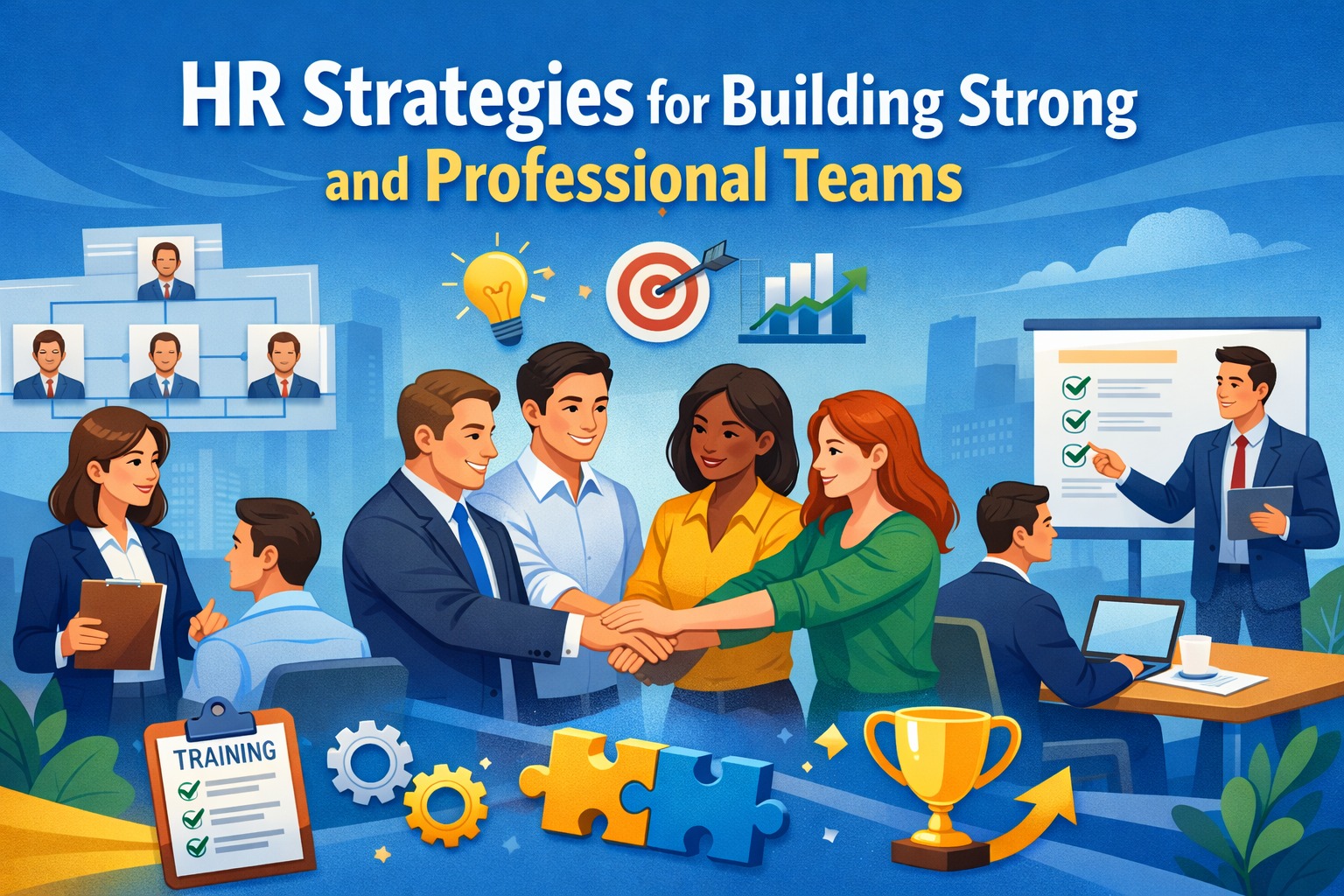
In today’s competitive business environment, organizations rely heavily on Human Resources (HR) to build teams that are not only skilled but also aligned with company values. Strong and professional teams do not happen by chance—they are the result of well-planned HR strategies that focus on recruitment, development, and long-term employee engagement. Effective HR practices help companies reduce turnover, increase productivity, and maintain a healthy workplace culture.
STRATEGIC TALENT ACQUISITION
Building a strong team starts with hiring the right people. Strategic talent acquisition goes beyond filling vacancies; it focuses on finding candidates who match both the technical requirements and the organizational culture.
HR professionals today use data-driven recruitment tools, structured interviews, and skill-based assessments to ensure better hiring decisions. Employer branding also plays a major role, as companies with a strong reputation tend to attract higher-quality candidates. By clearly defining job roles and expectations, organizations can reduce hiring mistakes and build a more stable workforce from the beginning.
EMPLOYEE DEVELOPMENT AND CONTINUOUS LEARNING
Once the right talent is in place, the next step is to invest in their growth. Employee development is a key strategy for maintaining a professional and high-performing team.
Training programs, workshops, mentorship, and online learning platforms help employees upgrade their skills and stay relevant in a rapidly changing work environment. Continuous learning not only improves performance but also increases employee satisfaction and loyalty. When employees see that their organization supports their growth, they are more likely to stay and contribute positively.
PERFORMANCE MANAGEMENT AND FEEDBACK CULTURE
A strong team requires consistent performance monitoring and constructive feedback. Effective performance management systems help employees understand their strengths, weaknesses, and areas for improvement.
Regular evaluations, clear KPIs (Key Performance Indicators), and transparent communication create accountability within the team. In addition, fostering a feedback culture encourages open communication between managers and employees. Instead of annual-only reviews, modern HR strategies emphasize continuous feedback, which helps employees improve in real time and stay aligned with company goals.
EMPLOYEE ENGAGEMENT AND WORKPLACE CULTURE
Employee engagement is a critical factor in building strong and professional teams. Engaged employees are more motivated, productive, and committed to their work.
HR strategies that support engagement include recognition programs, team-building activities, flexible work arrangements, and a positive work environment. A healthy workplace culture built on trust, respect, and collaboration significantly improves team dynamics. When employees feel valued and included, they are more likely to perform at their best and contribute to organizational success.
CONCLUSION
Building strong and professional teams requires a comprehensive HR strategy that covers recruitment, development, performance management, and employee engagement. Companies that invest in these areas are more likely to achieve long-term success, reduce turnover, and create a sustainable competitive advantage. In an evolving business world, effective HR strategies are not just supportive functions—they are essential drivers of organizational growth and excellence.
Tentang Penulis
Gusti Ayu Tita
Penulis — Universitas STEKOM
Penulis aktif yang berfokus pada isu-isu akademik, teknologi pendidikan, dan pengembangan sumber daya manusia di lingkungan kampus.



