INTRODUCTION
The rapid development of technology has transformed many aspects of human life, including education. Traditional classroom learning is no longer the only method used in schools and universities. Today, many educational institutions are adopting the hybrid learning method as a modern solution to support flexible and effective learning activities.
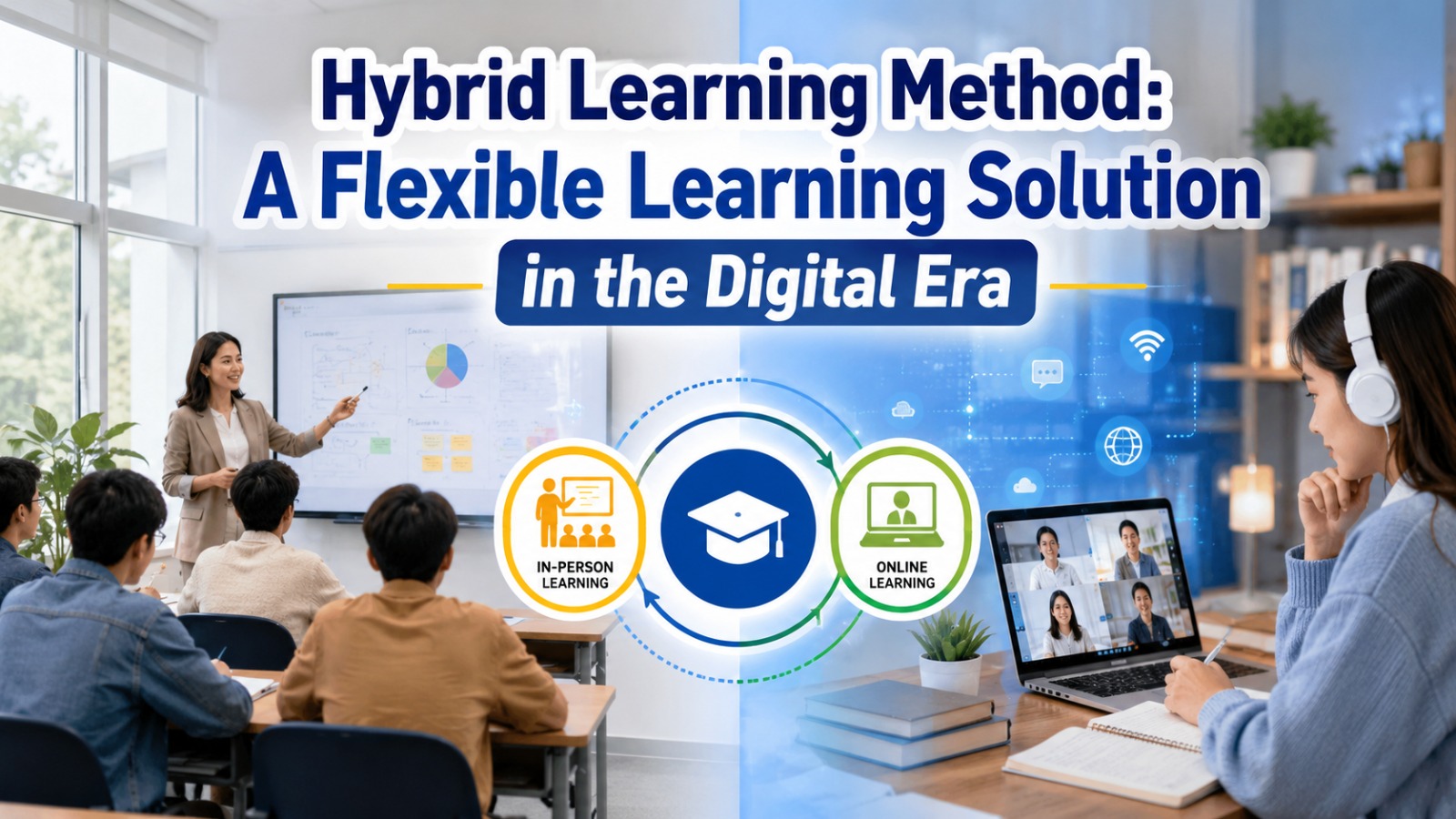
Hybrid learning combines face-to-face instruction with online learning activities. This approach allows students and teachers to interact both physically and digitally, creating a more adaptable educational experience. In the digital era, hybrid learning has become increasingly popular because it offers convenience, flexibility, and broader access to educational resources.
WHAT IS HYBRID LEARNING?
Hybrid learning is a learning model that integrates conventional classroom teaching with online learning systems. Students can participate in direct classroom sessions while also accessing digital materials, video conferences, online discussions, and assignments through internet-based platforms.
This method provides a balanced combination of traditional interaction and technological innovation. Teachers can deliver lessons more creatively, while students gain the opportunity to learn independently and manage their study schedules more effectively.
BENEFITS OF HYBRID LEARNING
FLEXIBILITY IN LEARNING
One of the biggest advantages of hybrid learning is flexibility. Students can access learning materials anytime and anywhere. This flexibility is especially beneficial for learners who have different schedules, learning speeds, or personal responsibilities.
IMPROVED ACCESS TO EDUCATION
Hybrid learning allows educational institutions to reach students from different geographical locations. Learners who cannot attend physical classes regularly still have the opportunity to participate in academic activities through online platforms.
ENHANCED DIGITAL SKILLS
By using technology in daily learning activities, students naturally develop digital literacy skills. They become more familiar with online collaboration tools, virtual communication, and digital problem-solving, which are important skills in the modern workforce.
MORE ENGAGING LEARNING EXPERIENCE
Teachers can combine videos, presentations, quizzes, and interactive discussions to make lessons more engaging. The use of multimedia content helps students understand complex topics more easily and keeps them motivated during the learning process.
CHALLENGES OF HYBRID LEARNING
Despite its many advantages, hybrid learning also presents several challenges.
INTERNET CONNECTIVITY ISSUES
A stable internet connection is essential for successful online learning sessions. In some areas, limited internet access can disrupt communication and reduce the effectiveness of learning activities.
TECHNOLOGY ADAPTATION
Not all teachers and students are equally comfortable with digital tools. Some individuals may require additional training to effectively use online learning platforms and educational applications.
STUDENT DISCIPLINE AND MOTIVATION
Hybrid learning requires students to be more independent and responsible. Without proper self-discipline, some learners may struggle to manage their time and complete assignments on schedule.
STRATEGIES FOR EFFECTIVE HYBRID LEARNING
To maximize the benefits of hybrid learning, educational institutions should implement several important strategies.
USE INTERACTIVE LEARNING TOOLS
Teachers should utilize interactive platforms such as virtual classrooms, online quizzes, and collaborative discussion forums to maintain student engagement.
PROVIDE CLEAR COMMUNICATION
Clear instructions and consistent communication are essential in hybrid learning environments. Students need detailed information about schedules, assignments, and expectations to avoid confusion.
ENCOURAGE ACTIVE PARTICIPATION
Teachers should encourage students to participate actively during both online and offline sessions. Group discussions, presentations, and collaborative projects can improve student involvement and teamwork.
OFFER TECHNICAL SUPPORT
Educational institutions should provide technical assistance for both teachers and students. Proper support can reduce technical difficulties and improve the overall learning experience.
THE FUTURE OF HYBRID LEARNING
Hybrid learning is expected to continue growing in the future. As technology becomes more advanced, educational institutions will likely develop more innovative and personalized learning systems. Artificial intelligence, virtual reality, and adaptive learning platforms may further improve the effectiveness of hybrid education.
Many experts believe that hybrid learning is not just a temporary trend but a long-term transformation in the education sector. It offers a practical solution for creating inclusive, flexible, and technology-driven learning environments.
CONCLUSION
The hybrid learning method has become an effective and flexible learning solution in the digital era. By combining traditional classroom interaction with online educational technology, hybrid learning provides greater accessibility, convenience, and engagement for students and teachers alike.
Although there are challenges related to technology and student discipline, proper strategies and support can help educational institutions implement hybrid learning successfully. As digital transformation continues to shape education, hybrid learning will likely play a major role in the future of global learning systems.
Tentang Penulis
Gusti Ayu Tita
Penulis — Universitas STEKOM
Penulis aktif yang berfokus pada isu-isu akademik, teknologi pendidikan, dan pengembangan sumber daya manusia di lingkungan kampus.