
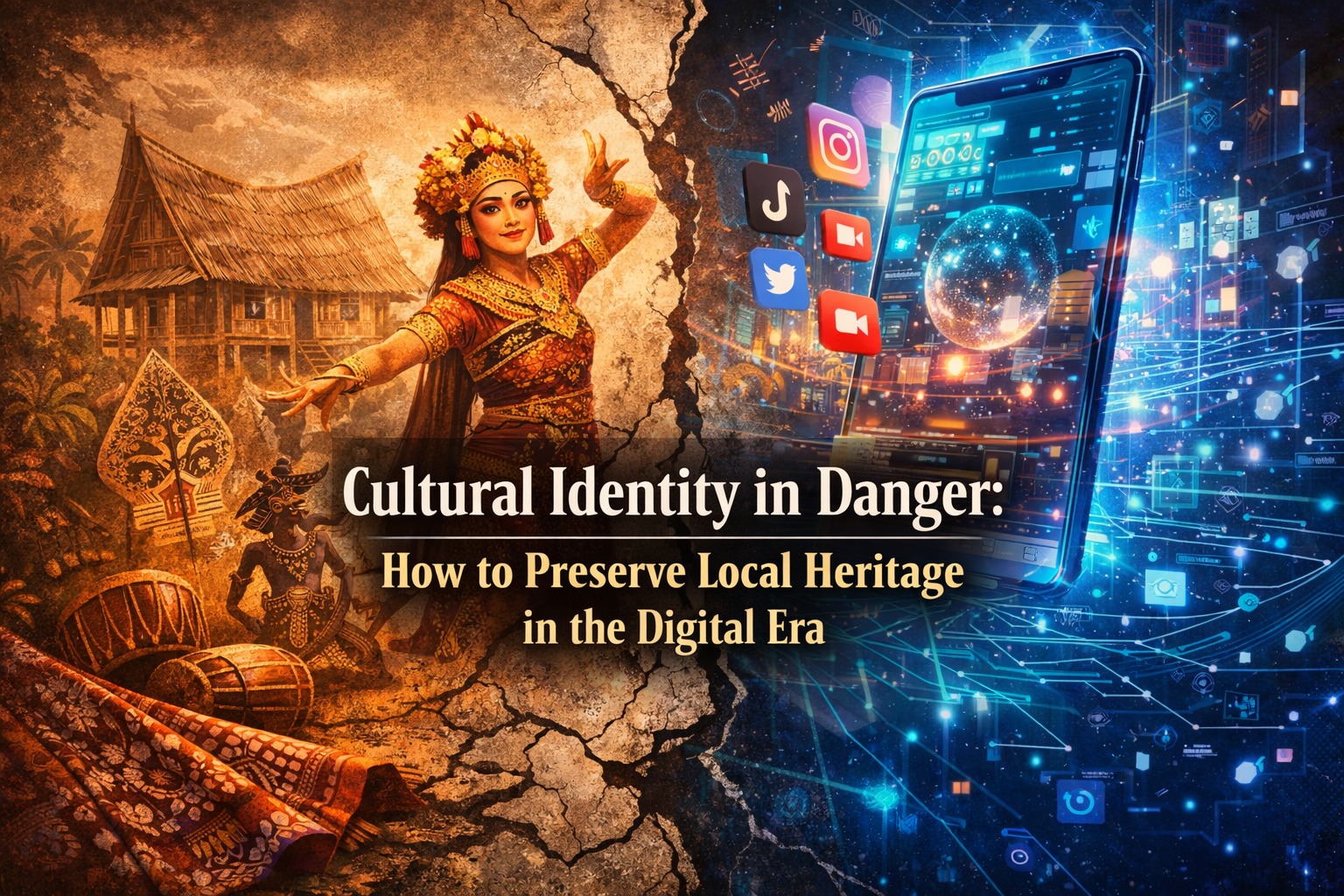
The development of digital technology has brought significant changes to society. The internet, social media, and digital platforms have made cross-cultural information exchange easier than ever. However, behind this convenience, local cultural identity faces serious threats. Cultural heritage that has long served as the foundation of national identity is gradually being marginalized by dominant global cultures in digital spaces.
The Meaning of Cultural Identity for a Nation
Cultural identity reflects the values, norms, traditions, and customs that shape the character of a nation. Regional languages, traditional arts, customs, and local wisdom are essential components of this identity.
Cultural identity functions as social cohesion and a moral compass in social life. When this identity weakens, society risks losing its sense of direction and belonging to its own culture.
The Digital Era and Threats to Local Heritage
The digital era creates new spaces for the spread of global culture. Entertainment content, lifestyle trends, and foreign popular culture easily dominate public attention, especially among younger generations. Social media algorithms tend to promote viral content, causing local culture—with limited exposure—to become increasingly marginalized.
As a result, many cultural heritages are poorly recognized or even forgotten because they cannot compete within the fast-paced flow of digital information.
The Impact of Losing Cultural Identity
The loss of cultural identity affects not only arts and traditions but also the social fabric of society. Some potential impacts include:
- A decline in pride toward one’s own culture
- The erosion of communal values and mutual cooperation
- Younger generations losing understanding of cultural history
- The weakening of national character and identity
These impacts highlight the importance of cultural preservation as a foundation for social and national development.
The Role of Technology in Cultural Preservation
Although the digital era poses challenges, technology can also serve as a strategic tool for preserving cultural heritage. The digitization of cultural archives, the creation of educational content, and the use of social media to promote local culture can expand the reach and appeal of traditional heritage.
With creative approaches, local culture can be presented in modern formats without losing its authentic values.
Strategies to Preserve Cultural Heritage in the Digital Era
To keep cultural identity alive, concrete and sustainable steps are needed, including:
1. Cultural education from an early age within families and schools
2. Utilizing digital platforms for documentation and cultural promotion
3. Creative collaboration between cultural practitioners and younger generations
4. Government policy support for cultural preservation
5. Increasing public awareness of the importance of cultural identity
These strategies can create a balance between technological advancement and the preservation of cultural values.
Conclusion
Cultural identity in the digital era is in a vulnerable position, but it is not beyond saving. Through wise use of technology and collective awareness, local cultural heritage can continue to live and grow. Preserving culture is not merely about protecting the past, but also about building a future rooted in national values and identity.
**Keywords:**
Tentang Penulis
Gusti Ayu Tita
Penulis — Universitas STEKOM
Penulis aktif yang berfokus pada isu-isu akademik, teknologi pendidikan, dan pengembangan sumber daya manusia di lingkungan kampus.



