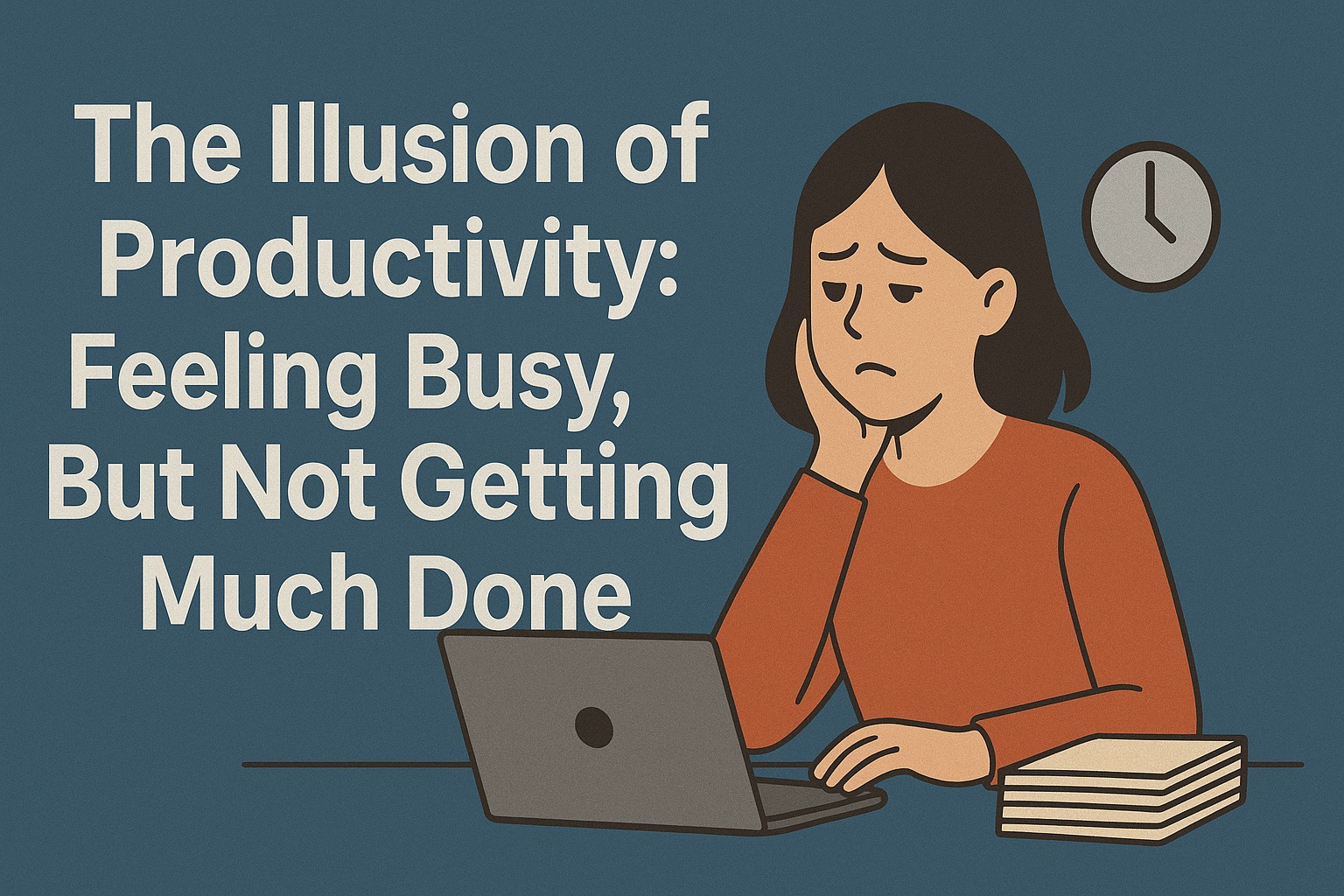
Many people feel like they’ve been working all day, but when they look at the results, very little is actually completed. This phenomenon is called the **illusion of productivity**—a condition where we appear busy, yet the important work isn’t progressing. This illusion often makes us feel like we’ve already put in enough effort, when in reality, we’re simply trapped in activities that have little impact.
Why Do We Fall Into the Illusion of Productivity?
One major reason is the habit of prioritizing small, quick tasks because they’re easier to finish. We feel “productive” every time we check something off our to-do list, even though the tasks we complete are insignificant. The brain loves the feeling of instant accomplishment, so without realizing it, we choose busyness over meaningful progress.
Additionally, multitasking gives the impression of being busy, but it actually reduces focus and decreases the quality of our work.
Busyness Doesn’t Equal Productivity
Many people assume that having a packed schedule means being productive, when productivity is actually measured by impact—not by the number of activities. Important tasks often get postponed simply because we’re too occupied with trivial things like replying to chats nonstop, organizing unnecessary files, or repeatedly opening apps without a clear purpose.
As a result, energy gets drained, but meaningful outcomes are nowhere to be seen.
How to Escape the Illusion of Productivity
To break free from this illusion, we must learn to distinguish between being “busy” and being “impactful.” Start by sorting tasks based on how much they contribute to your main goals. Focus on one major task at a time. Reduce multitasking, manage notifications, and evaluate which activities only make you *look* busy without delivering real results.
By doing so, every effort you make will lead to true progress—rather than just routine actions that go nowhere.
Tentang Penulis
Gusti Ayu Tita
Penulis — Universitas STEKOM
Penulis aktif yang berfokus pada isu-isu akademik, teknologi pendidikan, dan pengembangan sumber daya manusia di lingkungan kampus.