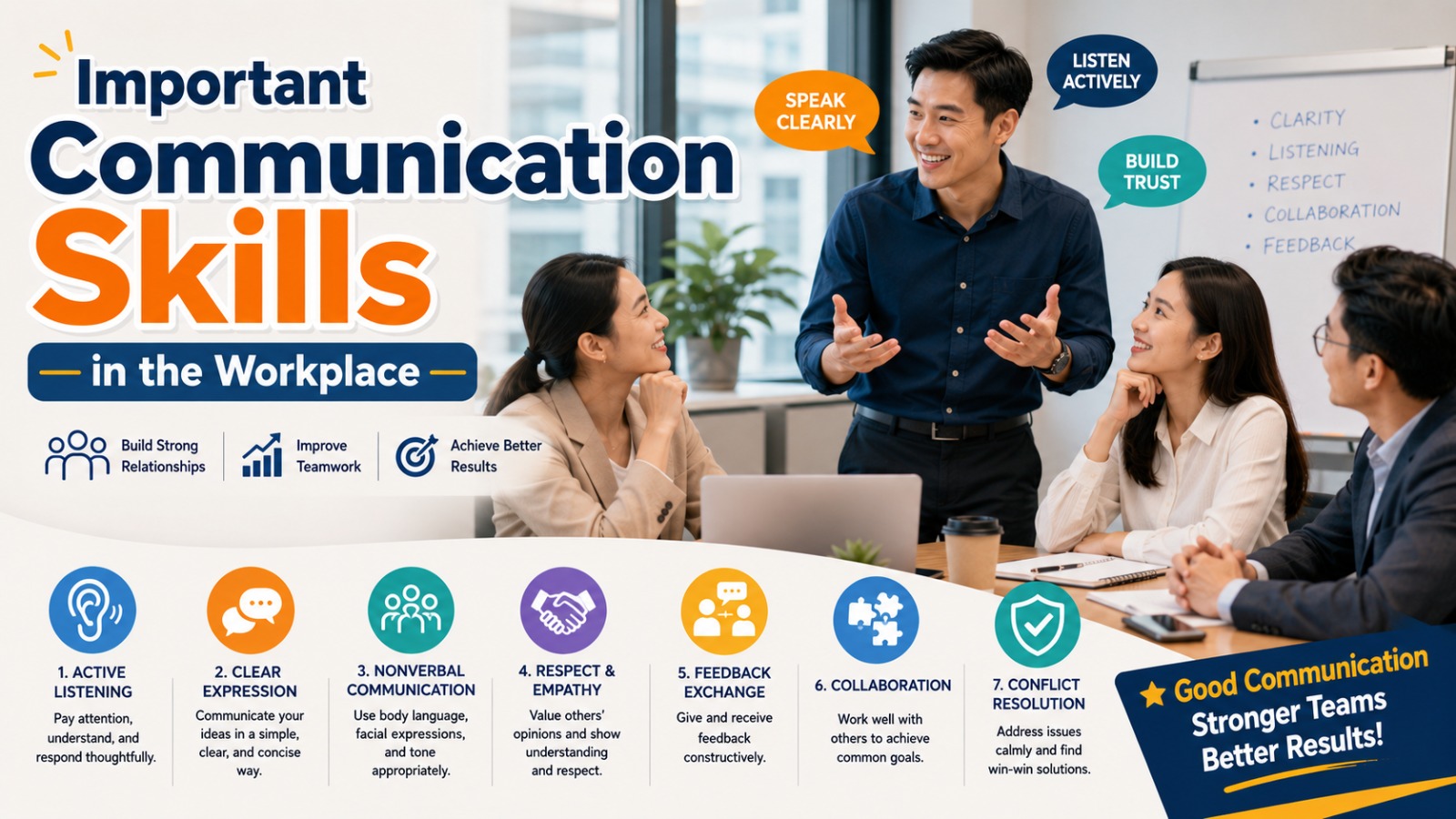
Communication skills are one of the most valuable abilities in the workplace. In every industry, employees need to communicate effectively with coworkers, managers, clients, and customers. Strong communication can improve teamwork, increase productivity, and create a more professional work environment.
Many companies value communication skills as much as technical abilities. Employees who communicate clearly and confidently often perform better in meetings, solve problems faster, and build stronger professional relationships. Because of this, improving workplace communication is essential for career growth and long-term success.
WHY COMMUNICATION SKILLS MATTER AT WORK
Workplace communication affects daily operations and professional relationships. Misunderstandings can lead to mistakes, delays, and conflicts, while effective communication helps teams work smoothly and efficiently.
Good communication skills help employees:
- Share ideas clearly
- Collaborate effectively with teams
- Build trust with coworkers and clients
- Solve workplace problems faster
- Improve leadership abilities
- Increase professional confidence
Employees who communicate well are often viewed as more reliable and professional.
ACTIVE LISTENING
Active listening is one of the most important workplace communication skills. Many communication problems happen because people do not fully listen during conversations or meetings.
Active listening means paying close attention to the speaker, understanding the message, and responding thoughtfully. Employees who listen carefully can avoid misunderstandings and respond more effectively.
Good active listening habits include:
- Maintaining eye contact
- Avoiding interruptions
- Asking relevant questions
- Showing interest during conversations
- Confirming understanding when necessary
Listening well creates better teamwork and stronger professional relationships.
CLEAR AND PROFESSIONAL SPEAKING
Speaking clearly and professionally is essential in the workplace. Employees need to explain ideas, provide updates, and communicate instructions effectively.
Professional speaking involves using respectful language, organizing thoughts clearly, and speaking with confidence. Simple and direct communication often works better than using complicated explanations.
Clear communication can improve productivity and reduce workplace confusion.
NONVERBAL COMMUNICATION
Body language also plays an important role in workplace communication. Facial expressions, posture, gestures, and eye contact can influence how messages are received.
Positive nonverbal communication can make employees appear more confident and approachable. Maintaining good posture, making eye contact, and using appropriate gestures can improve professional interactions.
Negative body language, such as avoiding eye contact or appearing distracted, may create misunderstandings or reduce trust.
WRITTEN COMMUNICATION SKILLS
Written communication is increasingly important in modern workplaces. Emails, reports, messages, and presentations all require clear and professional writing.
Strong written communication skills help employees deliver accurate information and maintain professionalism. Good workplace writing should be:
- Clear and concise
- Grammatically correct
- Organized and easy to understand
- Professional in tone
Proofreading messages before sending them can help avoid mistakes and misunderstandings.
TEAM COMMUNICATION
Most workplaces require teamwork. Effective team communication helps employees collaborate, solve problems, and complete tasks efficiently.
Good team communicators respect others’ opinions, share ideas openly, and support productive discussions. Communication within teams should remain respectful and focused on solutions.
Strong teamwork communication also improves workplace relationships and reduces unnecessary conflict.
CONFLICT RESOLUTION SKILLS
Conflicts can happen in any workplace, but communication skills can help resolve problems professionally. Employees who communicate calmly and respectfully during disagreements are more likely to find positive solutions.
Effective conflict resolution involves:
- Listening carefully to different perspectives
- Staying calm during discussions
- Avoiding emotional reactions
- Focusing on solutions instead of blame
- Using respectful language
Professional conflict resolution creates a healthier and more productive work environment.
PUBLIC SPEAKING AND PRESENTATION SKILLS
Many jobs require employees to speak in meetings or give presentations. Public speaking skills can help employees communicate ideas confidently in front of groups.
Preparation is important for successful presentations. Organizing information clearly and practicing before speaking can improve confidence and performance.
Employees with strong presentation skills often stand out as leaders in the workplace.
ADAPTABILITY IN COMMUNICATION
Different workplace situations require different communication styles. Employees need to adapt when speaking with managers, coworkers, customers, or clients.
Adaptable communicators understand how to adjust their tone, language, and communication approach depending on the situation. This flexibility improves professionalism and relationship-building.
Being adaptable also helps employees work effectively in diverse teams and changing work environments.
CONCLUSION
Communication skills are essential for workplace success. Active listening, clear speaking, professional writing, teamwork, and conflict resolution all contribute to a productive and positive work environment.
Employees who develop strong communication abilities often build better relationships, improve career opportunities, and become more effective professionals. With regular practice and a willingness to learn, anyone can strengthen their workplace communication skills and achieve greater success.
Tentang Penulis
Gusti Ayu Tita
Penulis — Universitas STEKOM
Penulis aktif yang berfokus pada isu-isu akademik, teknologi pendidikan, dan pengembangan sumber daya manusia di lingkungan kampus.