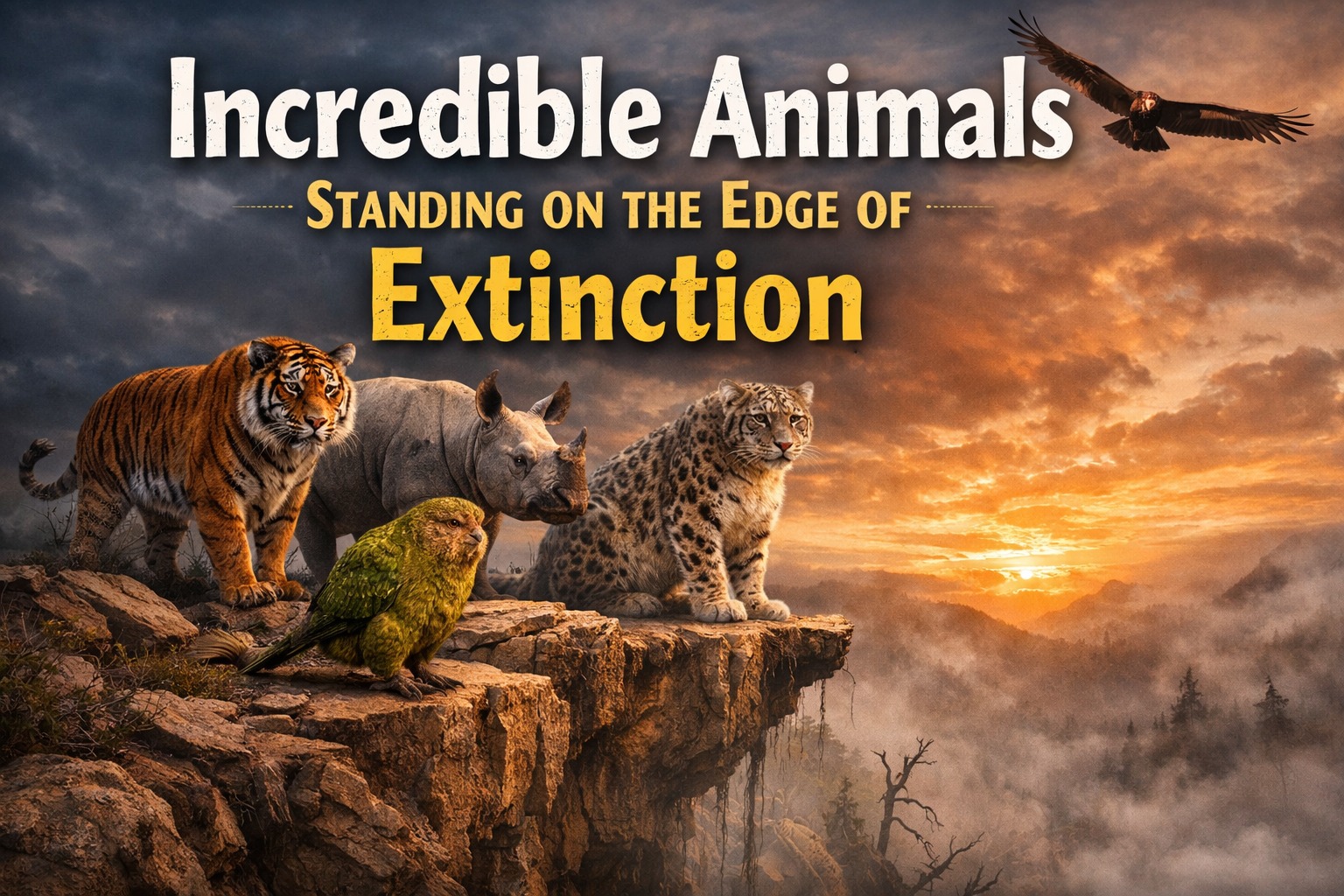
The world is home to millions of fascinating animal species, yet many of them are now facing the serious threat of extinction. Human activities such as deforestation, illegal hunting, climate change, and pollution continue to destroy natural habitats and reduce wildlife populations. If immediate action is not taken, several incredible animals may disappear forever. Understanding the importance of wildlife conservation is essential to protecting the planet’s biodiversity for future generations.
WHY ANIMALS ARE BECOMING EXTINCT
Many species are declining rapidly due to environmental damage caused by humans. Forests are cleared for agriculture, industries pollute rivers and oceans, and illegal wildlife trade continues to endanger rare animals. Climate change also affects ecosystems by altering temperatures and weather patterns, making survival more difficult for vulnerable species.
Another major reason is habitat fragmentation. When forests and grasslands are divided into smaller areas, animals struggle to find food, shelter, and mates. Over time, their populations decrease significantly.
INCREDIBLE ANIMALS FACING EXTINCTION
AMUR LEOPARD
The Amur leopard is considered one of the rarest big cats in the world. Native to parts of Russia and China, this beautiful animal is threatened by habitat destruction and poaching. Its thick fur and remarkable agility make it one of nature’s most extraordinary predators.
JAVAN RHINOCEROS
The Javan rhinoceros is one of the most endangered mammals on Earth. Only a small number remain in protected areas of Indonesia. Illegal hunting and habitat loss have pushed this species close to extinction.
SUMATRAN ORANGUTAN
Known for its intelligence and human-like behavior, the Sumatran orangutan is losing its rainforest habitat because of palm oil plantations and illegal logging. Conservation groups continue working hard to protect these primates from disappearing forever.
HAWKSBILL SEA TURTLE
This sea turtle plays an important role in maintaining healthy coral reef ecosystems. Unfortunately, plastic pollution, illegal trade, and climate change threaten its survival. Many turtles also become trapped in fishing nets each year.
VAQUITA
The vaquita is the world’s rarest marine mammal. Found only in the Gulf of California, this small porpoise faces extinction mainly due to illegal fishing activities. Experts estimate that only a few individuals remain in the wild.
THE IMPORTANCE OF WILDLIFE CONSERVATION
Protecting endangered animals is not only about saving individual species. Wildlife helps maintain balanced ecosystems that support human life as well. Forest animals contribute to seed dispersal, bees assist pollination, and marine creatures help stabilize ocean ecosystems.
When one species disappears, the entire food chain can be disrupted. This imbalance may create environmental problems that eventually affect humans through food shortages, climate instability, and ecosystem collapse.
HOW PEOPLE CAN HELP SAVE ENDANGERED ANIMALS
Everyone can contribute to wildlife conservation in simple but meaningful ways. Supporting environmental organizations, reducing plastic use, avoiding products linked to illegal wildlife trade, and spreading awareness are effective actions.
Governments and communities also need stronger environmental laws and conservation programs. Reforestation projects, wildlife sanctuaries, and sustainable living practices can help restore natural habitats and protect vulnerable species.
Education is another powerful tool. When people understand the value of biodiversity, they become more motivated to protect the environment and the animals living within it.
CONCLUSION
The extinction crisis is one of the greatest environmental challenges facing the world today. Incredible animals such as the Amur leopard, Javan rhinoceros, and vaquita are fighting for survival against growing threats caused by human activity. Protecting endangered species requires cooperation between governments, organizations, and individuals worldwide. By taking action now, humanity still has the opportunity to preserve Earth’s extraordinary wildlife for future generations.
Tentang Penulis
Gusti Ayu Tita
Penulis — Universitas STEKOM
Penulis aktif yang berfokus pada isu-isu akademik, teknologi pendidikan, dan pengembangan sumber daya manusia di lingkungan kampus.