
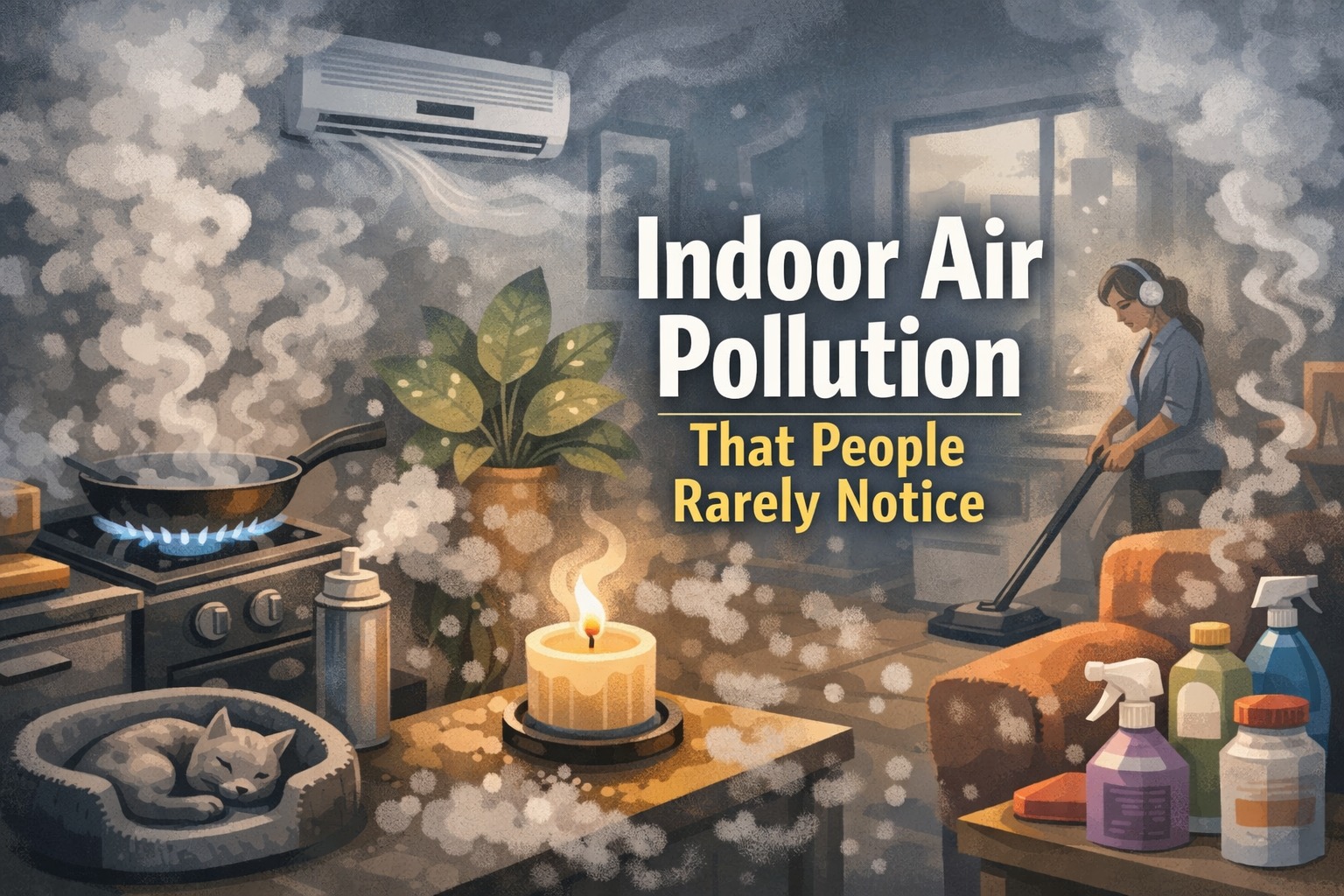
Indoor air pollution is often overlooked because many people assume the air inside their homes is cleaner than the air outside. In reality, indoor spaces can contain harmful pollutants that slowly affect health, comfort, and productivity. Since people spend most of their time indoors, understanding hidden sources of indoor air pollution becomes increasingly important.
Poor indoor air quality may lead to headaches, allergies, breathing difficulties, and long-term health problems. Unfortunately, many common pollution sources are rarely noticed because they appear harmless in daily life.
WHAT IS INDOOR AIR POLLUTION?
Indoor air pollution refers to contamination inside homes, offices, schools, or other buildings caused by harmful particles, chemicals, or biological substances in the air. These pollutants can come from household products, building materials, cooking activities, and even furniture.
Unlike outdoor pollution, indoor pollution often accumulates in enclosed spaces with limited ventilation. This situation allows pollutants to remain trapped and continuously circulate indoors.
COMMON SOURCES OF HIDDEN INDOOR AIR POLLUTION
HOUSEHOLD CLEANING PRODUCTS
Many cleaning sprays, detergents, and air fresheners release volatile organic compounds (VOCs). These chemicals may create a pleasant smell, but prolonged exposure can irritate the lungs and eyes.
Products containing strong fragrances or chemical ingredients are often used daily without realizing their impact on indoor air quality.
COOKING SMOKE AND GAS STOVES
Cooking activities produce smoke, grease particles, and harmful gases. Gas stoves may release nitrogen dioxide and carbon monoxide, especially in kitchens with poor ventilation.
Even simple cooking methods such as frying or grilling can increase indoor pollution levels significantly.
DUST AND PET DANDER
Dust accumulation inside carpets, curtains, and furniture can trigger allergies and respiratory issues. Pet fur and dander also contribute to poor indoor air quality, especially for sensitive individuals.
Without regular cleaning, these tiny particles continue circulating through the air.
MOLD AND MOISTURE
Damp environments encourage mold growth on walls, ceilings, and hidden corners of buildings. Mold spores spread easily through the air and may cause coughing, asthma attacks, and skin irritation.
Bathrooms, kitchens, and poorly ventilated rooms are common areas where moisture problems develop.
CIGARETTE SMOKE
Secondhand smoke remains one of the most dangerous indoor pollutants. Smoke particles stay in the air and attach to furniture, curtains, and walls for long periods.
Children and elderly individuals are particularly vulnerable to the harmful effects of cigarette smoke indoors.
HEALTH EFFECTS OF INDOOR AIR POLLUTION
Indoor air pollution can affect people differently depending on age, health conditions, and exposure duration. Some immediate symptoms include:
- Headaches
- Dizziness
- Eye irritation
- Sneezing and coughing
- Fatigue
Long-term exposure may increase the risk of asthma, heart disease, and chronic respiratory illnesses. People with weak immune systems often experience stronger reactions to indoor pollutants.
SIMPLE WAYS TO IMPROVE INDOOR AIR QUALITY
IMPROVE VENTILATION
Opening windows regularly helps fresh air circulate and reduces trapped pollutants indoors. Exhaust fans in kitchens and bathrooms also support better airflow.
USE NATURAL CLEANING PRODUCTS
Switching to low-chemical or fragrance-free cleaning products can reduce harmful emissions inside the home.
CLEAN DUST REGULARLY
Vacuuming carpets, washing curtains, and cleaning furniture surfaces help minimize dust buildup and allergens.
CONTROL HUMIDITY
Maintaining proper humidity levels prevents mold growth. Using dehumidifiers or fixing water leaks can improve indoor conditions.
AVOID SMOKING INDOORS
Keeping indoor environments smoke-free significantly improves air quality and protects family members from dangerous pollutants.
WHY PEOPLE OFTEN IGNORE INDOOR AIR POLLUTION
Many indoor pollutants are invisible and odorless, making them difficult to detect without proper awareness. People tend to focus more on outdoor pollution from vehicles and factories while forgetting that indoor environments may also contain harmful contaminants.
Additionally, modern lifestyles often involve spending long hours inside air-conditioned rooms with limited fresh air circulation. This habit increases exposure to hidden indoor pollutants over time.
CONCLUSION
Indoor air pollution is a serious issue that people rarely notice, yet it can greatly impact health and daily comfort. Common household activities, cleaning products, cooking smoke, and poor ventilation all contribute to declining indoor air quality.
By understanding hidden pollution sources and adopting healthier habits, people can create safer indoor environments for themselves and their families. Small changes such as improving ventilation, reducing chemical use, and maintaining cleanliness can make a significant difference in overall well-being.
Tentang Penulis
Gusti Ayu Tita
Penulis — Universitas STEKOM
Penulis aktif yang berfokus pada isu-isu akademik, teknologi pendidikan, dan pengembangan sumber daya manusia di lingkungan kampus.



