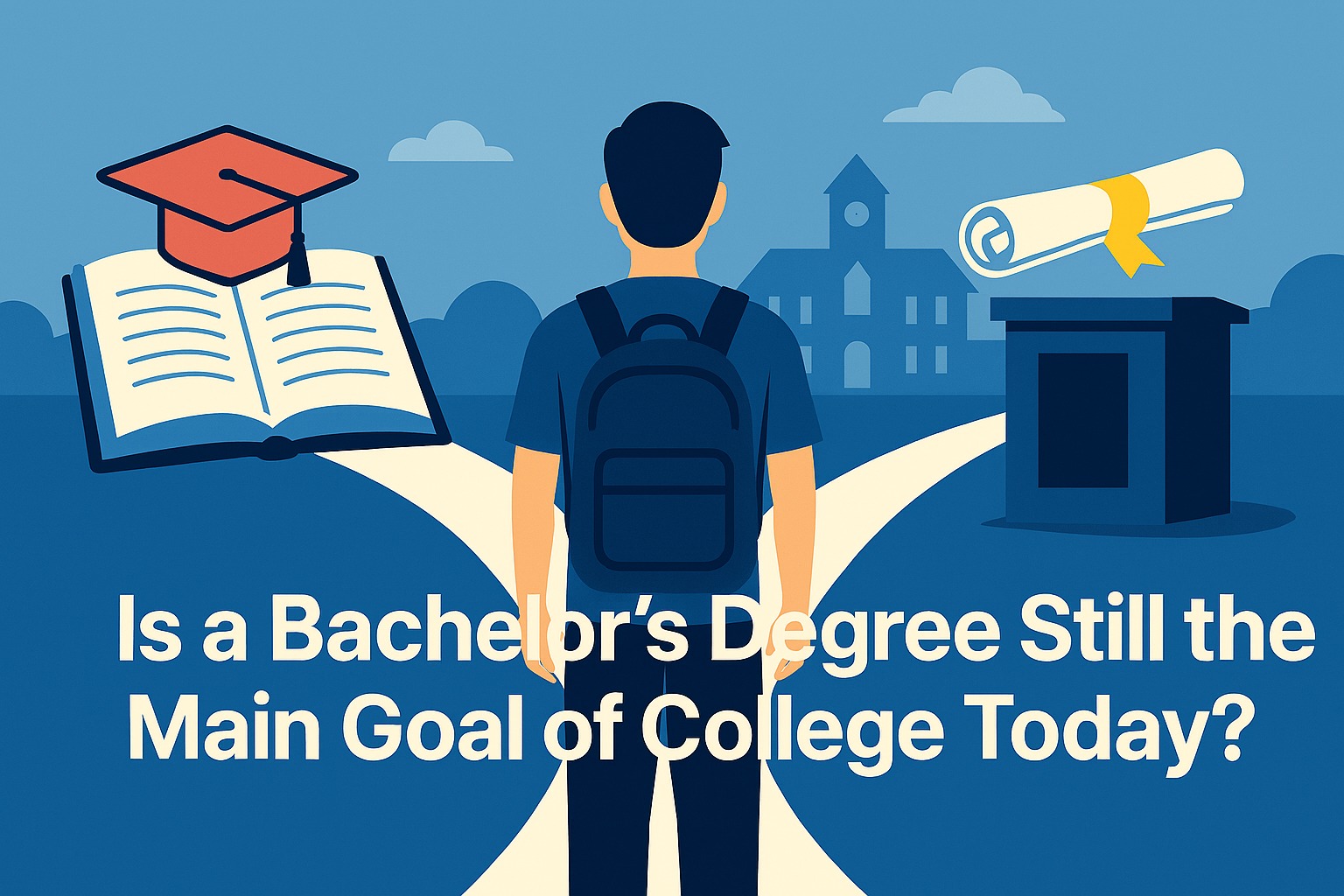
In today’s fast-paced and ever-changing world, the role of higher education and bachelor’s degrees is increasingly being questioned. In the past, earning a bachelor’s degree was considered a major achievement that opened doors to career success. However, in the modern era shaped by technological advancements and a dynamic job market, many are beginning to question whether a bachelor’s degree remains the primary goal of higher education.
CHANGING DEMANDS IN THE JOB MARKET
One factor driving this shift is the rapid transformation of the workforce. As industries—especially technology—evolve, many jobs no longer strictly require a bachelor’s degree. Employers are increasingly prioritizing practical skills and work experience over formal educational credentials.
For instance, in the tech and digital sectors, many successful professionals have built strong careers without holding formal degrees. Self-learning platforms have created opportunities for individuals to acquire valuable skills independently.
As a result, many people recognize that technical abilities and real-world experience are often more valued than a diploma alone. Therefore, the purpose of college is shifting from merely earning a degree to acquiring relevant skills and knowledge.
COLLEGE AS A PROCESS OF PERSONAL DEVELOPMENT
Despite this shift, many still believe that college plays a vital role in personal growth. Higher education fosters critical thinking, intellectual discussion, and character development. It provides space for students to explore their interests, build networks, and develop soft skills.
In this sense, a bachelor’s degree remains a symbol of intellectual achievement and personal commitment. However, students must avoid focusing solely on grades and credentials. College should be maximized for experiential learning and holistic development.
ALTERNATIVE EDUCATION PATHS
Today, alternative education options such as professional training programs, industry certifications, and skill-based bootcamps are increasingly popular. These programs often provide practical experience aligned with market needs.
Fields like information technology, graphic design, digital marketing, and project management frequently offer promising career paths even without traditional degrees. Additionally, rising tuition costs and lengthy study periods have led many to seek more flexible and affordable educational routes.
CONCLUSION: IS A BACHELOR’S DEGREE STILL RELEVANT?
While the job market has evolved and no longer always prioritizes formal degrees, a bachelor’s degree still holds value in certain professions such as law, medicine, and education. College remains a powerful environment for intellectual and personal growth.
However, in today’s era, a degree is not the only pathway to success. Practical skills, adaptability, and experience have become increasingly important. The true goal of college should not merely be earning a diploma, but acquiring relevant knowledge and competencies for long-term success.
Tentang Penulis
Gusti Ayu Tita
Penulis — Universitas STEKOM
Penulis aktif yang berfokus pada isu-isu akademik, teknologi pendidikan, dan pengembangan sumber daya manusia di lingkungan kampus.