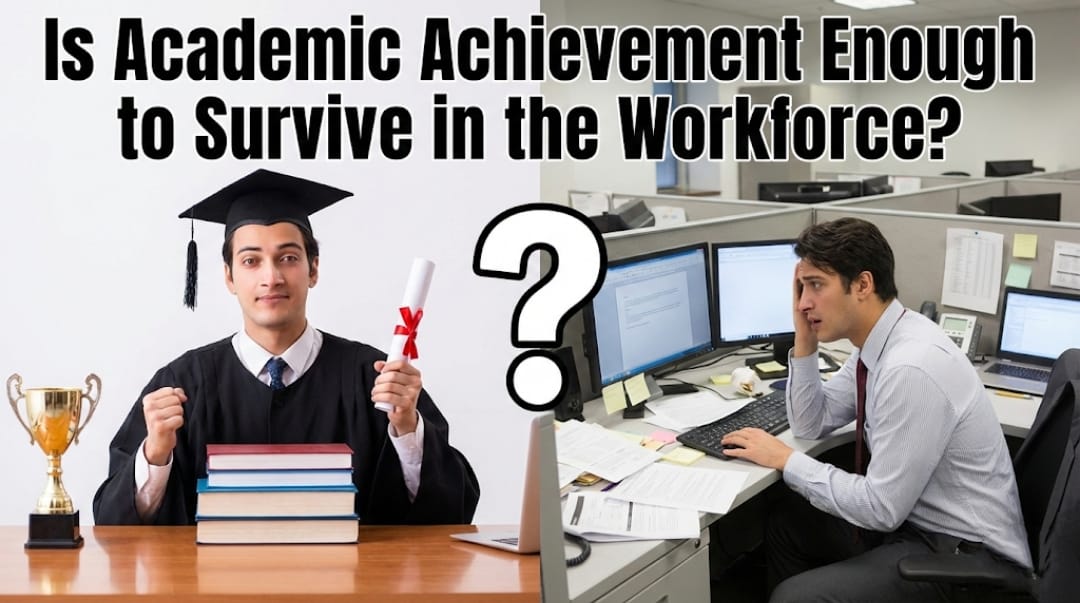
Academic achievement has long been considered a strong indicator of future success. Students who earn high grades are often praised for their intelligence, discipline, and commitment. Many believe that excelling in school automatically guarantees stability and growth in the professional world.
However, the reality of today’s workforce suggests a more complex picture. While academic excellence provides a valuable foundation, it may not be sufficient on its own to ensure long-term success at work.
THE VALUE OF ACADEMIC ACHIEVEMENT
Strong academic performance reflects important qualities. High-achieving students typically demonstrate critical thinking, time management, and the ability to meet deadlines. These competencies are relevant in many professional contexts.
Employers also recognize that academic success often indicates dedication and subject mastery. A solid GPA can open doors to interviews, internships, and entry-level opportunities. In competitive industries, academic records may even serve as initial screening criteria.
Yet, surviving and thriving in the workforce involves more than intellectual capability.
THE IMPORTANCE OF SOFT SKILLS
In professional environments, communication and collaboration are essential. Employees must work with diverse teams, manage conflicts, and present ideas clearly. These abilities are not always fully developed through traditional academic evaluation.
Soft skills such as emotional intelligence, adaptability, and leadership influence workplace performance. An individual may possess excellent technical knowledge but struggle to contribute effectively without strong interpersonal skills.
The workforce values balanced competence, where academic knowledge supports practical interaction.
ADAPTABILITY IN A CHANGING WORK ENVIRONMENT
Unlike academic systems with structured syllabi and predictable assessments, the workforce is dynamic. Market demands shift, technologies evolve, and organizational priorities change.
Employees are expected to adapt quickly and continuously learn new skills. Academic achievement demonstrates the ability to learn, but real-world adaptation requires flexibility beyond exam preparation.
Professionals who succeed are often those who combine knowledge with resilience and openness to change.
EXPERIENCE AND PRACTICAL APPLICATION
The ability to apply theoretical knowledge to real problems distinguishes academic learning from professional practice. Internships, part-time jobs, and project-based learning provide exposure to workplace realities.
Without hands-on experience, graduates may struggle to translate academic concepts into practical solutions. Surviving in the workforce depends on understanding how ideas function within real organizational contexts.
Experience strengthens confidence and bridges the gap between education and employment.
PROFESSIONAL MINDSET AND CONTINUOUS GROWTH
Academic systems reward measurable outcomes such as grades and certifications. In contrast, professional growth is often gradual and performance-based.
Employees must develop initiative, accountability, and long-term commitment. Surviving in the workforce requires persistence and willingness to improve beyond formal qualifications.
A professional mindset values feedback, collaboration, and ongoing development.
CONCLUSION
Academic achievement is an important asset, but it is not enough on its own to survive in the workforce. While strong grades reflect discipline and knowledge, professional success also depends on soft skills, adaptability, practical experience, and a growth-oriented mindset.
Students who complement academic excellence with real-world engagement and interpersonal competence are better prepared to navigate the challenges of modern employment.
Tentang Penulis
Gusti Ayu Tita
Penulis — Universitas STEKOM
Penulis aktif yang berfokus pada isu-isu akademik, teknologi pendidikan, dan pengembangan sumber daya manusia di lingkungan kampus.