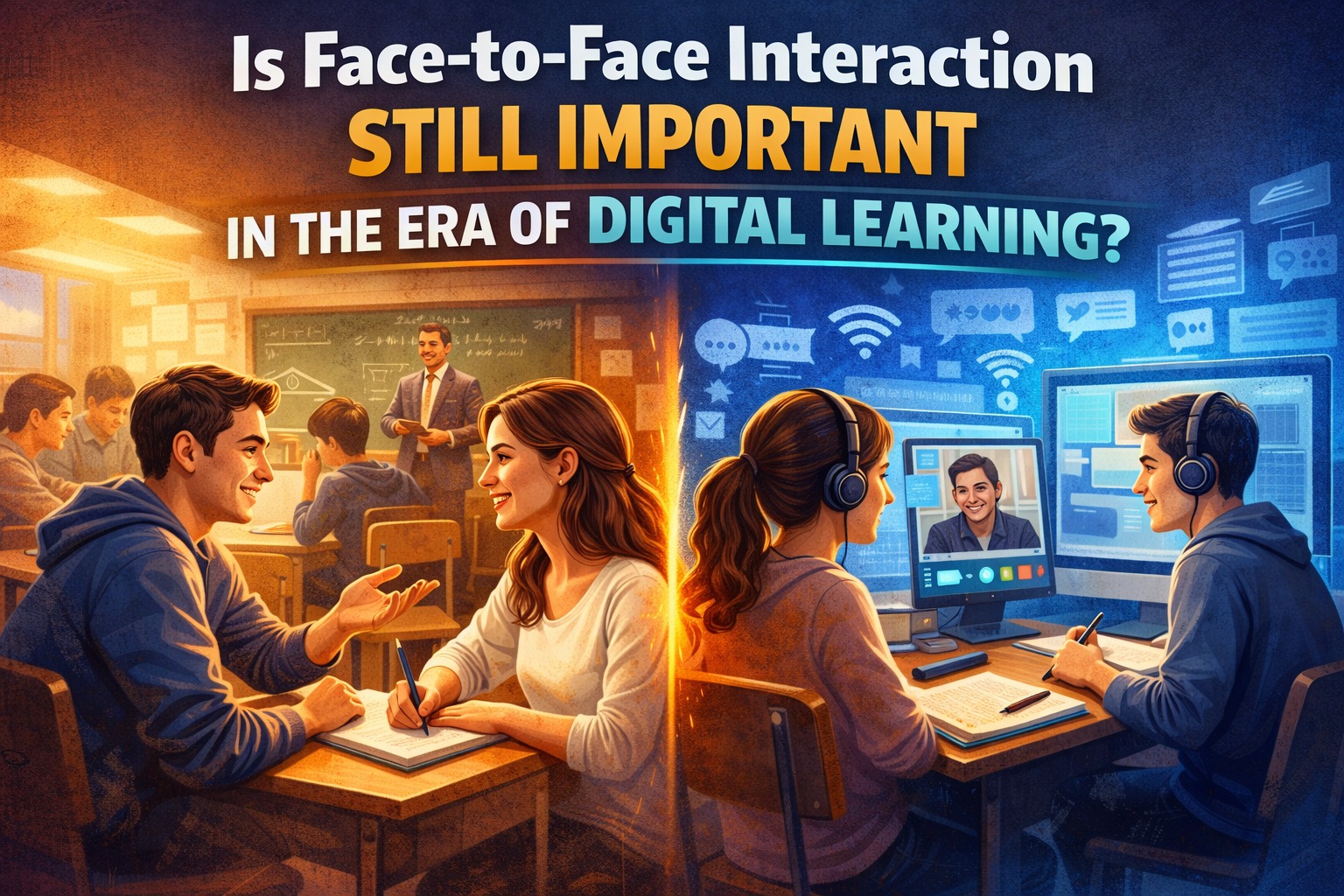
Technological advancements have significantly transformed the landscape of education. Digital learning has become an integral part of students’ daily academic lives, ranging from online lectures and virtual discussions to system-based examinations. Amid these conveniences, an important question arises: does face-to-face interaction still play a relevant role in today’s era of digital learning?
SHIFTS IN LEARNING PATTERNS IN HIGHER EDUCATION
Digital learning offers a high level of flexibility. Students can study from anywhere, access materials at any time, and adjust their learning pace according to personal needs. This model is often considered efficient, especially for students who have responsibilities outside campus life.
However, this shift has also brought significant changes to interaction patterns. Communication that once took place directly is now largely replaced by screens and text-based messages, which inevitably affects the quality of academic relationships.
THE MEANING OF FACE-TO-FACE INTERACTION IN THE LEARNING PROCESS
Face-to-face interaction is more than simply being physically present in a classroom. It involves nonverbal communication, spontaneous discussions, and emotional responses that are difficult to replicate through digital platforms. Through direct interaction, students can more easily grasp lecturers’ explanations, ask questions, and actively engage in discussions.
Moreover, face-to-face interaction helps build academic rapport, which plays an important role in long-term learning processes.
THE IMPACT OF DIGITAL LEARNING ON INTERACTION QUALITY
While digital learning expands access to education, it often reduces the intensity of interaction. Online discussions tend to be more rigid, time-limited, and not all students feel comfortable expressing their opinions in virtual settings.
This condition can affect both comprehension of the material and students’ emotional engagement in the learning process, particularly for those who rely on direct communication to understand concepts effectively.
THE ROLE OF FACE-TO-FACE INTERACTION IN SOFT SKILL DEVELOPMENT
Direct interaction within the campus environment plays a major role in shaping students’ soft skills. Communication abilities, teamwork, argumentation, and social adaptability are more easily developed through face-to-face encounters.
These soft skills are essential for the professional world and are difficult to cultivate optimally if the learning process relies solely on digital interaction.
BALANCING TECHNOLOGY AND HUMAN CONNECTION
The era of digital learning should not eliminate face-to-face interaction entirely. Technology should function as a supporting tool rather than a complete replacement for human connection in education.
A learning approach that combines digital instruction with in-person meetings allows students to gain flexibility while still experiencing more meaningful and holistic learning.
CHALLENGES IN MAINTAINING INTERACTION IN THE DIGITAL ERA
One of the biggest challenges is maintaining the quality of interaction amid rapid technological advancement. Busy schedules, independent learning habits, and reliance on digital platforms often cause face-to-face interaction to be viewed as less of a priority.
Without healthy interaction, however, the learning process risks becoming mechanical and losing its humanistic value.
CONCLUSION
Face-to-face interaction remains highly important in the era of digital learning. Although technology offers convenience and flexibility, direct interaction continues to play a vital role in building understanding, motivation, and students’ social skills. The best approach is not choosing one over the other, but integrating the strengths of digital learning with face-to-face interaction to ensure that education remains effective and human-centered.
Tentang Penulis
Gusti Ayu Tita
Penulis — Universitas STEKOM
Penulis aktif yang berfokus pada isu-isu akademik, teknologi pendidikan, dan pengembangan sumber daya manusia di lingkungan kampus.