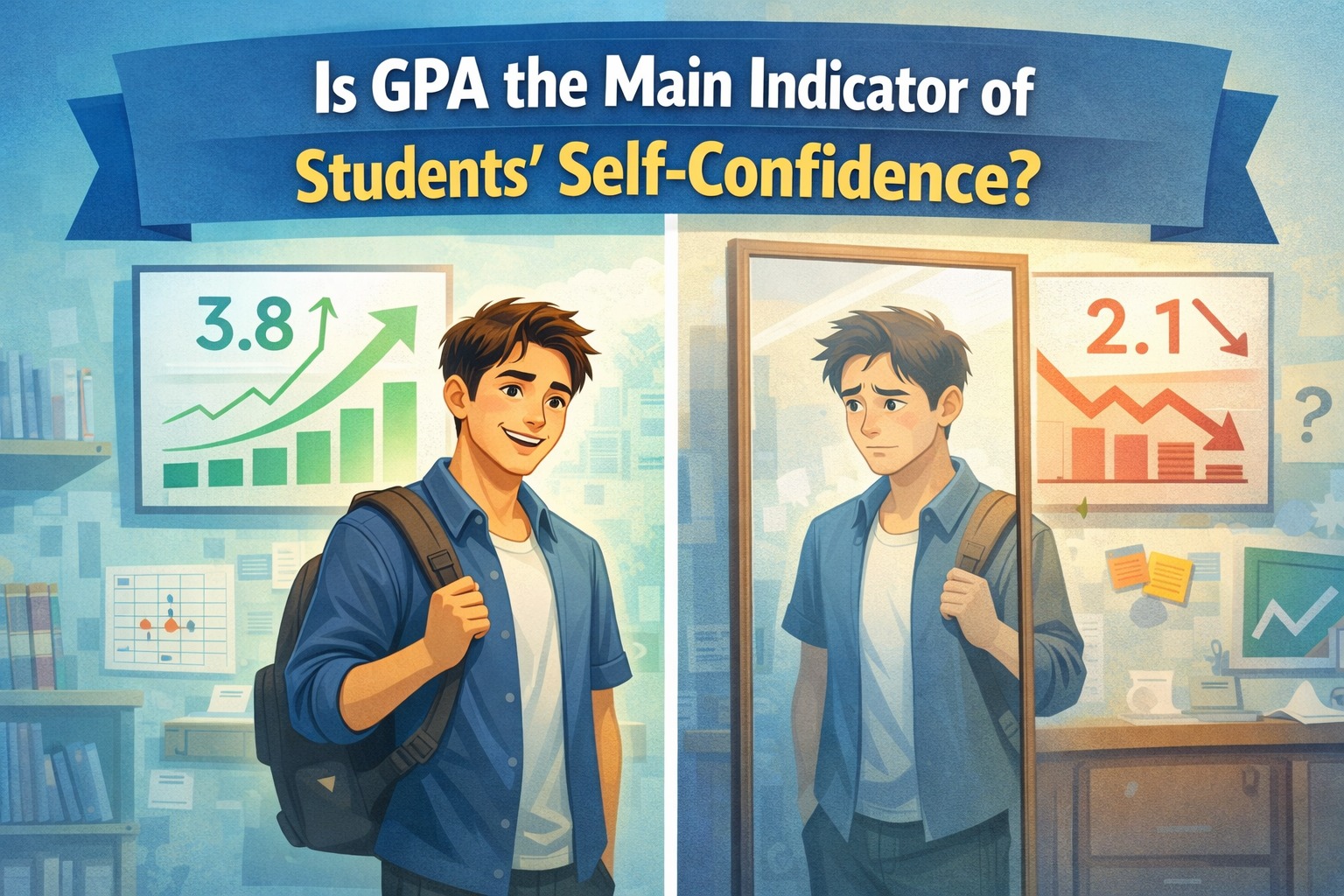
Grade Point Average (GPA) is often viewed as a reflection of students’ academic ability. On campus, GPA is frequently used to evaluate achievement, discipline, and potential. As a result, many students associate their GPA with their level of self-confidence. But is GPA truly the main indicator of students’ self-confidence?
THE MEANING OF GPA IN STUDENT LIFE
GPA represents the cumulative academic performance of students throughout their studies. Functionally, it serves as an evaluation tool and administrative requirement in academic activities. In practice, however, GPA often holds deeper meaning.
For some students, GPA symbolizes success and recognition. A high GPA increases confidence, while a low GPA is often perceived as failure, even though it does not always reflect true potential.
THE CONNECTION BETWEEN GPA AND SELF-CONFIDENCE
Self-confidence is the belief in one’s abilities and self-worth. GPA can influence confidence because it is a formal academic assessment. Students with high GPA tend to participate actively, express opinions confidently, and face academic challenges more boldly.
However, this relationship is not absolute. Many students with moderate or low GPA still maintain strong self-confidence by recognizing strengths beyond academics.
THE INFLUENCE OF CAMPUS AND SOCIAL ENVIRONMENT
Campus culture plays a major role in shaping how GPA affects students’ confidence. Highly competitive environments that focus solely on academic results can make students feel judged by their GPA alone. This may weaken confidence among those who do not meet certain standards.
Conversely, inclusive environments that appreciate diverse achievements—such as leadership, creativity, and organizational skills—help students build confidence without relying solely on GPA.
GPA IS NOT THE ONLY MEASURE OF SELF-CONFIDENCE
Viewing GPA as the main determinant of self-confidence is a misconception. Healthy self-confidence develops through experience, social skills, personal achievements, and self-acceptance. GPA reflects only academic performance, not overall personal value.
Students who separate academic results from self-worth tend to have greater emotional stability and confidence.
BUILDING CONFIDENCE BEYOND GPA
To develop balanced self-confidence, students should cultivate abilities outside academics. Joining organizations, social activities, competitions, and skill development programs helps students recognize personal strengths.
In this way, GPA remains important as an academic evaluation but does not become the sole source of confidence.
CONCLUSION
GPA does influence students’ self-confidence, especially in academic contexts. However, it is not the primary determinant. Strong confidence emerges from holistic self-understanding, environmental support, and appreciation of both academic and non-academic achievements.
Tentang Penulis
Gusti Ayu Tita
Penulis — Universitas STEKOM
Penulis aktif yang berfokus pada isu-isu akademik, teknologi pendidikan, dan pengembangan sumber daya manusia di lingkungan kampus.