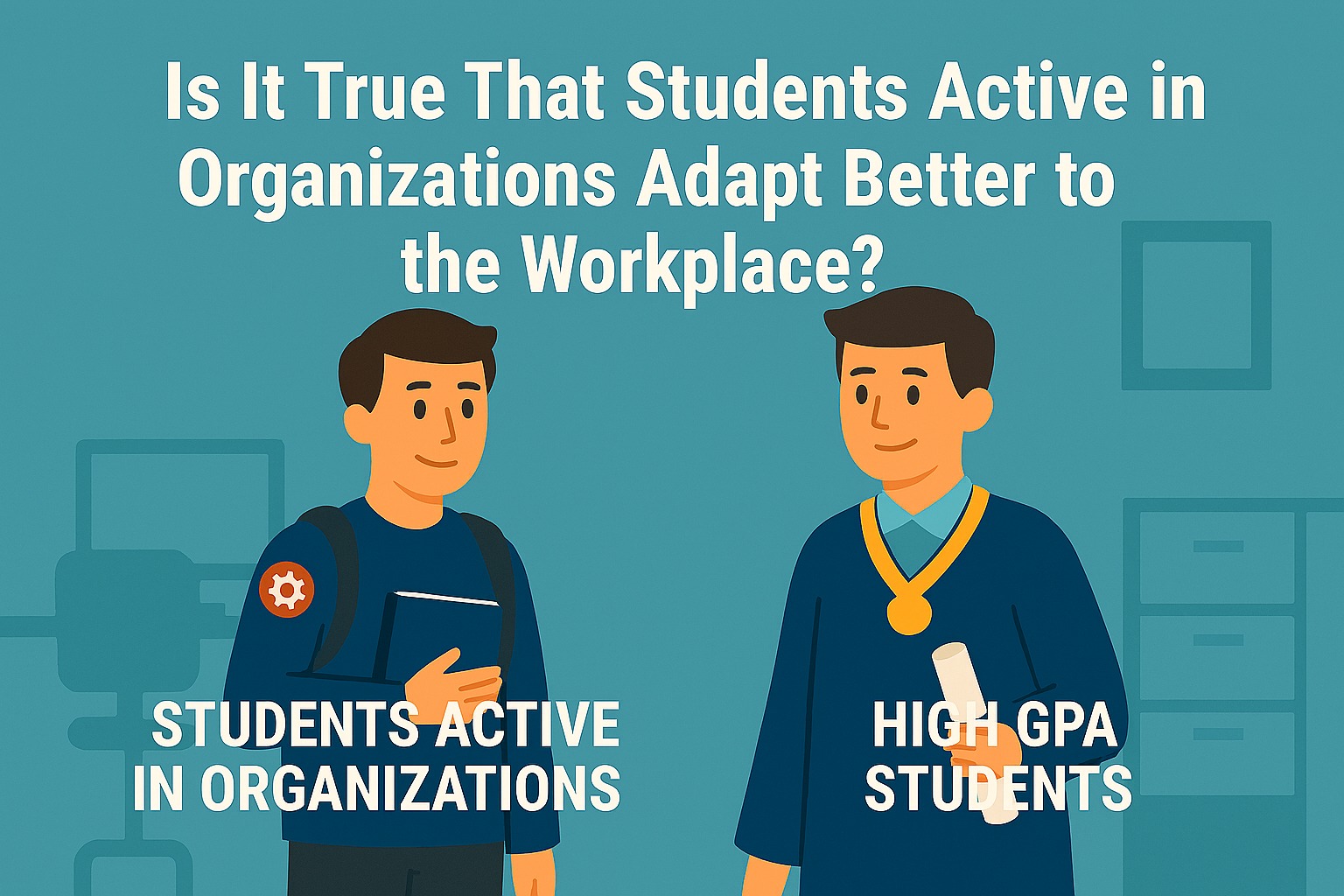
Entering the workforce is often a challenging phase for many fresh graduates. The transition from campus life to a professional environment requires strong adaptability. Many people believe that students who are active in organizations adapt more easily to the workplace compared to those who focus only on academic activities
This assumption arises because organizational involvement is believed to develop various important skills needed in professional life. But is this assumption accurate? To answer this question, it is necessary to understand how organizational experience influences someone’s readiness to face the workplace.
ORGANIZATIONAL EXPERIENCE TRAINS SOCIAL SKILLS
One of the main advantages of joining organizations during college is the opportunity to interact with many people. Students who are active in organizations often collaborate with team members, participate in meetings, and communicate with different parties.
This experience helps them develop social skills that are essential in professional environments. In the workplace, employees rarely work alone; they must collaborate with colleagues, supervisors, and clients.
The ability to communicate and build good professional relationships becomes a key factor that helps someone adapt more easily in the workplace.
BUILDING TEAMWORK SKILLS
Almost every campus organization involves teamwork in carrying out programs or activities. Students involved in organizations become accustomed to sharing responsibilities, discussing solutions, and solving problems together.
These teamwork skills are highly relevant in the workplace. Many companies rely on collaboration among teams to complete projects or achieve targets.Students who are already used to teamwork during college often find it easier to adjust to work systems that require coordination and effective communication.
DEVELOPING THE ABILITY TO HANDLE CHALLENGES
Organizational activities often present unexpected challenges. For example, sudden changes in event plans, differences in opinions among members, or limited time to complete tasks.
Such situations help students learn to face problems directly. They are trained to find solutions, make decisions, and remain calm under pressure.These abilities become extremely valuable in professional environments, where challenges and problem-solving situations frequently occur.
ACADEMIC PERFORMANCE STILL MATTERS
Although organizational experience provides many benefits, academic performance still plays an important role. Knowledge gained during college forms the foundation for understanding the field of work someone will pursue.
Companies generally look for candidates who not only have strong social skills but also possess sufficient academic knowledge. Therefore, students should maintain a balance between organizational involvement and academic performance.
By having both, students can demonstrate that they possess well-rounded competencies required in professional environments.
BALANCE IS THE KEY TO CAREER READINESS
Students who successfully combine organizational experience with academic achievements often have a greater advantage. They possess not only technical knowledge from formal education but also interpersonal skills developed through organizational activities.
The ability to manage time between academic responsibilities and organizational commitments also shows that students can handle responsibilities effectively. This is a positive trait that many employers value.
With this balance, students can prepare themselves more thoroughly to face workplace challenges.
CONCLUSION
The assumption that students active in organizations adapt more easily to the workplace has a strong basis. Organizational experience helps students develop essential skills such as communication, teamwork, time management, and the ability to face challenges.
However, academic performance remains an important foundation in building a career. Therefore, students who can balance organizational involvement with academic achievements usually have better readiness when entering professional environments.
By using their college years to learn academically while also developing themselves through various activities, students can build a strong foundation for success in the workforce.
Tentang Penulis
Gusti Ayu Tita
Penulis — Universitas STEKOM
Penulis aktif yang berfokus pada isu-isu akademik, teknologi pendidikan, dan pengembangan sumber daya manusia di lingkungan kampus.