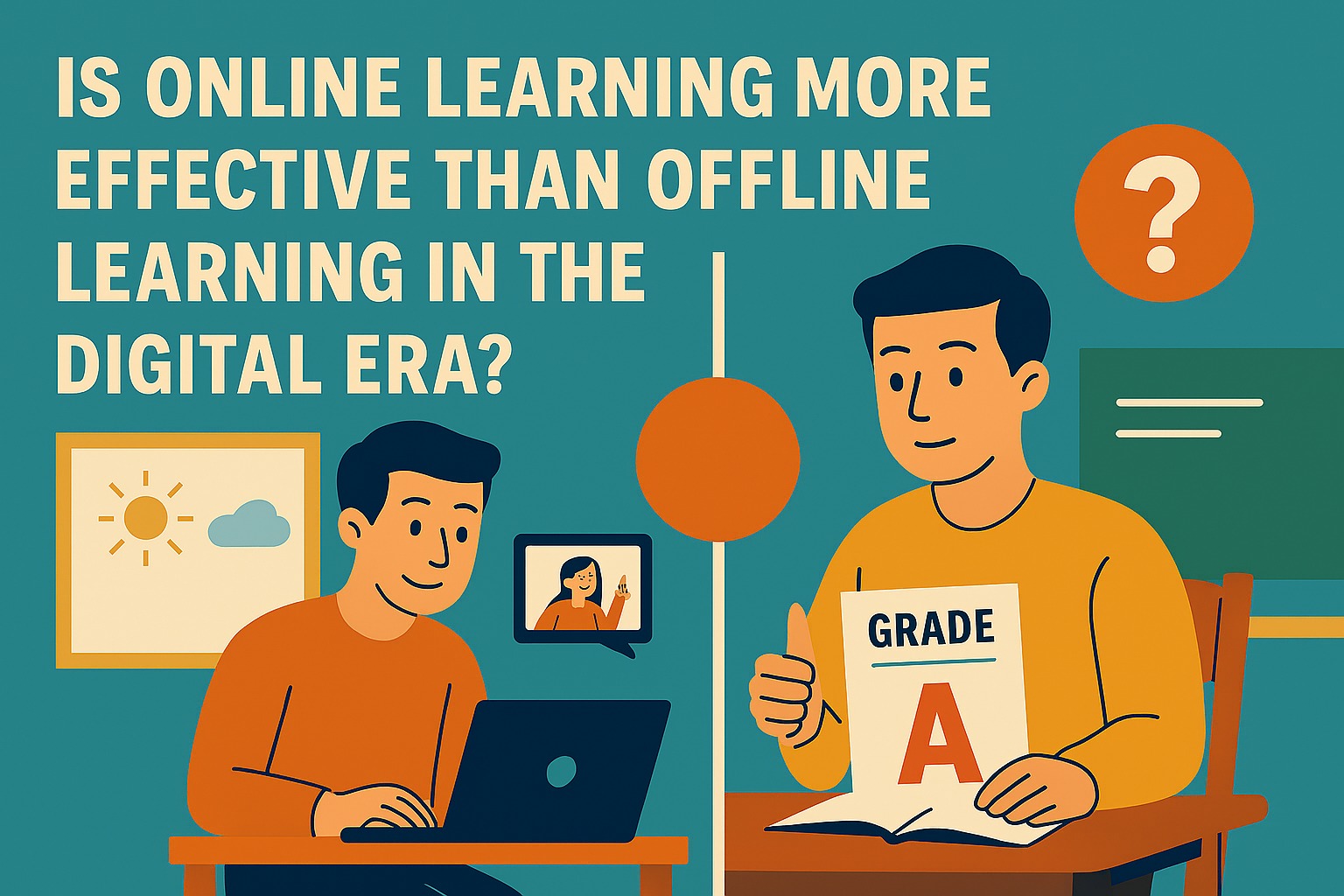
The digital era has transformed nearly every aspect of human life, including how people access education. With the rapid growth of technology and internet connectivity, online learning has become a mainstream alternative to traditional classroom education. Many schools and universities now offer virtual courses alongside face-to-face instruction. This shift raises an important question: is online learning more effective than offline learning in today’s digital world?
To answer this, it is essential to explore the strengths and weaknesses of both methods and understand how they meet the needs of modern learners.
FLEXIBILITY AND ACCESSIBILITY
One of the strongest advantages of online learning is flexibility. Students can access materials anytime and from anywhere, as long as they have an internet connection. This flexibility is especially helpful for working professionals, parents, or students who live far from educational institutions. They can manage their own schedules and learn at their own pace.
In contrast, offline learning usually requires students to attend classes at specific times and locations. While this structure can help with discipline, it may not be convenient for everyone. Travel time, transportation costs, and fixed schedules can become obstacles for some learners.
However, accessibility in online learning also depends on reliable internet access and suitable devices. In regions where digital infrastructure is limited, offline learning may still be more practical and inclusive.
INTERACTION AND ENGAGEMENT
Offline learning often provides richer direct interaction between teachers and students. Face-to-face communication allows immediate feedback, non-verbal cues, and spontaneous discussions. Group activities and classroom debates can create a dynamic learning atmosphere that motivates students.
Online learning platforms have improved significantly, offering video conferences, discussion forums, and interactive quizzes. These tools help maintain communication and collaboration. Yet, some students may feel isolated or less engaged when learning through a screen. Technical issues or distractions at home can also reduce concentration.
Therefore, while online learning offers digital interaction, offline learning may still have an advantage in building strong social connections and classroom engagement.
COST AND RESOURCE EFFICIENCY
From a financial perspective, online learning can be more cost-effective. Students may save money on transportation, accommodation, and printed materials. Institutions can also reduce operational costs such as classroom maintenance and physical facilities.
On the other hand, offline learning provides access to campus facilities like libraries, laboratories, and study spaces that enhance practical experience. Certain subjects, especially those requiring hands-on practice, may be more effective when taught in person.
In the digital era, many institutions adopt a blended approach, combining online resources with offline practice. This hybrid model seeks to maximize efficiency while maintaining quality.
LEARNING OUTCOMES AND PERSONAL DISCIPLINE
The effectiveness of any learning method ultimately depends on the learner’s commitment. Online learning demands strong self-discipline, time management, and motivation. Without direct supervision, some students may struggle to stay focused and complete assignments on time.
Offline learning provides a structured environment that can help students develop consistent study habits. Regular schedules and physical presence in class often encourage accountability.
Research and practical experience suggest that neither method is universally superior. Instead, effectiveness depends on the subject matter, teaching quality, technological support, and individual learning style.
CONCLUSION
In the digital era, online learning offers flexibility, accessibility, and cost efficiency that align well with modern lifestyles. However, offline learning continues to provide valuable face-to-face interaction, structured environments, and practical experiences. Rather than asking which method is more effective in general, it may be more accurate to consider which method is more effective for specific needs and contexts.
A balanced combination of online and offline learning may represent the most effective solution. By integrating technology with traditional teaching methods, education systems can adapt to the demands of the digital age while maintaining meaningful human interaction.
Tentang Penulis
Gusti Ayu Tita
Penulis — Universitas STEKOM
Penulis aktif yang berfokus pada isu-isu akademik, teknologi pendidikan, dan pengembangan sumber daya manusia di lingkungan kampus.