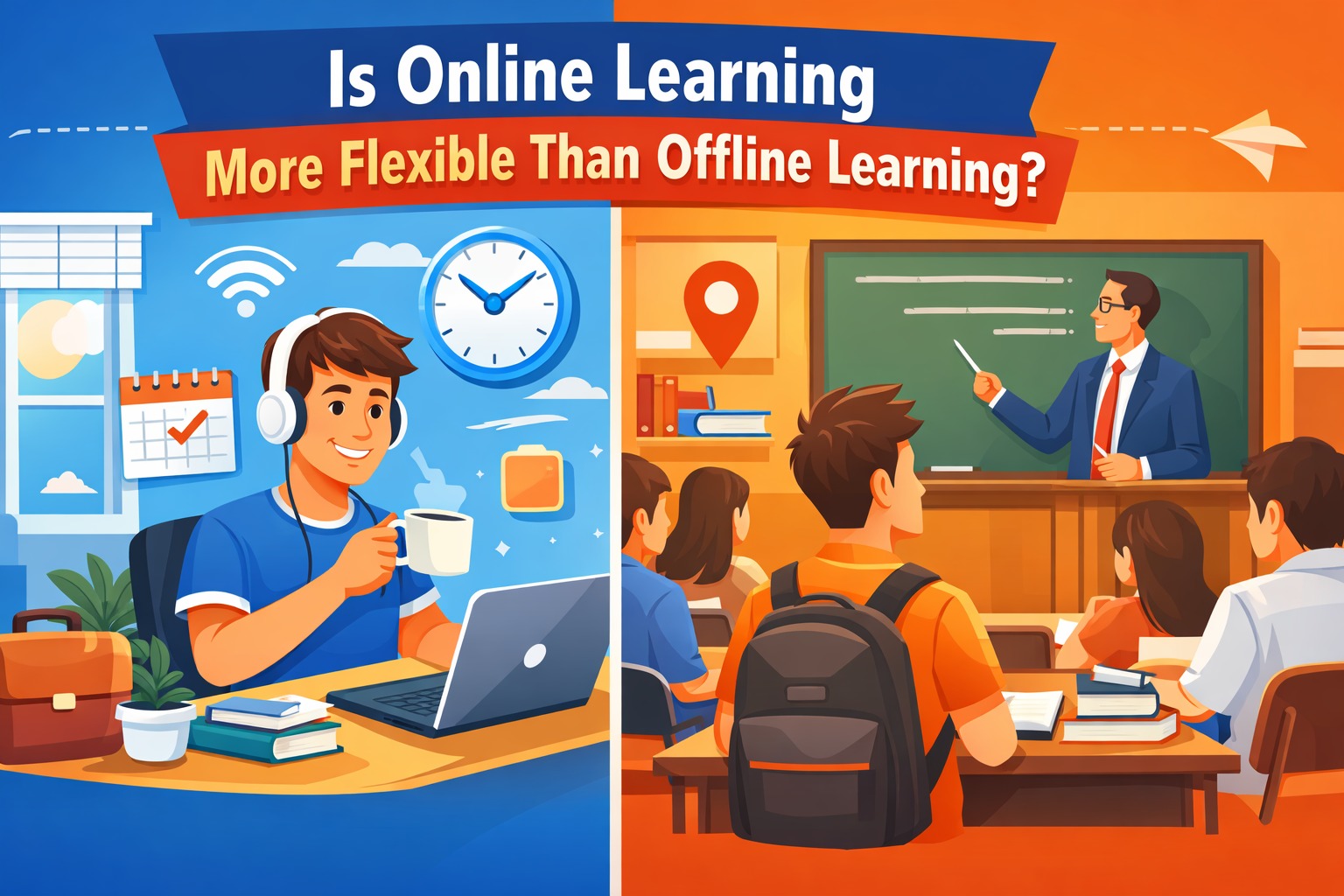
In recent years, the debate between online learning and offline learning has become increasingly relevant. Many students, educators, and institutions are asking the same question: Is online learning more flexible than offline learning? With the rapid development of digital technology, learning is no longer limited to traditional classrooms. However, flexibility means different things to different learners.
This article explores the flexibility of online learning compared to offline learning, including time management, location, learning pace, and overall accessibility.
Understanding Flexibility in Education
Flexibility in education refers to how easily students can manage their learning schedule, location, pace, and resources. A flexible learning system allows students to balance their academic responsibilities with personal life, work, and other commitments.
When comparing online and offline learning, flexibility is often the main factor students consider before choosing their preferred mode of study.
Time Flexibility: Learning Anytime
One of the biggest advantages of online learning is time flexibility. Most online courses provide recorded lectures, digital materials, and discussion forums that students can access anytime. This allows learners to:
- Study at their own pace
- Rewatch difficult lessons
- Learn during their most productive hours
- Balance part-time jobs or family responsibilities
In contrast, offline learning usually follows a fixed schedule. Students must attend classes at specific times, which can limit their ability to manage other activities.
Conclusion on time flexibility: Online learning offers greater freedom in managing study time.
Location Flexibility: Learning Anywhere
Online learning removes geographical barriers. Students can attend classes from home, a café, or even while traveling.
This is especially beneficial for:
- Students living in remote areas
- Working professionals
- International learners
Offline learning requires physical attendance in a classroom or campus. This means students must commute daily, which can consume time and money.
Conclusion on location flexibility: Online learning clearly provides more location freedom.
Learning Pace and Personalization
Online platforms often allow students to move through materials at their own speed. Fast learners can complete modules quickly, while others can take more time to understand the content.
Offline learning, however, usually follows a standardized pace determined by the lecturer. Students who struggle may find it difficult to keep up, while advanced learners may feel limited.
In terms of pace flexibility, online learning has a strong advantage.
Structured Environment vs Flexible Environment
While online learning offers flexibility, offline learning provides structure.
Some students perform better with:
- Fixed schedules
- Face-to-face interaction
- Immediate feedback from lecturers
- Direct classroom discussions
Too much flexibility in online learning can sometimes lead to procrastination, lack of discipline, or reduced focus. Therefore, flexibility does not always guarantee better results.
Technology and Accessibility Factors
Online learning depends heavily on stable internet access and digital devices. Students without reliable technology may face challenges.
Offline learning, on the other hand, does not require advanced technical skills or strong internet connections. This makes it more accessible in certain regions.
Therefore, flexibility in online learning is highly beneficial—but only when technological support is available.
So, Is Online Learning More Flexible?
Yes, in most aspects—especially time, location, and pace—online learning is more flexible than offline learning. It allows students to customize their learning experience according to their personal needs and lifestyle.
However, flexibility also requires strong self-discipline, motivation, and proper technological access. Offline learning may be less flexible, but it provides structure and direct interaction that some students need to succeed.
Ultimately, the best choice depends on individual learning styles, goals, and circumstances.
Final Thoughts
Online learning offers significant flexibility advantages compared to offline learning. It empowers students to control when, where, and how they study. However, flexibility must be balanced with responsibility and commitment to achieve optimal learning outcomes.
As education continues to evolve, blended learning—combining both online and offline methods—may become the most effective solution for modern students.
Tentang Penulis
Gusti Ayu Tita
Penulis — Universitas STEKOM
Penulis aktif yang berfokus pada isu-isu akademik, teknologi pendidikan, dan pengembangan sumber daya manusia di lingkungan kampus.