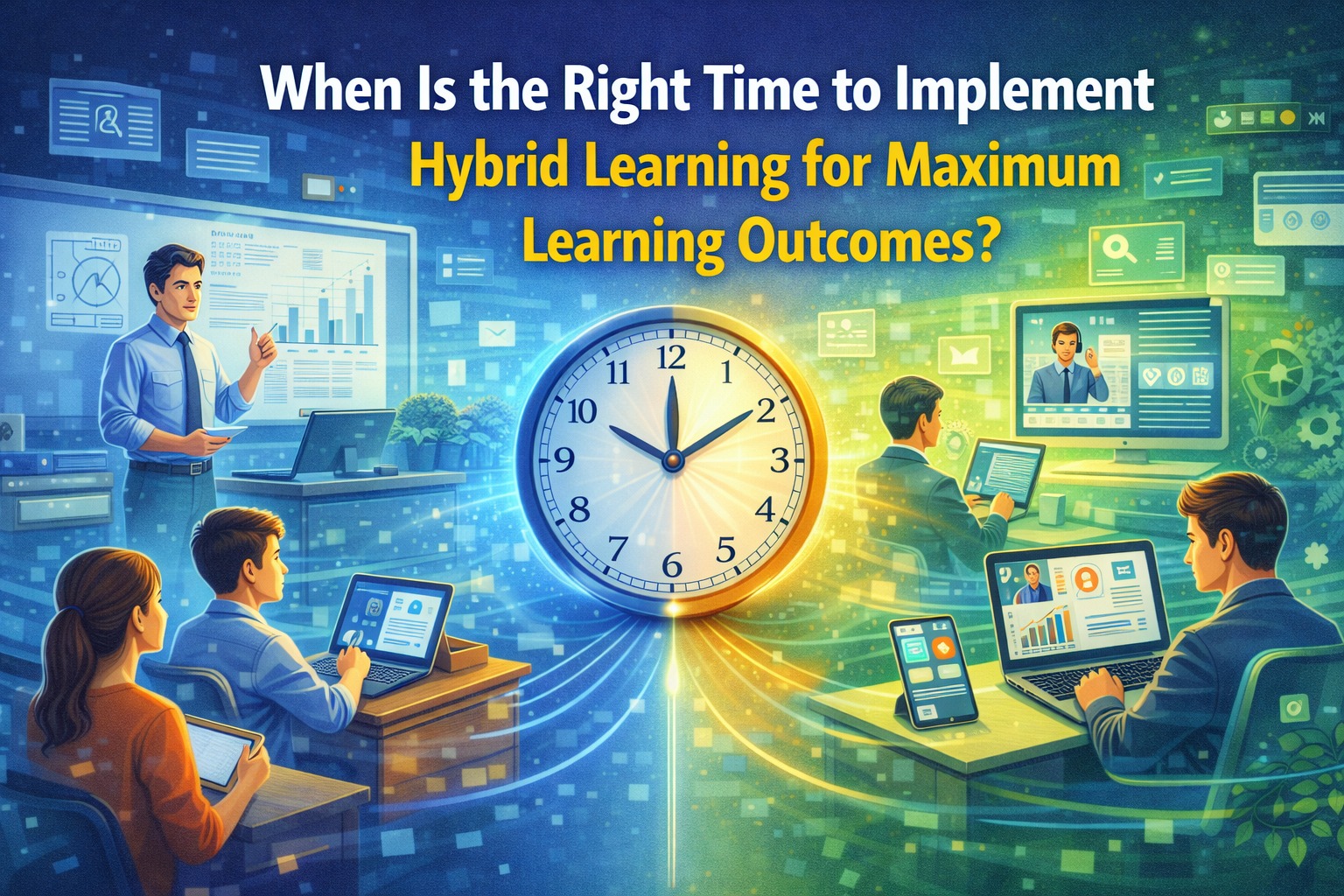
In recent years, hybrid learning has become one of the most discussed educational methods. By combining online and face-to-face learning, it offers both flexibility and effectiveness.
However, an important question arises: When is the right time to implement hybrid learning to achieve optimal learning outcomes?
What Is Hybrid Learning?
Hybrid learning is a learning model that combines classroom-based instruction with online learning. Its purpose is to balance digital flexibility with direct interaction between educators and learners.
This model is widely used in universities, training institutions, and secondary schools, especially in today’s digital era.
When Is the Right Time to Apply Hybrid Learning?
1. When Learners Are Familiar with Digital Technology
Hybrid learning works best when students are comfortable using digital devices and online platforms such as Google Classroom or Microsoft Teams.
2. When Learning Materials Require Interaction and Practice
Subjects involving laboratory work, group discussions, or project presentations benefit from a combination of online theory and offline practice.
3. When Time and Location Become Constraints
Hybrid learning is ideal when geographic distance or scheduling issues prevent consistent physical attendance.
4. When Educational Institutions Have Adequate Infrastructure
Stable platforms, reliable internet access, and trained educators signal the ideal time to fully implement hybrid learning.
How to Make Hybrid Learning More Effective
To maximize learning outcomes:
- Design a balanced curriculum for online and face-to-face activities.
- Use interactive technologies such as learning videos, discussion forums, and online quizzes.
- Maintain active communication between educators and learners.
- Conduct regular evaluations to improve the system.
Conclusion
Hybrid learning can be an ideal solution in modern education—when applied at the right time and under the right conditions.
It is most effective when learners are technologically ready, materials require flexibility, and institutions have sufficient infrastructure.
With careful planning, hybrid learning becomes not just a trend, but a future-oriented learning strategy that maximizes learning outcomes.
**Keywords:**
Tentang Penulis
Gusti Ayu Tita
Penulis — Universitas STEKOM
Penulis aktif yang berfokus pada isu-isu akademik, teknologi pendidikan, dan pengembangan sumber daya manusia di lingkungan kampus.