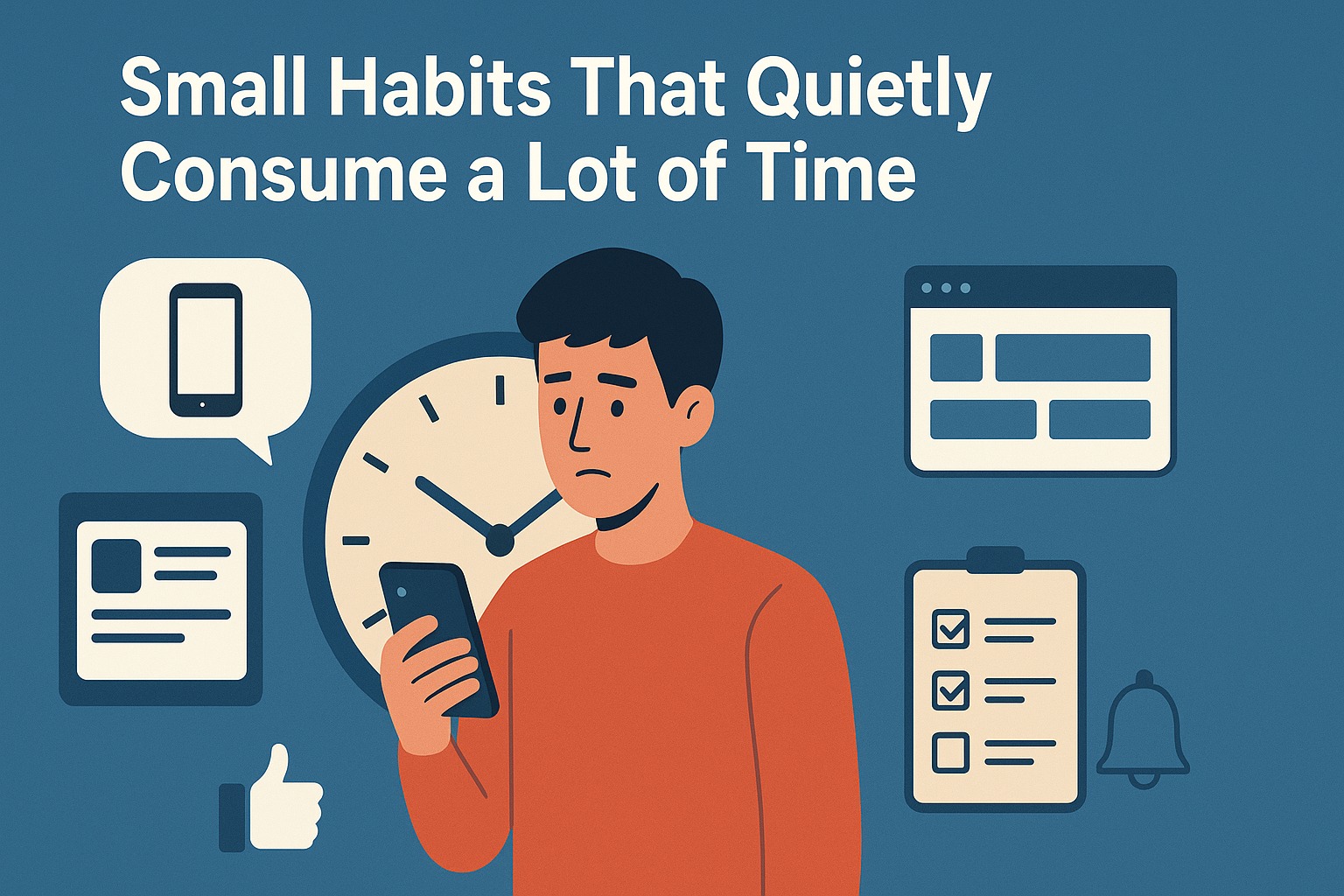
Small habits often seem trivial, but it is precisely these little things that silently consume most of our time. Many people feel they have worked hard all day, yet the results don’t match the effort because their productive hours are scattered by light routines they never account for. This article helps us understand how small habits can become “time thieves” and how to control them.
Small Habits That Often Consume Time
There are many small habits that seem harmless, such as checking your phone every few minutes, changing songs repeatedly, opening social media “just for a moment,” or delaying tasks because you feel you need a quick break. Each one feels insignificant, but when combined, they can take up dozens of minutes—even hours—every single day.
Why Are Small Habits More Dangerous Than Big Challenges?
The reason is simple: we rarely notice them. Big challenges make us extra alert, while small ones catch us off guard. We feel like it’s fine to delay something for five minutes, but the brain needs extra time to regain focus after being distracted. This is what quietly lowers productivity without us realizing it.
How to Control Small Habits So They Don’t Waste Your Time
The first step is to identify which small habits most often “steal” your time. Once you’re aware, try reducing them gradually. Set small rules for yourself—such as specific times to check your phone, reducing multitasking, using a focus timer, or creating a daily priority list. When managed well, these small habits can give back a significant amount of productive time that has been lost.
Tentang Penulis
Gusti Ayu Tita
Penulis — Universitas STEKOM
Penulis aktif yang berfokus pada isu-isu akademik, teknologi pendidikan, dan pengembangan sumber daya manusia di lingkungan kampus.