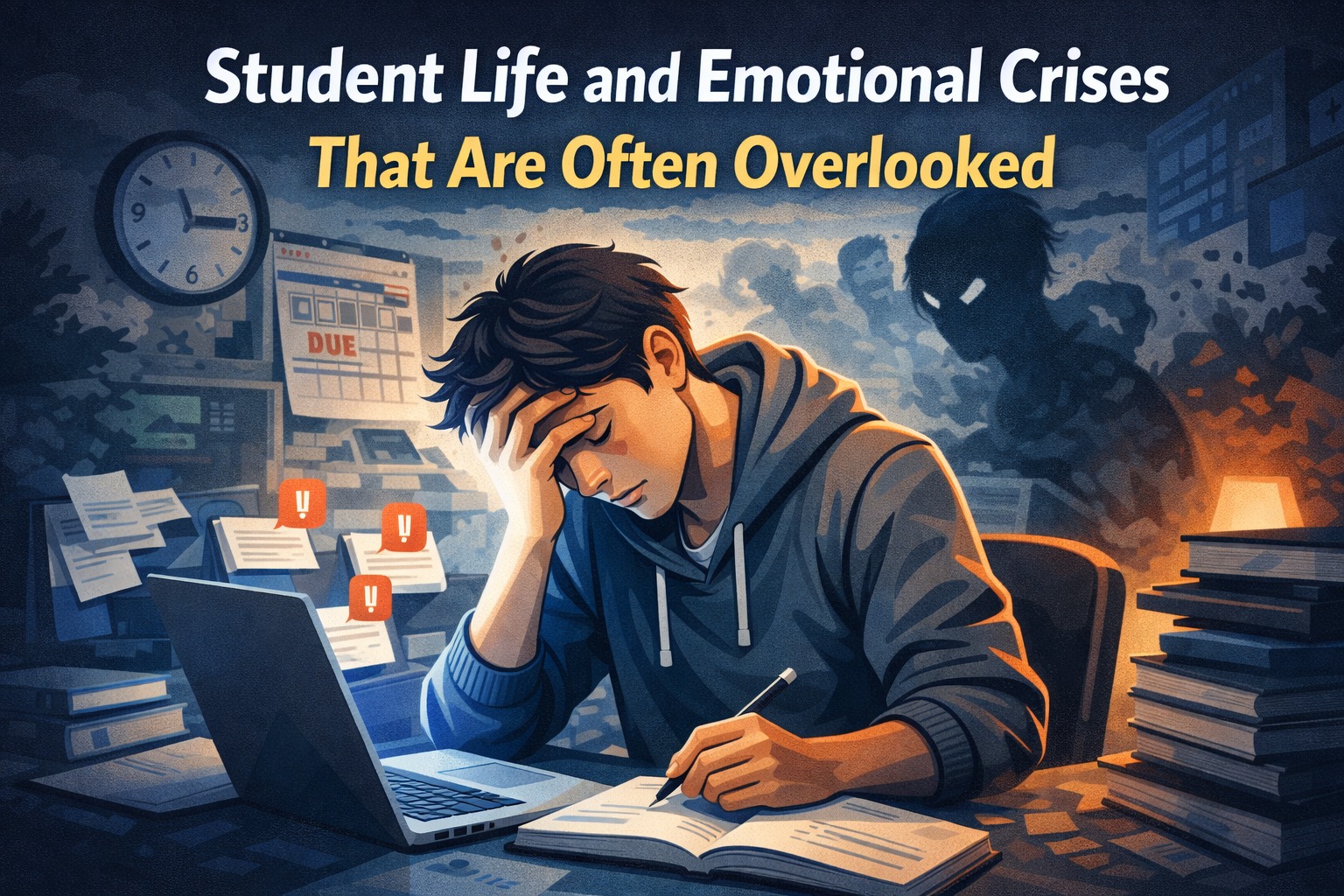
Student life is often perceived as the most enjoyable phase in a person’s journey. Campus activities, friendships, and the freedom to determine one’s future path frequently become the main highlights. However, behind these dynamics, many students silently experience emotional crises that are rarely recognized, let alone openly discussed. These emotional crises are not just temporary sadness, but psychological conditions that arise from accumulating academic, social, and personal pressures. Unfortunately, this issue is still often underestimated and seen as a normal part of the maturation process.
THE EMOTIONAL REALITY OF STUDENTS BEHIND CAMPUS ACTIVITIES
Students are expected to always appear active, productive, and capable of managing everything independently. At the same time, they are in a phase of identity exploration filled with uncertainty. Environmental changes, new role demands, and pressure from expectations often trigger internal conflicts.
Many students choose to hide their emotional exhaustion to maintain an image of being strong. As a result, emotions remain suppressed without healthy outlets and eventually develop into prolonged stress.
ACADEMIC PRESSURE AS A TRIGGER FOR EMOTIONAL CRISIS
Heavy coursework, tight deadlines, and academic performance demands are among the main triggers of emotional crises in students. Educational systems that emphasize academic achievement often overlook individual mental readiness.
When results do not meet expectations, students may experience disappointment, anxiety, and even a loss of self-confidence. In the long term, unmanaged academic pressure can affect emotional well-being and learning motivation.
LONELINESS AND FEELING MISUNDERSTOOD
Even in crowded environments, many students feel lonely. Being far from family, having friendships that are not always supportive, and the lack of safe spaces to share make students feel alone in facing their problems.
These feelings of being misunderstood are often ignored because they are considered trivial. In fact, prolonged loneliness can worsen emotional conditions and trigger mental health issues.
STIGMA TOWARD EMOTIONAL EXPRESSION
One reason student emotional crises are rarely discussed is stigma. Expressing sadness, anxiety, or fatigue is often seen as a sign of weakness. The culture of “having to be strong” makes students reluctant to seek help or even simply share their feelings.
As a result, many students choose to suppress their emotions until they reach a breaking point. In reality, acknowledgment and emotional support are basic human needs in the development process.
THE IMPORTANCE OF AWARENESS AND ENVIRONMENTAL SUPPORT
Ignoring students’ emotional crises can have serious consequences, both for academic performance and overall quality of life. Therefore, collective awareness is needed that emotional health is just as important as academic achievement.
Campuses, families, and social environments need to create safe spaces for discussion without judgment. Students also need to be encouraged to recognize, accept, and manage their emotions in healthy ways in order to experience a more balanced college life.
Tentang Penulis
Gusti Ayu Tita
Penulis — Universitas STEKOM
Penulis aktif yang berfokus pada isu-isu akademik, teknologi pendidikan, dan pengembangan sumber daya manusia di lingkungan kampus.