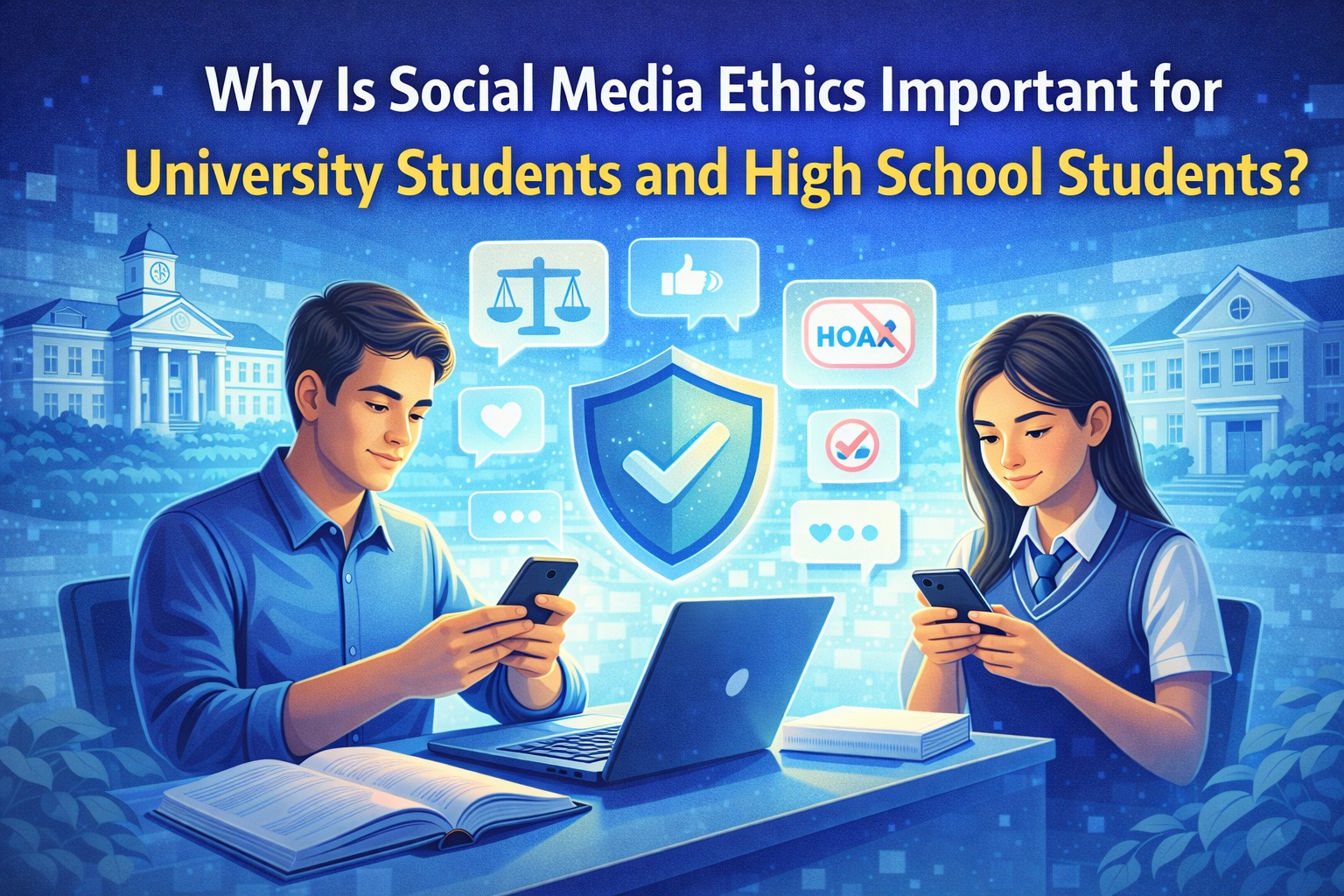
In today’s digital era, social media has become an essential part of daily life, including for university students and high school students. Social media makes communication easier, enables information sharing, and provides access to a wide range of knowledge. However, behind this convenience lies the challenge of using social media wisely and responsibly. One crucial aspect that must be considered is social media ethics. So, why is social media ethics important for students? This article explains several reasons why ethical behavior on social media is vital for them.
1. Building a Positive Self-Image
One of the main reasons social media ethics is important is that social media reflects our digital self-image. Whether this image is positive or negative depends on how we interact and communicate on these platforms.
- Digital Reputation:
University students and high school students who are building their academic and social careers must realize that every post or comment they make can affect their reputation. Careless posts or offensive comments can damage personal image and even affect future academic or career opportunities.
- First Impressions:
Lecturers, potential employers, or colleagues often search for information about someone through social media. Therefore, it is important to ensure that social media accounts reflect positive, professional behavior and good character.
2. Preventing the Spread of Misinformation
Social media ethics is also essential in maintaining the integrity of shared information. Students are often exposed to various issues that require accurate understanding.
- The Spread of Hoaxes:
Without caution, individuals may unknowingly become part of misinformation (hoaxes). As educated individuals, students have a moral responsibility to filter and verify information before sharing it.
- Social Responsibility:
Social media is not only a platform for expressing opinions but also a source of information for many people. Therefore, ethical behavior requires ensuring that shared content is truthful and accountable.
3. Respecting Privacy and the Rights of Others
One aspect often overlooked is the importance of respecting others’ privacy on social media. Social media ethics teaches users to understand boundaries between sharing personal content and respecting others’ private spaces.
* Being Careful When Sharing Content:
Not everything should be shared online. Posting photos or videos of friends without permission or discussing others without considering the consequences can harm individuals and violate their privacy rights.
* Handling Sensitive Content:
Content that seems harmless may involve sensitive personal information. Understanding this and sharing responsibly is a key part of social media ethics.
4. Avoiding Conflict and Disputes in the Digital Space
Social media can facilitate constructive discussion, but it can also trigger conflict if not used carefully. Students often interact with people from diverse backgrounds, beliefs, and perspectives, making ethical communication essential.
- Avoiding Negative Comments:
Social media often becomes a space for heated debates. Ethics encourages respectful communication, even when disagreeing with others, and avoiding anger or insults.
- Respecting Differences:
Differences of opinion are common and healthy in academic life. However, discussions must remain constructive and respectful to prevent unproductive conflicts.
5. Maintaining Mental Health
Social media ethics also plays an important role in maintaining mental health, both for oneself and others. The digital world often creates social pressure that can negatively affect psychological well-being.
- Avoiding Toxicity and Bullying:
Social media can foster cyberbullying, body shaming, and hate speech. Ethical behavior teaches individuals not to participate in such actions and to respect others’ feelings.
- Managing Social Expectations:
Constantly comparing oneself to others on social media can lead to anxiety and low self-esteem. Ethical social media use includes being aware of content consumption that may harm mental health.
6. Becoming a Role Model for Others
University students and high school students also have a moral responsibility to be positive role models for peers and younger generations.
- Encouraging Wise Communication:
Practicing ethical social media behavior sets a positive example and helps create a healthier digital culture where people interact respectfully and responsibly.
Conclusion
Social media ethics is not merely an unwritten rule but a guideline that must be upheld, especially by students who are building their academic and personal futures. By practicing ethical behavior on social media, individuals not only protect their personal image and reputation but also contribute to creating a safer, more positive, and beneficial digital environment for everyone. Therefore, let us be wiser in using social media and remember that actions in the digital world have real-world consequences.
**Keywords:**
Tentang Penulis
Gusti Ayu Tita
Penulis — Universitas STEKOM
Penulis aktif yang berfokus pada isu-isu akademik, teknologi pendidikan, dan pengembangan sumber daya manusia di lingkungan kampus.