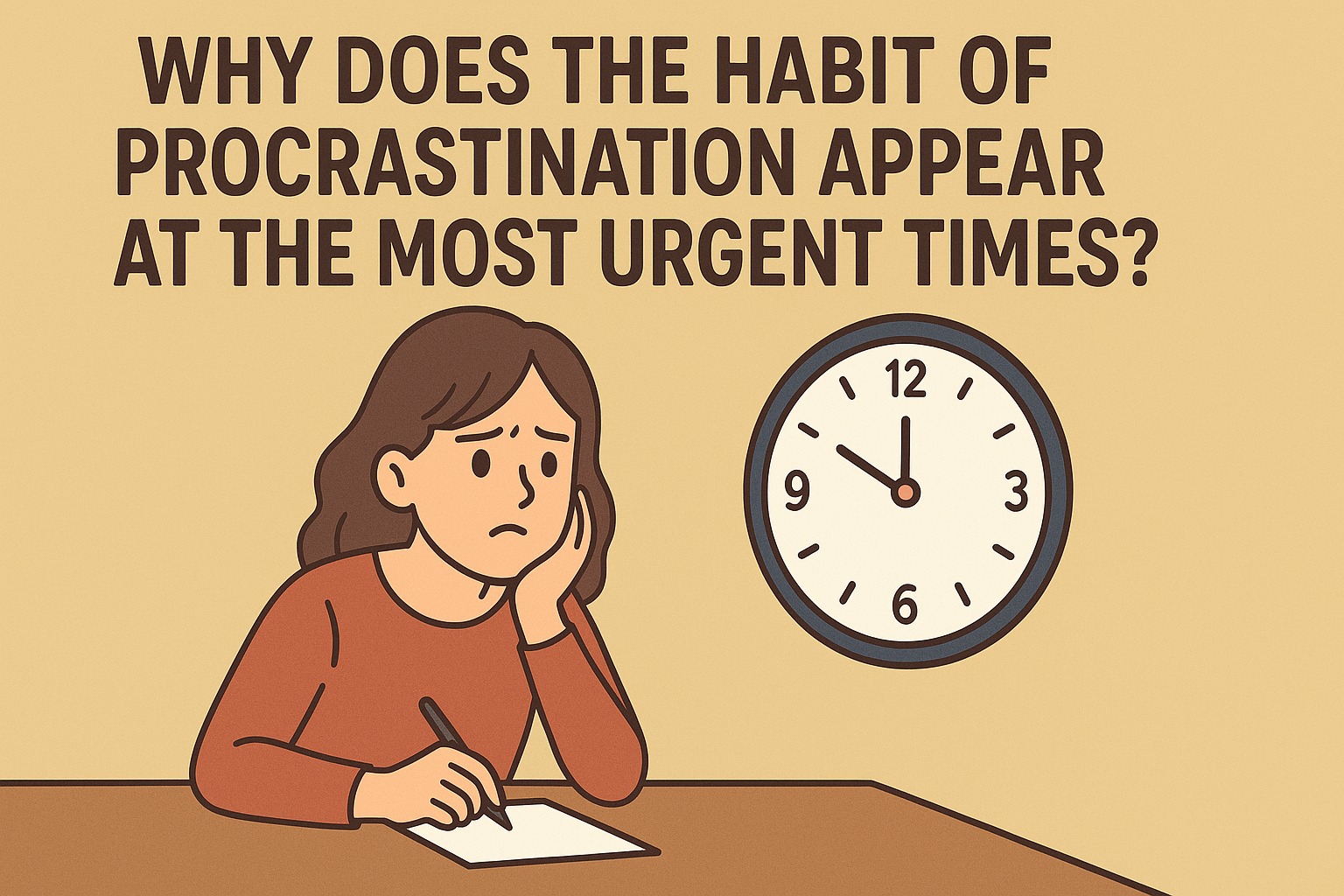
A task may have been waiting for days — yet we only start working when the deadline is just hours away. The closer the deadline, the more rushed we become. Why does this happen? Do we intentionally procrastinate, or is there something deeper in the way our brain makes decisions?
This phenomenon is known as *procrastination* — delaying work even when we clearly understand it should be done. Interestingly, this habit often appears in critical moments, when even small mistakes can lead to big consequences.
THE BRAIN PRIORITIZES COMFORT
Biologically, the human brain is naturally drawn to activities that are more pleasant and emotionally rewarding. When a task feels heavy, boring, or mentally draining, the brain sends signals to avoid it.
This happens because:
* Tasks are perceived as mentally exhausting
* Other activities feel more emotionally satisfying
* The brain seeks instant reward in the form of comfort
As a result, procrastination becomes a shortcut to temporarily escape stress.
ADRENALINE SURGES WHEN TIME IS RUNNING OUT
Some people work better under pressure. As deadlines approach, the body produces adrenaline, which increases alertness, thinking speed, and urgency to act.
However, this comes with two sides:
* Positive: focus improves due to urgency
* Negative: work quality may drop
Productivity spikes not because we are more disciplined, but because the body is forced into emergency mode.
PERFECTIONISM OFTEN BECOMES THE ROOT OF PROCRASTINATION
Perfectionism sounds good — but it can turn into a trap. When someone wants perfect results, they hesitate to start, fearing failure or imperfection.
For example:
* Overthinking before taking action
* Planning too long without execution
* Fear of mistakes leading to endless delay
The higher the standard, the greater the mental barrier to begin.
DIGITAL DISTRACTIONS ARE TOO TEMPTING TO IGNORE
Gadgets serve as powerful sources of distraction. Notifications, entertainment content, and endless scrolling easily pull attention away from tasks.
Without realizing it:
* Ten minutes becomes an hour
* Tasks remain untouched as focus shifts
* Productivity drops due to instant dopamine reward
Distractions make the brain forget priorities until time has almost run out.
HOW TO REDUCE PROCRASTINATION DURING CRITICAL MOMENTS
Procrastination can be managed through simple yet consistent strategies. Progress doesn’t need to be big — what matters is starting early.
Steps that may help:
1. Break tasks into small, manageable parts.
2. Use a timer to stay focused for short intervals.
3. Turn off notifications while working.
4. Set personal deadlines earlier than the official one.
5. Reward yourself for every progress achieved.
The main key is to **start earlier instead of waiting to feel pressured.**
CONCLUSION
Procrastination arises because the brain avoids stress and seeks instant comfort. As deadlines approach, adrenaline spikes and forces us into action — but this rush doesn’t always produce the best results. With better time management, reduced digital distractions, and small consistent steps, procrastination can be minimized and prevented from appearing at the most critical moments.
Tentang Penulis
Gusti Ayu Tita
Penulis — Universitas STEKOM
Penulis aktif yang berfokus pada isu-isu akademik, teknologi pendidikan, dan pengembangan sumber daya manusia di lingkungan kampus.