
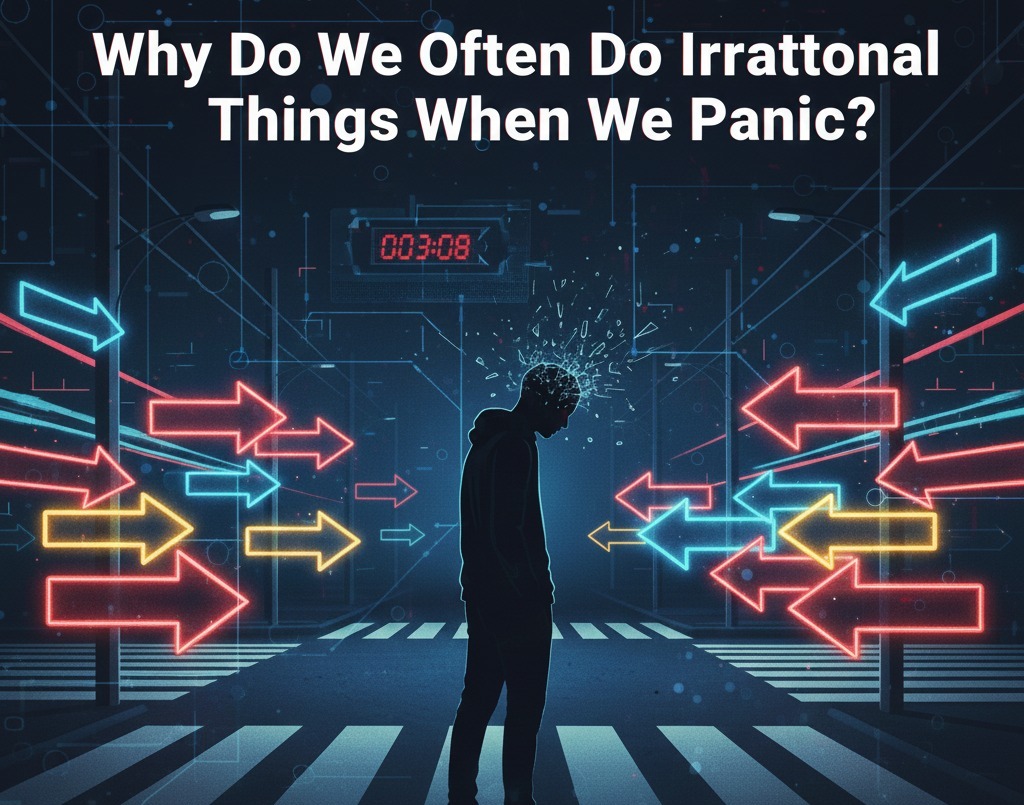
Panic is a natural human reaction when feeling threatened, cornered, or facing an unexpected situation. However, this condition often causes people to make wrong, impulsive, or even nonsensical decisions. Why does this happen? This article discusses the causes from psychological and biological perspectives, and how to control it.
NATURAL BRAIN REACTION DURING PANIC
When panic emerges, the brain works in a very different way compared to when we are in a calm state. The part of the brain called the amygdala, the center for emotion processing, quickly takes over control. Its main function is to detect danger and trigger a spontaneous response.
When the amygdala is dominant, the activity of the part of the brain responsible for rational thinking—the prefrontal cortex—actually weakens. This is what makes it difficult for someone to logically consider options and ultimately act in a rush.
THE ROLE OF ADRENALINE AND STRESS HORMONES
When panicking, the body releases hormones such as adrenaline and cortisol. Both work to increase heart rate, speed up breathing, and prepare the body to react quickly.
The problem is, this quick reaction is not always accompanied by mature thinking. As a result, someone might:
- Say meaningless things,
- Make decisions without thinking,
- Perform spontaneous and uncontrolled movements,
- Or, conversely, freeze and not know what to do.
The body is ready to act, but the rational brain has not had time to fully process the information.
EXAGGERATED PERCEPTION OF DANGER
Panic also often gives rise to cognitive distortions, which are thought patterns that jump to extreme conclusions. Examples include:
- Treating a small problem as a major threat,
- Imagining the worst possible outcome,
- Or believing that one has no time, when in fact there is still room to think.
This way of viewing danger in an exaggerated manner makes the resulting actions appear irrational to others.
WHY DOES LOGIC EASILY LOSE OUT DURING PANIC?
Logic and calmness require time to process information. Panic, conversely, makes the body feel that it must react immediately. When the body pushes us to move quickly, the brain is not given a chance to judge whether the action is right or wrong.
This is the reason why many people will say after a panic attack:
"Why did I do that? It was clearly nonsensical."
During a panic attack, what works is not logic, but the survival instinct.
HOW TO THINK CLEARLY DURING PANIC
Although panic is a natural reaction, the ability to remain calm can be trained. Some strategies that have been proven effective include:
1. Controlled Breathing
Inhale slowly for four seconds, hold for two seconds, and exhale for six seconds. This technique lowers amygdala activity.
2. Focus on One Thing
Shift your attention to something concrete, such as counting objects around you. This helps the rational brain "get back online."
3. Simulation Training
By familiarizing oneself with urgent situations—for example, through safety training or emergency scenarios—the brain will be better prepared and won't immediately panic.
4. Structured Thinking
Get into the habit of creating simple steps when facing a problem: stop, take a breath, assess the situation, and then act.
CONCLUSION
Panic makes it difficult for a person to think clearly because the emotional brain takes over, stress hormones increase, and the perception of danger becomes exaggerated. This is what causes irrational actions to often appear. However, with self-control training and relaxation techniques, the ability to think calmly during panic can be improved.
Tentang Penulis
Gusti Ayu Tita
Penulis — Universitas STEKOM
Penulis aktif yang berfokus pada isu-isu akademik, teknologi pendidikan, dan pengembangan sumber daya manusia di lingkungan kampus.



