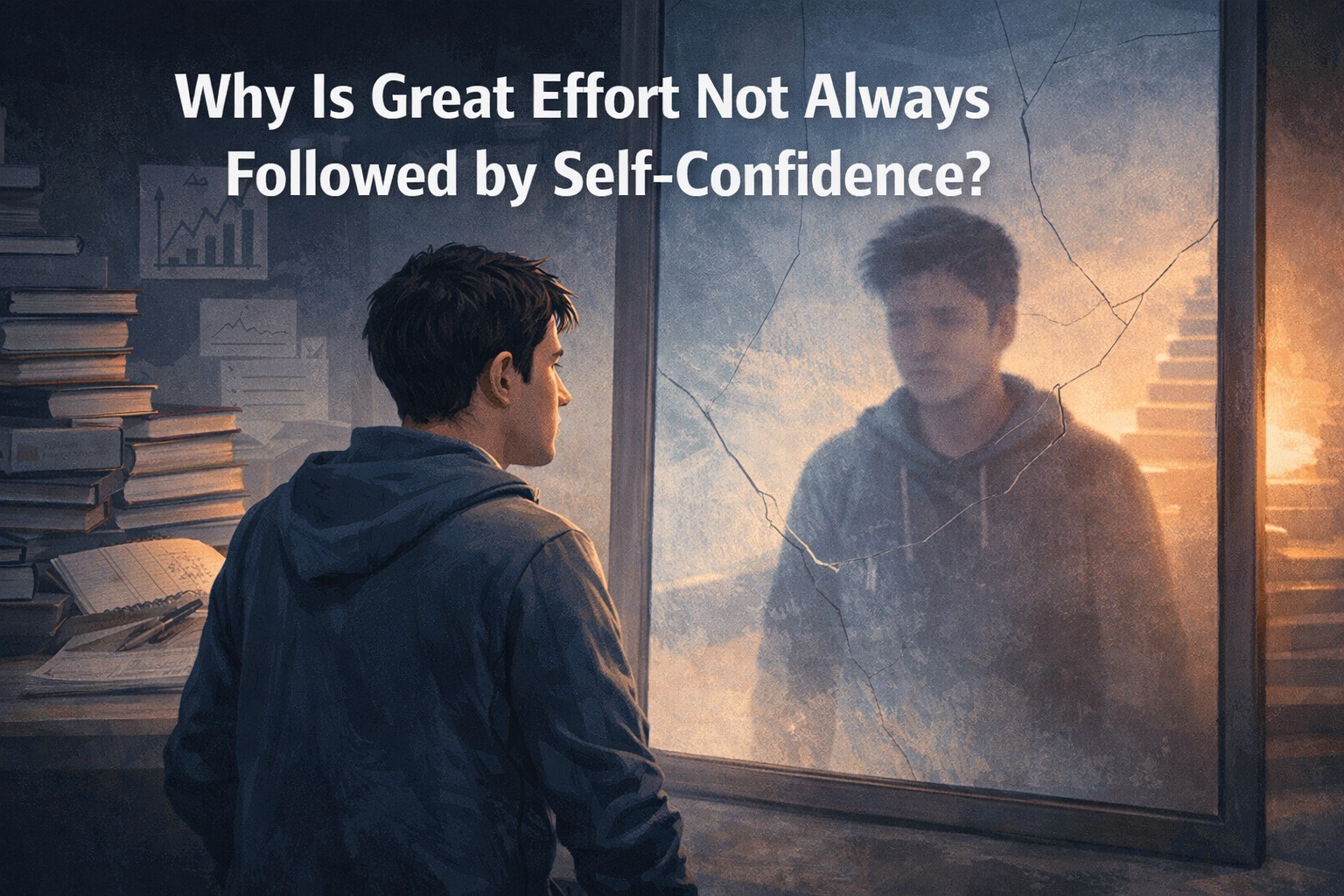
Many people believe that the greater the effort, the stronger the self-confidence that will follow. However, in reality, many individuals continue to doubt themselves despite having worked hard and struggled for a long time. This raises an important question: why does great effort not always translate into self-confidence?
THE RELATIONSHIP BETWEEN EFFORT AND SELF-CONFIDENCE
Effort and self-confidence are closely related but do not always move in the same direction. Effort is external and visible, while self-confidence is internal and influenced by how a person evaluates themselves. When self-evaluation is predominantly negative, even great effort can feel insufficient.
OVERLY HIGH PERSONAL STANDARDS
One of the main causes of low self-confidence is excessively high personal standards. Many people demand perfect results from themselves. When outcomes fail to match imagined expectations, the great effort invested is perceived as a failure. This pattern makes it difficult to feel satisfied and confident.
THE INFLUENCE OF PERFECTIONIST THINKING
Perfectionism is often mistaken for positive motivation. In many cases, however, it actually weakens self-confidence. An excessive focus on shortcomings causes achievements to feel small and unworthy of recognition. As a result, no amount of effort ever seems enough to build confidence.
COMPARISON WITH OTHERS
Social comparison also plays a major role in shaping self-confidence. When individuals compare their long and challenging journeys with others’ seemingly instant success, their own efforts feel meaningless. In reality, everyone has different paths, timelines, and challenges.
LACK OF APPRECIATION FOR THE PROCESS
Many people are accustomed to appreciating final results while overlooking the process itself. When the process is not valued, great effort is seen merely as an obligation rather than an achievement. This makes it difficult for self-confidence to grow, as there is no recognition of hard work.
ALIGNING EFFORT WITH SELF-CONFIDENCE
To ensure that great effort is accompanied by self-confidence, the following steps can help:
- Appreciating the process and small improvements
- Reducing unrealistic standards
- Limiting comparisons with others
- Practicing more objective and supportive self-talk
With these approaches, effort becomes more meaningful and strengthens self-confidence.
CLOSING
Great effort does not automatically result in self-confidence because confidence is shaped by mindset, personal standards, and emotional experiences. By understanding these factors, individuals can learn to build healthier and more balanced self-confidence, allowing every effort to be truly acknowledged and valued.
Keywords:
Tentang Penulis
Gusti Ayu Tita
Penulis — Universitas STEKOM
Penulis aktif yang berfokus pada isu-isu akademik, teknologi pendidikan, dan pengembangan sumber daya manusia di lingkungan kampus.