
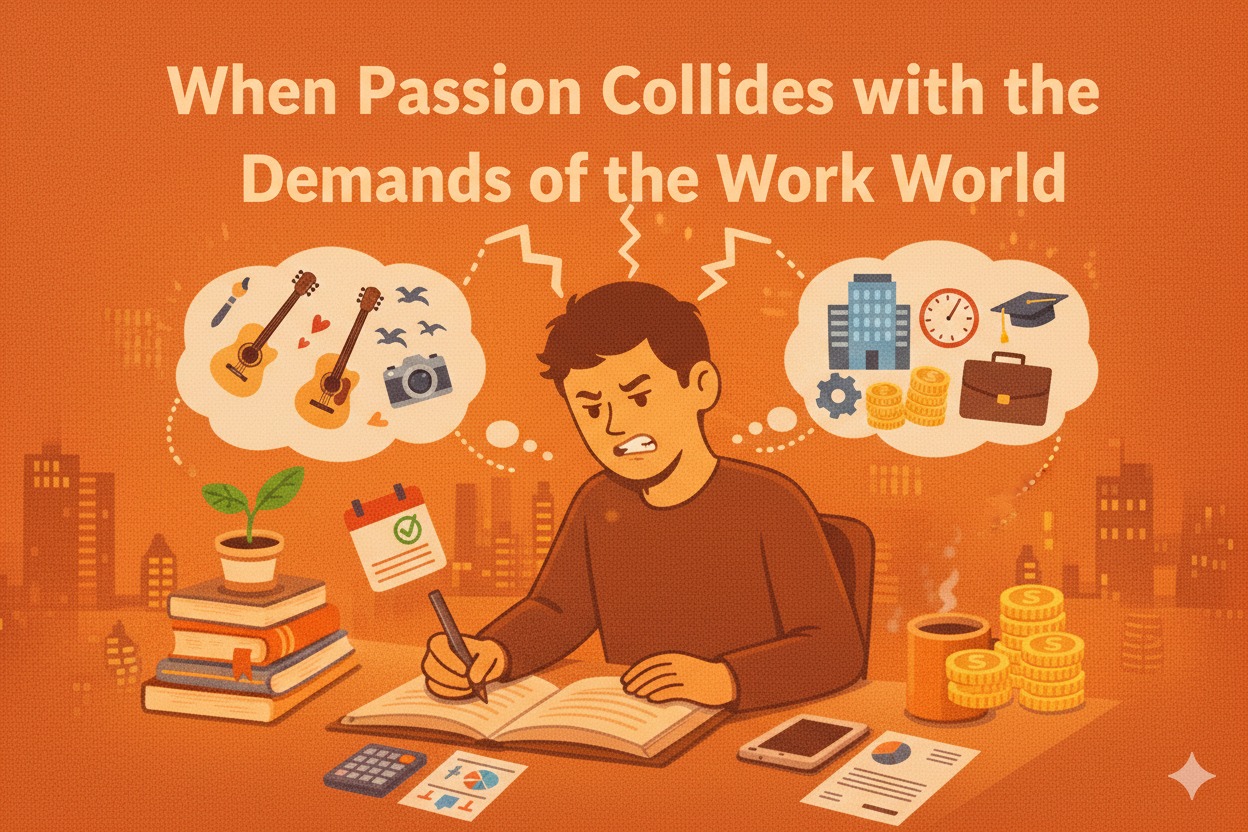
Many Young People Grow Up Believing Passion Is the Key to Happiness
Many young people grow up with the belief that following passion is the key to a happy life. However, reality often tells a different story. After graduating from college and entering the workforce, many face a major dilemma: the passion they have does not always align with the job market’s needs. This situation makes many people feel trapped between idealism and life demands.
PASSION AS A SOURCE OF LIFE MOTIVATION
Passion is often the main reason someone chooses a college major or a career path. When working according to interests, a person tends to be more enthusiastic, creative, and resilient under pressure. Work no longer feels like a burden, but rather a space for growth and self-expression. It is not surprising that many motivators encourage young people to “work according to their passion.” However, this enthusiasm is often not accompanied by a realistic understanding of the job market.
THE REALITY OF WORK LIFE IS NOT ALWAYS IDEAL
The workforce operates based on industry needs, not solely individual idealism. Many fields of interest have intense competition, limited job opportunities, or unstable income. On the other hand, sectors that actually require more workers are often less attractive because they are considered not aligned with passion. This conflict forces some graduates to accept jobs outside their interests to survive, pay for needs, and build financial stability.
THE DILEMMA BETWEEN IDEALISM AND LIFE NEEDS
When passion clashes with economic demands, mental pressure often arises. Feelings of disappointment, losing direction, and questioning life choices become common. Many people feel “failed” because they work in a field they do not love, even though they are financially secure. However, this condition is not a personal failure, but rather part of the adaptation process to adult life reality.
FINDING A WISE MIDDLE PATH
The solution to this conflict is not always choosing one extreme. Many people successfully turn passion into a side activity, long-term project, or even a small business while still working in a stable field. On the other hand, some find a new passion after entering the workforce. Developing additional skills, expanding relationships, and continuously learning can open opportunities for passion and career to gradually align.
CONCLUSION
When passion clashes with job market demands, there is no fully right or wrong answer. Each individual has different conditions, needs, and priorities. What matters most is being realistic without completely abandoning dreams. With the right strategy, passion and work can coexist over time.
Tentang Penulis
Gusti Ayu Tita
Penulis — Universitas STEKOM
Penulis aktif yang berfokus pada isu-isu akademik, teknologi pendidikan, dan pengembangan sumber daya manusia di lingkungan kampus.



