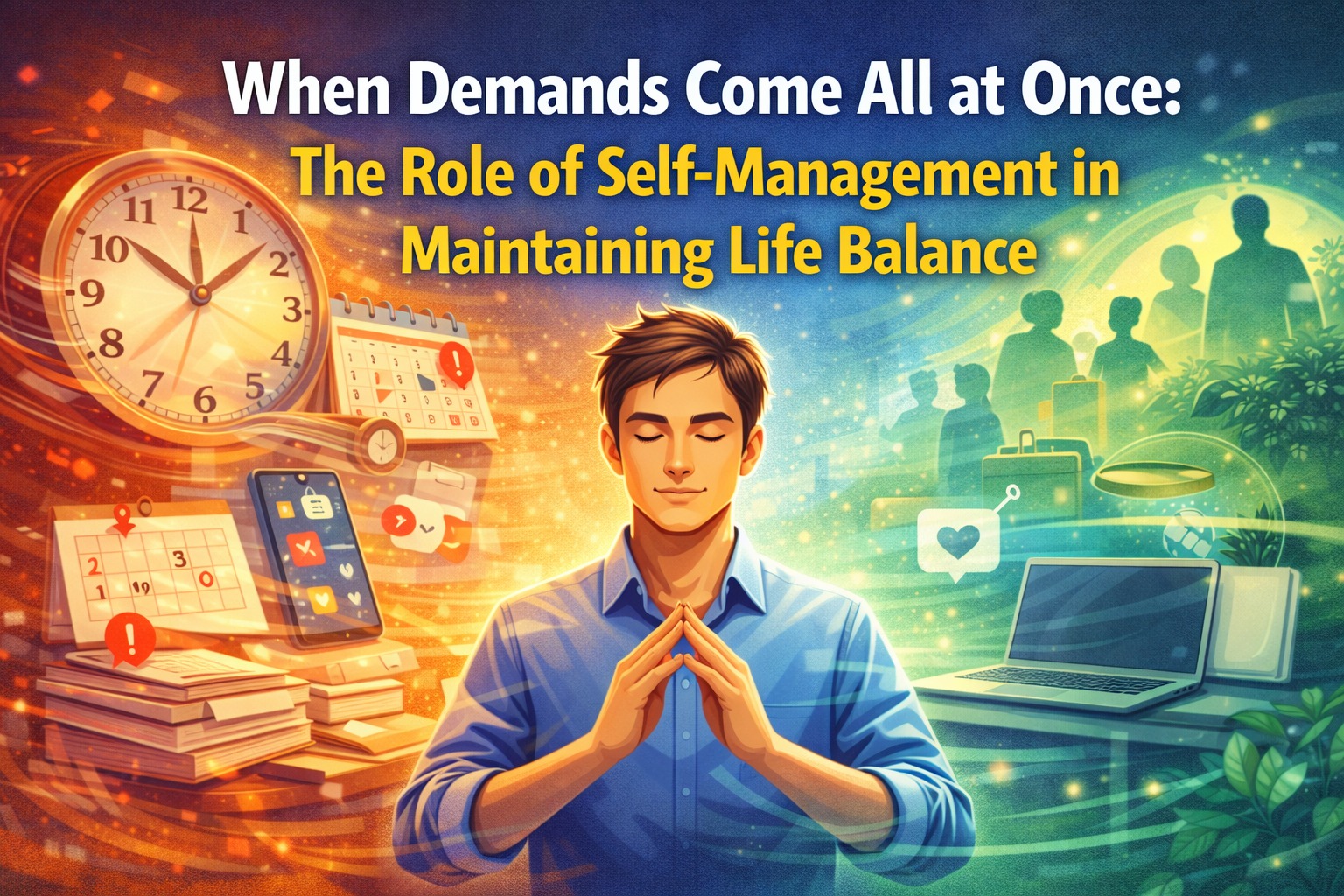
Living in the modern era often feels like a race without a finish line. Work responsibilities, family matters, social pressure, and the constant demand for self-improvement come one after another—often simultaneously. When these demands accumulate, many people experience physical and mental exhaustion. In such situations, self-management plays a crucial role in sustaining life balance.
Self-management helps individuals remain grounded amid pressure—not by avoiding demands, but by managing them consciously and purposefully.
The Reality of Ever-Increasing Life Demands
Technological advancement and lifestyle changes have made life’s demands increasingly complex. Work is no longer limited by space and time, while social expectations continue to rise. Social media reinforces the pressure to always be productive, responsive, and successful in multiple areas at once.
Without proper self-management, this condition can lead to prolonged stress. Individuals may feel as though they are never enough, despite their constant efforts to meet various demands.
Understanding Self-Management More Deeply
Self-management is the ability to regulate thoughts, emotions, time, and energy in alignment with life goals and personal capacity. This skill is not about doing everything perfectly, but about making the right choices within limitations.
Through self-management, individuals become proactive rather than merely reactive to pressure. This allows them to take control of their lives, even as demands continue to arise.
The Impact of Poor Self-Management
When self-management is neglected, various problems may emerge gradually. Emotional exhaustion, decreased productivity, difficulty concentrating, and conflicts in social relationships often stem from the inability to manage oneself effectively.
In the long term, this condition can disrupt life balance and diminish mental health quality. Therefore, self-management is not merely an additional skill—it is a fundamental necessity.
The Role of Self-Management in Maintaining Life Balance
Self-management helps individuals recognize their personal limits. By understanding when to focus and when to rest, energy can be used more wisely. In addition, the ability to set priorities allows individuals to distinguish between what is truly important and what merely feels urgent.
Life balance is achieved when work, personal life, and emotional needs receive equal attention. Self-management serves as the primary tool for maintaining this harmony.
Simple Strategies to Strengthen Self-Management
Developing self-management does not always require drastic changes. Simple steps such as creating realistic schedules, setting boundaries for work time, and making space for self-reflection can have a significant impact.
Moreover, cultivating self-awareness of emotions and personal needs helps prevent mental fatigue. Learning to say “no” to demands that exceed one’s capacity is also an essential part of healthy self-management.
Conclusion
When demands come in waves, self-management becomes the key to maintaining life balance. By consciously managing time, energy, and emotions, individuals can face pressure without losing direction or mental well-being.
Self-management is not about controlling everything, but about understanding oneself and making decisions that align with life’s needs. In a world that constantly demands more, this ability becomes the foundation for a more balanced and meaningful life.
Tentang Penulis
Gusti Ayu Tita
Penulis — Universitas STEKOM
Penulis aktif yang berfokus pada isu-isu akademik, teknologi pendidikan, dan pengembangan sumber daya manusia di lingkungan kampus.