
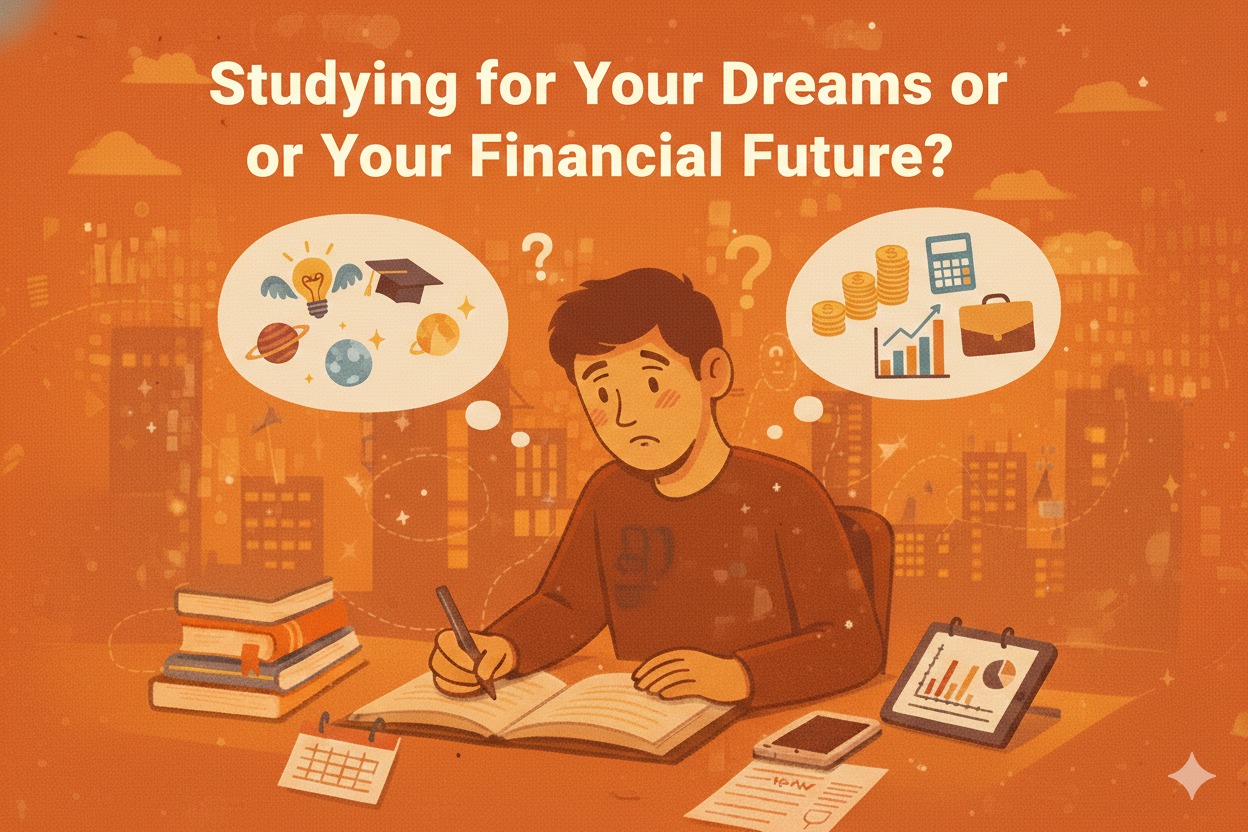
College is often seen as a gateway to a better life. However, behind the enthusiasm for education, a question often haunts prospective and current students: should college be pursued for personal dreams or for a more secure financial future? This question is not simple because it involves life goals, economic reality, and social pressure.
THE MEANING OF COLLEGE IN THE MIDST OF CHANGING TIMES
In the past, college was synonymous with social status and job security. However, today the job market is changing rapidly due to digitalization and technological development. Academic degrees are no longer the only determinant of success, but they still play an important role as a foundation of knowledge and critical thinking. For some, college is a path to pursue dreams—becoming educators, researchers, artists, or professionals in certain fields. For others, college is viewed as a long-term investment for future financial stability.
COLLEGE FOR DREAMS: BETWEEN PASSION AND REALITY
Studying based on interest and passion can bring great inner satisfaction. Students who study according to their dreams tend to be more motivated, creative, and resilient to academic pressure. They do not just chase grades, but also the meaning of the learning process itself. However, reality often demands compromise. Not all fields of interest offer broad job opportunities or promising income. Without careful planning, graduates risk facing financial difficulties after graduation.
COLLEGE FOR FINANCIAL FUTURE: SAFE BUT RISKY IN TERMS OF BOREDOM
Choosing a major with high job prospects and promising salaries is a rational decision. Many students take this path for economic security, especially those who want to support their families or avoid career uncertainty. Unfortunately, decisions driven solely by financial factors can trigger boredom and loss of motivation. Many students feel trapped in majors they do not like, making college feel like an obligation rather than a process of personal growth.
FINDING A REALISTIC BALANCE
The best choice is often not about choosing one or the other, but finding a balance. Combining personal interests with job opportunities can be a more sustainable strategy. Students can also develop additional skills, such as digital abilities, communication, or entrepreneurship, to expand financial opportunities without abandoning their dreams. College should not only be about earning money, but also about building identity, life values, and readiness to face the real world.
CONCLUSION
College for dreams and college for financial future are not two choices that must exclude each other. Both can go hand in hand with planning, self-awareness, and willingness to keep learning. In the end, the best decision is the one that aligns most with each individual’s conditions, goals, and values.
Tentang Penulis
Gusti Ayu Tita
Penulis — Universitas STEKOM
Penulis aktif yang berfokus pada isu-isu akademik, teknologi pendidikan, dan pengembangan sumber daya manusia di lingkungan kampus.



