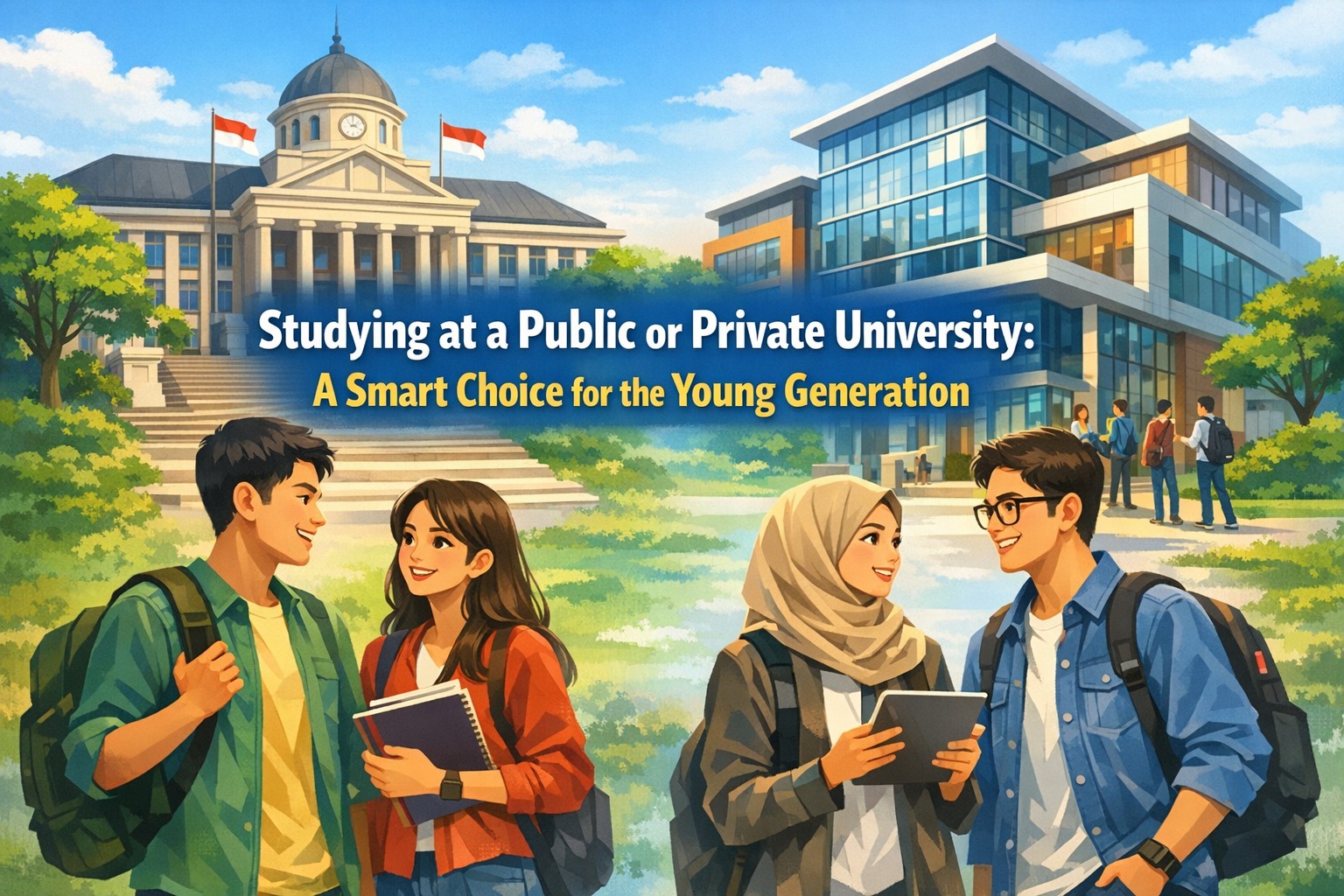
Choosing where to pursue higher education is one of the most important decisions in a young person’s life. Many prospective students face a classic dilemma: is it better to study at a public university or a private one? Both options have their own advantages and challenges. Therefore, understanding the differences objectively is essential to ensure that the decision truly aligns with future needs and goals.
UNDERSTANDING PUBLIC UNIVERSITIES
Public universities are often considered the top choice due to their reputation and relatively affordable tuition fees. These institutions are managed by the government and typically offer comprehensive facilities along with lecturers who have strong academic backgrounds.
However, competition to enter public universities is very intense. Limited admission pathways mean that not all prospective students are accepted, even those with significant potential. Additionally, learning systems at public universities tend to be more independent, requiring high levels of discipline from students.
ADVANTAGES OF PRIVATE UNIVERSITIES
Private universities serve as flexible and innovative alternatives. Many private institutions offer study programs that are closely aligned with industry needs and curricula that adapt quickly to changes in the modern world.
Another advantage of private universities is the availability of more diverse admission pathways and more personalized academic attention. Although tuition fees are generally higher, many private universities provide scholarships and flexible payment schemes to reduce the financial burden on students.
FACTORS TO CONSIDER BEFORE MAKING A CHOICE
Choosing between a public or private university should not be based solely on prestige or general perceptions. Important factors to consider include institutional accreditation, program quality, tuition costs, supporting facilities, and career opportunities after graduation.
In addition, personal interests and learning styles play a significant role. The best university is one that supports both academic and non-academic development in accordance with a student’s potential.
WHICH OPTION IS MORE SUITABLE FOR THE YOUNG GENERATION?
There is no absolute answer to whether studying at a public or private university is the better choice. Young people need to be realistic and thoughtful in assessing their own circumstances. Both public and private universities can serve as pathways to success if utilized optimally.
What matters most is not where one studies, but how students develop themselves, build skills, and prepare for the future from an early stage.
CONCLUSION
Studying at a public or private university is a strategic decision that should be aligned with individual needs, abilities, and life goals. With careful consideration and accurate information, young people can make smart choices for a better future.
Tentang Penulis
Gusti Ayu Tita
Penulis — Universitas STEKOM
Penulis aktif yang berfokus pada isu-isu akademik, teknologi pendidikan, dan pengembangan sumber daya manusia di lingkungan kampus.