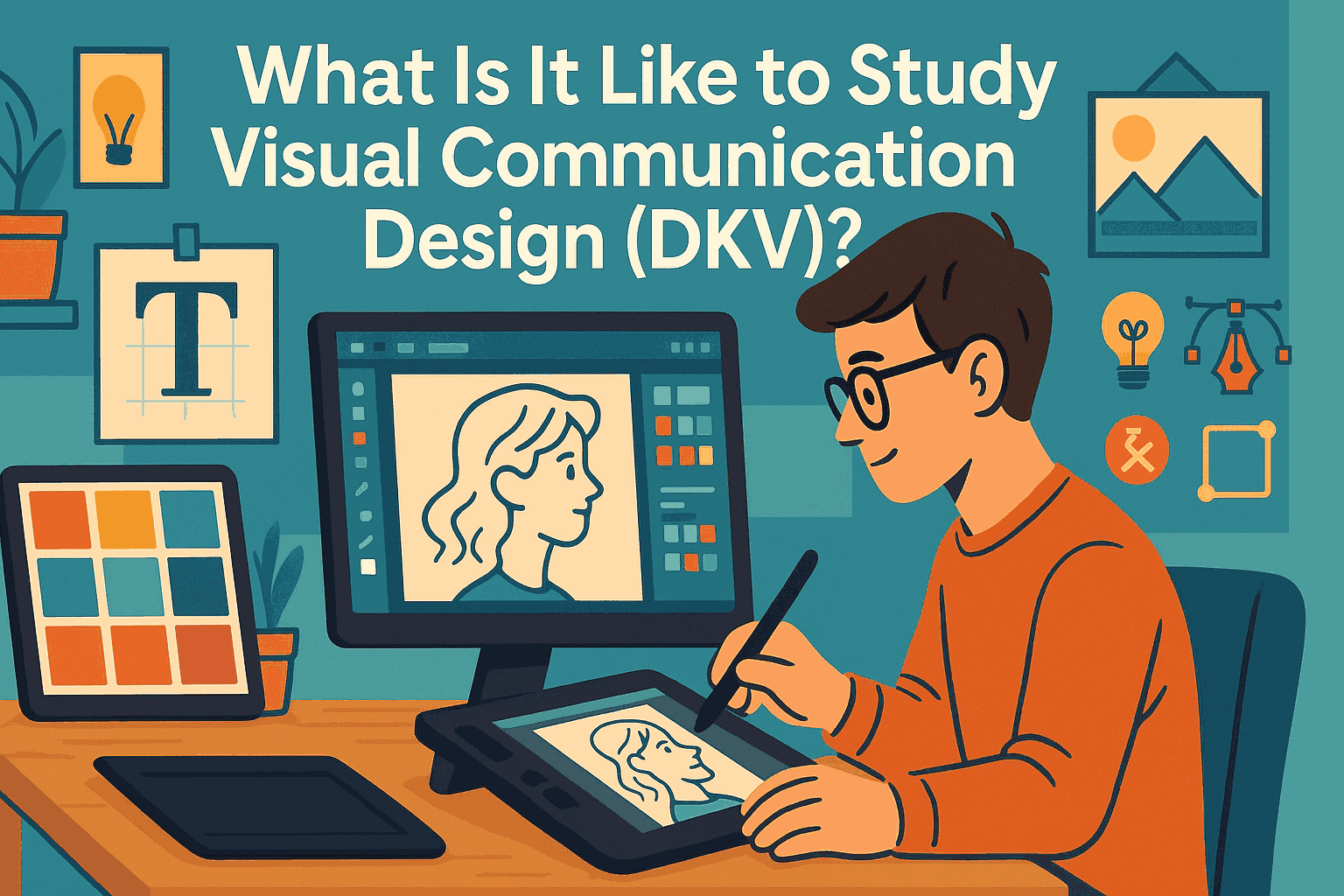
Visual Communication Design (DKV) is an academic program that focuses on the intersection of art, design, and creative communication. This major equips students with the skills and knowledge to convey messages effectively through visual media. For those passionate about creativity, illustration, and digital arts, pursuing a degree in Visual Communication Design could be the perfect choice. In this article, we’ll explore what to expect when studying DKV and how it prepares you for a dynamic career in the design industry.
KEY ASPECTS OF STUDYING DKV
Studying DKV centers on mastering the ability to create visual works that are impactful, engaging, and meaningful. Students learn the core principles of design, including color theory, typography, illustration, photography, animation, and how to use professional design software. More importantly, they are trained to combine these visual elements with strategic communication techniques to clearly convey messages and influence audiences.
1. Project-Based Learning
One of the most important features of a DKV program is its project-based learning approach. Students are involved in real-world design projects, often in collaboration with clients or companies. This hands-on experience allows them to develop practical skills that are directly applicable in the professional world.
2. Creativity and Imagination Development
DKV education strongly encourages students to think creatively and push their imagination. You’ll be challenged to think outside the box, explore new ideas and visual approaches, and experiment with different tools and media. Through research and creative exploration, DKV students sharpen their ability to create original and innovative design solutions.
3. Building a Professional Portfolio
A strong and diverse portfolio is essential for anyone entering the competitive world of design. DKV programs provide opportunities for students to compile their best work, receive constructive feedback from lecturers and industry professionals, and gradually build a professional portfolio that showcases their unique style and capabilities.
4. Industry-Relevant Skills and Knowledge
In today’s digital-driven world, the role of visual communication is more crucial than ever. From social media content to user interface design, visual designers play a key role in crafting effective digital experiences. A DKV degree equips students with the relevant skills and understanding to meet industry demands, adapt to trends, and contribute to fast-evolving creative sectors.
CONCLUSION
Pursuing a degree in Visual Communication Design is a great choice for those who love art, design, and creative expression. This program not only helps students develop technical proficiency but also enhances their conceptual thinking and aesthetic sensibilities. Graduates from DKV programs are well-prepared for careers as graphic designers, illustrators, animators, photographers, or other creative professionals in visual communication.
Choosing the right university to study DKV is equally important. A supportive institution will offer a stimulating learning environment, proper facilities, experienced faculty, and valuable industry connections. With access to internships and real-world projects, students can apply what they learn in practical contexts, making them even more competitive in the design job market.
Tentang Penulis
Gusti Ayu Tita
Penulis — Universitas STEKOM
Penulis aktif yang berfokus pada isu-isu akademik, teknologi pendidikan, dan pengembangan sumber daya manusia di lingkungan kampus.