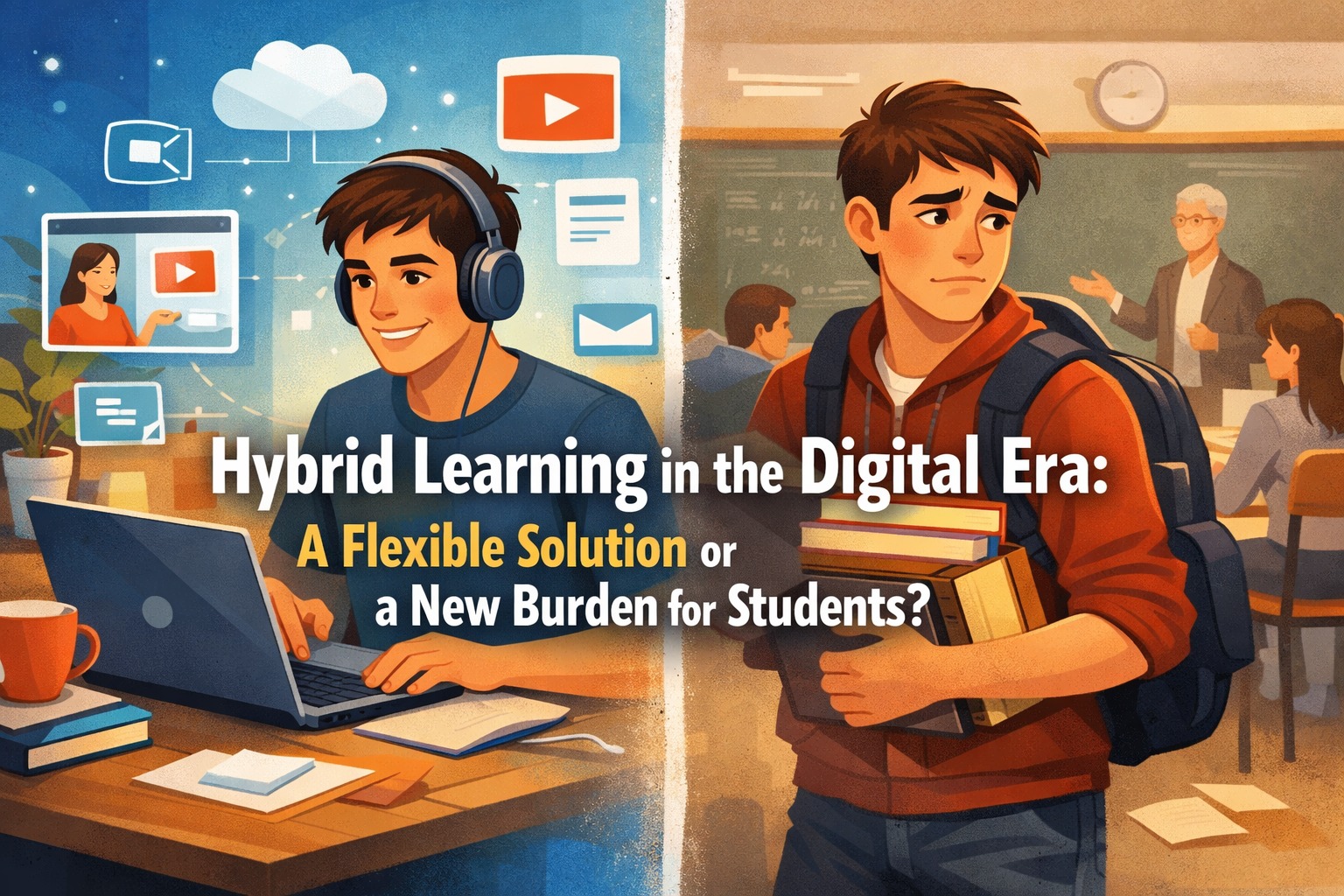
The development of digital technology has brought significant changes to higher education. One form of this transformation is the implementation of the hybrid learning system, which combines face-to-face and online learning. This model is considered a flexible solution amid demands for efficiency and high mobility. However, behind the flexibility it offers, an important question arises: is hybrid learning truly effective, or does it instead become a new burden for students?
DEFINITION AND CONCEPT OF HYBRID LEARNING
Hybrid learning is a learning method that combines in-person classroom sessions with technology-based digital learning. In practice, students attend offline classes at certain times and participate in online learning on other occasions. This system is designed to provide flexibility in accessing learning materials while maintaining academic interaction between lecturers and students.
The hybrid concept emerged as a response to the need for adaptive learning, especially after the pandemic accelerated digitalization in the education sector. Many universities have since adopted this system as a long-term learning model.
FLEXIBILITY AS THE MAIN ADVANTAGE
One of the primary advantages of hybrid learning is flexibility in terms of time and location. Students are not always required to be physically present on campus, allowing them to save travel time and operational costs. For students who work or have other commitments, this system is considered highly beneficial for managing study schedules.
In addition, digitally available learning materials allow students to review content whenever needed. This can enhance understanding and independent learning, especially for students with visual or self-directed learning styles.
ACADEMIC CHALLENGES AND MENTAL FATIGUE
On the other hand, hybrid learning also presents its own challenges. Switching between offline and online learning modes requires continuous adaptation, which is not always easy. Students must consistently maintain focus, discipline, and effective time management.
Many students experience fatigue due to academic demands that seem to have no clear boundaries of time and space. Intensive online activities, combined with accumulating assignments, can trigger stress and reduce learning motivation if not managed properly.
THE ROLE OF LECTURERS AND EDUCATIONAL INSTITUTIONS
The success of hybrid learning does not depend solely on student readiness but also on the roles of lecturers and educational institutions. Lecturers are required to design balanced learning experiences between online and offline formats and to utilize technology effectively.
Educational institutions must also provide adequate digital infrastructure, including stable and accessible learning platforms. Without strong system support, hybrid learning risks lowering the overall quality of education.
ASSESSING THE EFFECTIVENESS OF HYBRID LEARNING
The effectiveness of hybrid learning largely depends on its implementation. When designed in a structured manner and oriented toward student needs, this system can serve as a relevant learning solution in the digital era. However, if applied without proper evaluation and a human-centered approach, hybrid learning may become a new burden that drains students’ energy and focus.
Therefore, continuous evaluation and openness to student feedback are essential to ensure that this system delivers optimal benefits.
CONCLUSION
Hybrid learning in the digital era offers flexibility and efficiency that align with technological advancements. However, it also brings serious challenges, particularly related to mental fatigue and students’ readiness to adapt. With careful planning, institutional support, and awareness of academic balance, hybrid learning can become an effective educational solution rather than merely a technological demand.
Tentang Penulis
Gusti Ayu Tita
Penulis — Universitas STEKOM
Penulis aktif yang berfokus pada isu-isu akademik, teknologi pendidikan, dan pengembangan sumber daya manusia di lingkungan kampus.