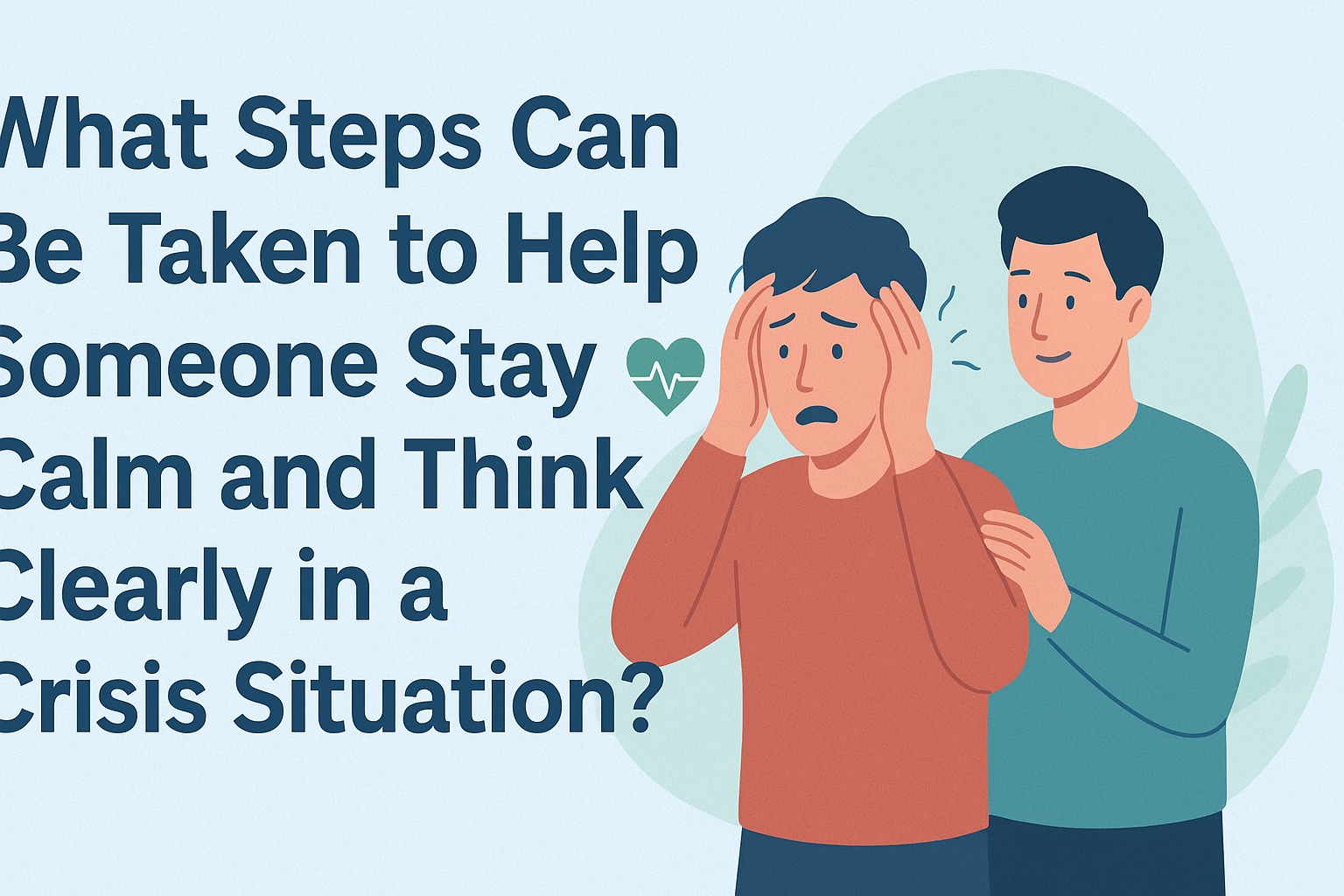
Crisis situations often trigger panic and cause a person to lose control. In moments like these, the ability to stay calm and think clearly becomes extremely important. Fortunately, there are several practical steps that can help someone ease panic and make more rational decisions. This article discusses effective and easy-to-apply strategies.
REGULATING BREATHING TO REDUCE TENSION
Breathing techniques are the fastest way to calm the body. By slowing down the breath, the parasympathetic nervous system becomes activated, helping to lower the heart rate.
Methods such as the 4-7-8 breathing technique or deep belly breathing can stabilize the mind within seconds.
CLEARLY IDENTIFYING THE ROOT OF THE PROBLEM
Many people panic because their minds are filled with worst-case scenarios. By identifying the core issue, thoughts become more focused.
This step helps eliminate unnecessary assumptions, allowing someone to determine what needs to be prioritized first.
USING GROUNDING TECHNIQUES TO REGAIN FOCUS
Grounding techniques such as the 5-4-3-2-1 method can help bring a person back to the present moment.
By directing attention toward things that can be seen, felt, heard, or touched, the brain shifts from panic mode to a calmer state of thinking.
THINKING IN SMALL AND STRUCTURED STEPS
In a crisis, trying to solve everything at once can worsen panic. It is better to break the problem into smaller, more manageable steps.
This approach makes the mind feel lighter and makes solutions easier to identify.
SEEKING SOCIAL SUPPORT OR PROFESSIONAL HELP
Not every crisis can be handled alone. Support from friends, family, or professionals can help reduce emotional burden.
Listening to advice from someone who is calmer can also provide new perspectives for making wiser decisions.
CONCLUSION
Staying calm during a crisis is not an innate ability—it is a skill that can be trained. By regulating breathing, identifying the problem, using grounding techniques, creating structured steps, and seeking social support, a person can restore clear thinking and avoid impulsive decisions. With regular practice, these strategies become even more effective when facing real-life situations.
Tentang Penulis
Gusti Ayu Tita
Penulis — Universitas STEKOM
Penulis aktif yang berfokus pada isu-isu akademik, teknologi pendidikan, dan pengembangan sumber daya manusia di lingkungan kampus.