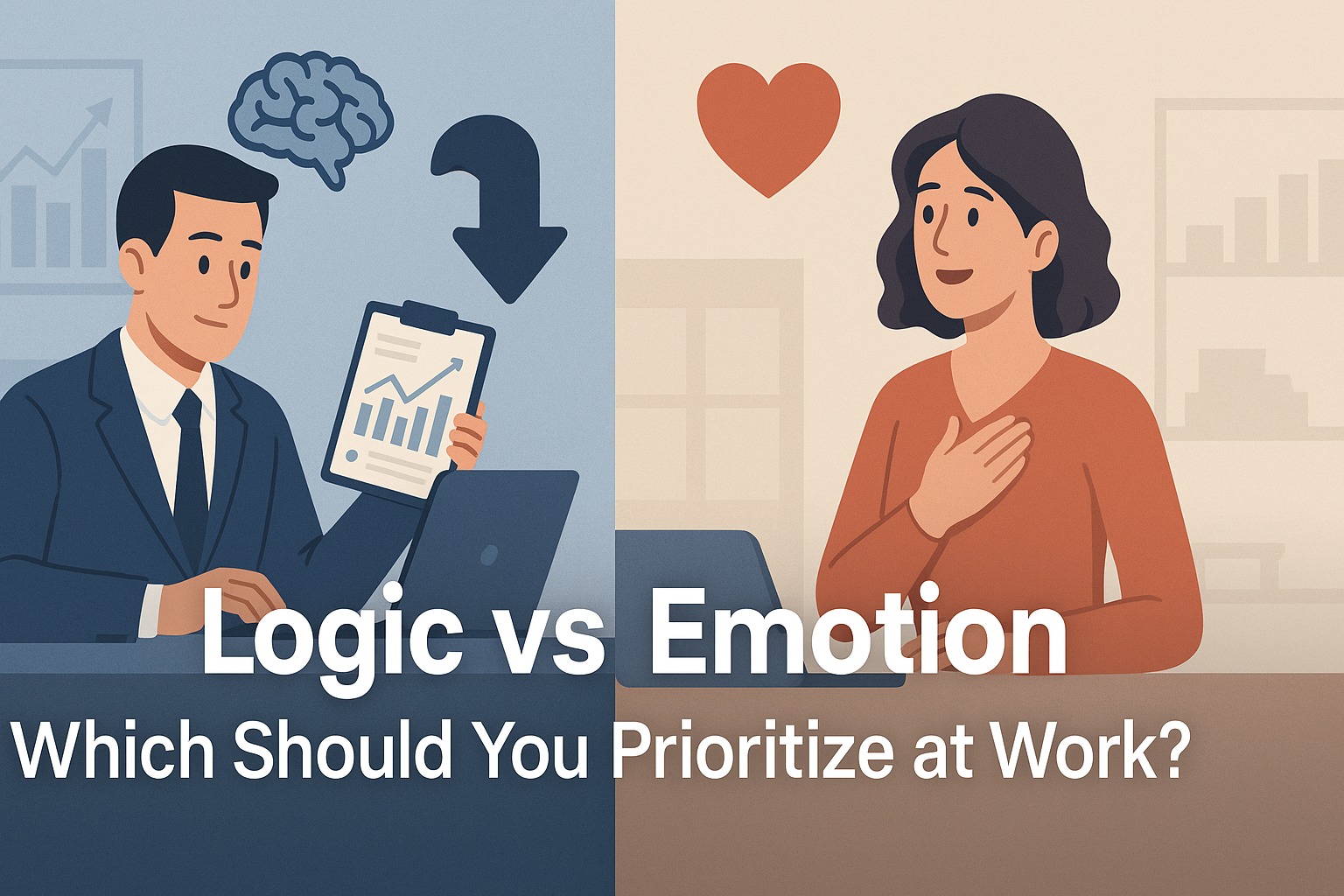
Logic vs Emotion: Which Should You Prioritize at Work?
In professional environments, decision-making often involves two primary approaches—logic and emotion. Both play crucial roles in shaping how we work, communicate, and solve problems. But one of the most common questions is: which should take precedence at work—logic or emotion? This article explores the importance of both, and when it's best to rely on each.
Understanding Logic and Emotion in the Workplace
Logic refers to rational, objective thinking based on data, facts, and analysis. It is typically used in tasks such as reviewing performance reports, developing strategies, or making long-term plans.
Emotion, on the other hand, is the subjective response to certain situations. Emotion allows us to empathize with colleagues, build rapport, and foster a harmonious work environment.
When to Prioritize Logic
Logic should be the leading factor in situations such as:
• Data-Driven Decision Making
For example, creating a marketing strategy, budgeting, or determining workflow priorities.
• Analyzing Complex Problems
Logical thinking helps break down complex issues into manageable parts, leading to better solutions.
• Avoiding Personal Bias
Emotion-based decisions can often be impulsive or biased. Logic adds objectivity.
Real-life example: A project manager needs to evaluate team performance using KPIs. In this case, hard data is more reliable than subjective impressions or favoritism.
When to Prioritize Emotion
While logic is essential, emotions should not be overlooked. Emotional intelligence is vital in scenarios such as:
• Team Communication
Understanding how others feel promotes trust, collaboration, and team morale.
• Inspirational Leadership
Leaders who only rely on logic may appear cold. Emotional connection builds authenticity and loyalty.
• Conflict Resolution
Empathy and emotional understanding are key to resolving interpersonal tensions in the workplace.
Real-life example: When a team member is facing personal struggles, an empathetic approach will be more effective than a purely logical one.
Blending Logic and Emotion for Balanced Decisions
Rather than choosing one over the other, the most effective professionals combine both logic and emotion in their decision-making. Here are a few ways to do this:
- Use logic as the foundation for decision-making.
- Validate those decisions with emotional awareness and empathy.
- Include input from others to avoid making overly subjective or one-sided decisions.
By doing so, decisions are not only accurate and data-informed, but also considerate and emotionally intelligent.
Conclusion
In the workplace, logic and emotion are not opposing forces but complementary tools. Logic brings structure and objectivity, while emotion enhances communication and human connection. The key lies in understanding the context and knowing when to lean more on one than the other.
By striking a balance between the two, professionals can make smarter, more compassionate decisions that drive both performance and well-being.
Tentang Penulis
Gusti Ayu Tita
Penulis — Universitas STEKOM
Penulis aktif yang berfokus pada isu-isu akademik, teknologi pendidikan, dan pengembangan sumber daya manusia di lingkungan kampus.