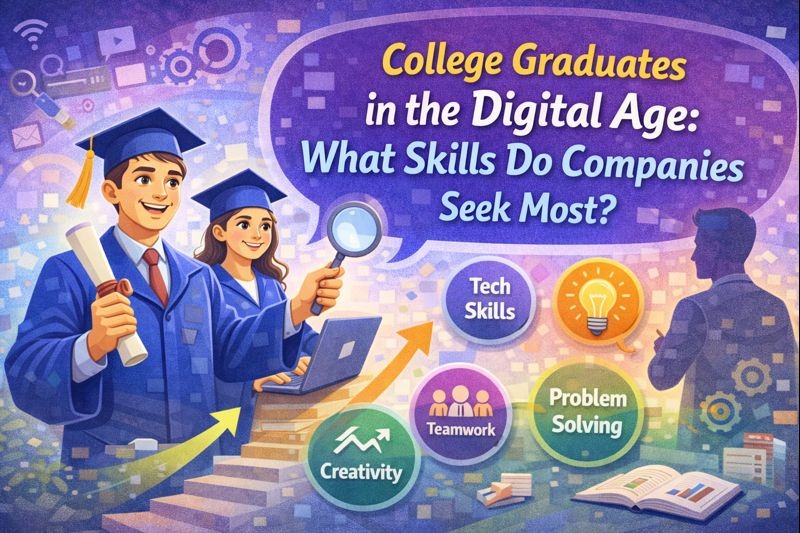
Most In-Demand Skills for University Graduates in the Digital Era
The development of digital technology has transformed how companies recruit and evaluate job candidates. In the past, academic degrees and grades were the main considerations. However, in today’s digital era, companies are increasingly selective in seeking university graduates who are not only strong in theory but also practically job-ready. This raises an important question: what skills are most sought after by companies from university graduates in the digital era? This article discusses the answer in a comprehensive and relevant way based on current workforce demands.
THE SHIFT IN RECRUITMENT CRITERIA IN THE DIGITAL ERA
Digitalization has enabled companies to operate faster and more efficiently. Recruitment processes have evolved, ranging from online recruitment systems and digital-based tests to portfolio assessments. As a result, companies no longer focus solely on academic majors or GPA. Instead, they place greater emphasis on candidates’ problem-solving abilities, adaptability to technology, and the real contributions they can make from the beginning of their employment.
MOST NEEDED TECHNICAL SKILLS
Technical skills, or hard skills, are one of the main factors in job selection in the digital era. Some of the most in-demand skills include:
1. Digital Literacy
The ability to understand and use digital technology is a fundamental skill for university graduates. This includes using digital work tools, managing data, and understanding online platforms relevant to their field.
2. Basic Data Processing
In the data-driven era, companies need graduates who can read, process, and understand basic data. This skill is important not only for technology-related fields but also for business, marketing, and administration.
3. Digital Marketing Skills
Companies increasingly rely on digital marketing to reach consumers. Therefore, skills such as social media management, content writing, and basic SEO knowledge provide significant added value for graduates.
4. Proficiency in Supporting Software
Each profession requires specific supporting software. Graduates who are familiar with design applications, data-processing tools, or digital collaboration platforms can adapt more easily to the workplace.
SOFT SKILLS THAT TECHNOLOGY CANNOT REPLACE
Amid technological advancement, soft skills are becoming even more valuable. Companies seek graduates who balance technical abilities with strong interpersonal skills.
1. Communication Skills
Graduates who can clearly express ideas both verbally and in writing find it easier to work in teams and interact with clients.
2. Problem-Solving Ability
Companies value graduates who can think critically and proactively solve workplace problems rather than waiting for instructions.
3. Adaptability and Willingness to Learn
Rapid technological changes require graduates to continuously learn. An open mindset toward new developments is key to surviving in the digital era.
4. Teamwork and Leadership
The ability to collaborate across disciplines is highly needed. Even for fresh graduates, leadership potential is considered a strong advantage.
THE IMPORTANCE OF PORTFOLIOS AND EXPERIENCE
In the digital era, portfolios often speak louder than academic transcripts. Companies want to see tangible evidence of graduates’ skills through projects, internships, freelance work, or organizational involvement.
Such experiences demonstrate job readiness, professional work ethics, and the ability to handle real-world situations. Therefore, students are encouraged to build their portfolios while still in university.
STRATEGIES FOR STUDENTS TO PREPARE SKILLS EARLY
To stay competitive, university students should prepare themselves early. Some effective steps include:
* Joining online training and courses aligned with personal interests
* Actively participating in campus organizations or committees
* Taking internships or independent projects
* Building personal branding through professional platforms
* Continuously updating skills according to industry trends
These steps help graduates become more competitive when entering the workforce.
CONCLUSION
In the digital era, university graduates cannot rely solely on diplomas. Companies are looking for individuals who possess a combination of technical skills, soft skills, and real-world experience. Digital literacy, data processing skills, communication, and adaptability are among the most sought-after competencies.
With proper early preparation, university graduates have a strong opportunity to compete and succeed in the ever-evolving digital workforce.
Tentang Penulis
Gusti Ayu Tita
Penulis — Universitas STEKOM
Penulis aktif yang berfokus pada isu-isu akademik, teknologi pendidikan, dan pengembangan sumber daya manusia di lingkungan kampus.