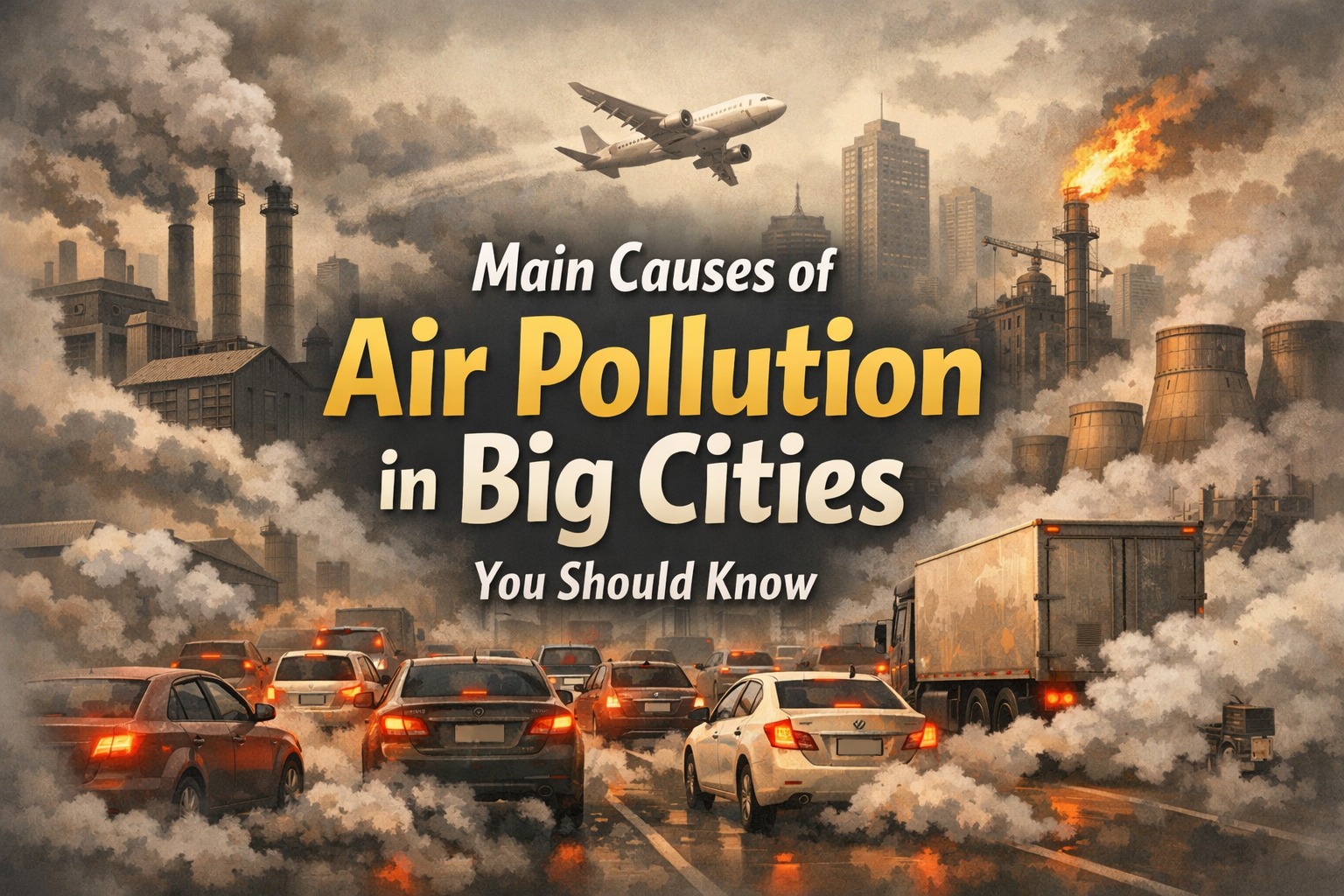
Air pollution has become one of the biggest environmental problems in modern urban areas. Many large cities around the world experience poor air quality every day due to rapid industrial growth, increasing population, and heavy transportation activity. Dirty air not only damages the environment but also affects human health, causing respiratory diseases, heart problems, and other serious conditions. Understanding the main causes of air pollution can help people become more aware and encourage better environmental practices.
VEHICLE EMISSIONS
One of the leading causes of air pollution in big cities is vehicle emissions. Millions of cars, motorcycles, buses, and trucks release harmful gases into the atmosphere every day. These vehicles produce carbon monoxide, nitrogen oxides, and other pollutants that contribute to smog and poor air quality.
Traffic congestion worsens the problem because vehicles continue burning fuel while stuck on crowded roads. In many developing cities, old vehicles with poor engine conditions also produce thicker smoke and higher pollution levels.
INDUSTRIAL ACTIVITIES
Factories and industrial areas are another major source of urban air pollution. Manufacturing processes often release toxic chemicals, smoke, and harmful particles into the air. Industries that rely heavily on coal, oil, or gas generate large amounts of greenhouse gases that pollute the atmosphere.
Without proper waste management and air filtration systems, industrial emissions can spread quickly across residential areas. This situation becomes more dangerous when factories are located near densely populated neighborhoods.
BURNING OF FOSSIL FUELS
The excessive use of fossil fuels such as coal, gasoline, and diesel significantly increases air pollution in big cities. Power plants, transportation systems, and factories depend on these energy sources to operate daily.
When fossil fuels are burned, they release carbon dioxide and other harmful pollutants into the atmosphere. These emissions contribute not only to air pollution but also to global warming and climate change.
CONSTRUCTION AND URBAN DEVELOPMENT
Rapid urban development also plays a major role in worsening air quality. Construction projects produce large amounts of dust, dirt, and fine particles that spread through the air. Heavy machinery used at construction sites releases exhaust fumes that add to pollution levels.
As cities continue expanding, green spaces are often reduced, making it harder for nature to absorb pollutants naturally. The lack of trees and parks can increase pollution concentration in urban environments.
HOUSEHOLD AND WASTE POLLUTION
Household activities can also contribute to air pollution. Burning trash, using low-quality fuels for cooking, and improper waste disposal release harmful smoke into the environment. In some cities, open waste burning remains a common practice despite its negative effects on public health.
Landfills also produce methane gas, which contributes to both air pollution and climate change. Poor waste management systems can worsen environmental conditions in crowded urban areas.
IMPACT OF AIR POLLUTION ON HEALTH
Air pollution has serious effects on human health, especially for children, older adults, and people with respiratory illnesses. Continuous exposure to polluted air can lead to asthma, lung infections, heart disease, and reduced immune system function.
People living in highly polluted cities may also experience eye irritation, headaches, and breathing difficulties. Long-term exposure to toxic air can decrease overall quality of life and increase healthcare costs.
HOW TO REDUCE AIR POLLUTION
Reducing air pollution requires cooperation from governments, industries, and communities. Using public transportation, reducing vehicle usage, and switching to cleaner energy sources can help improve air quality.
Planting more trees, improving waste management systems, and encouraging environmentally friendly lifestyles are also important steps. Governments can strengthen environmental regulations and promote sustainable urban planning to create healthier cities.
CONCLUSION
Air pollution in big cities is caused by many factors, including vehicle emissions, industrial activities, fossil fuel usage, construction projects, and poor waste management. These problems not only damage the environment but also threaten human health. By understanding the causes of air pollution and taking preventive actions, society can work together to build cleaner, healthier, and more sustainable urban environments.
Tentang Penulis
Gusti Ayu Tita
Penulis — Universitas STEKOM
Penulis aktif yang berfokus pada isu-isu akademik, teknologi pendidikan, dan pengembangan sumber daya manusia di lingkungan kampus.