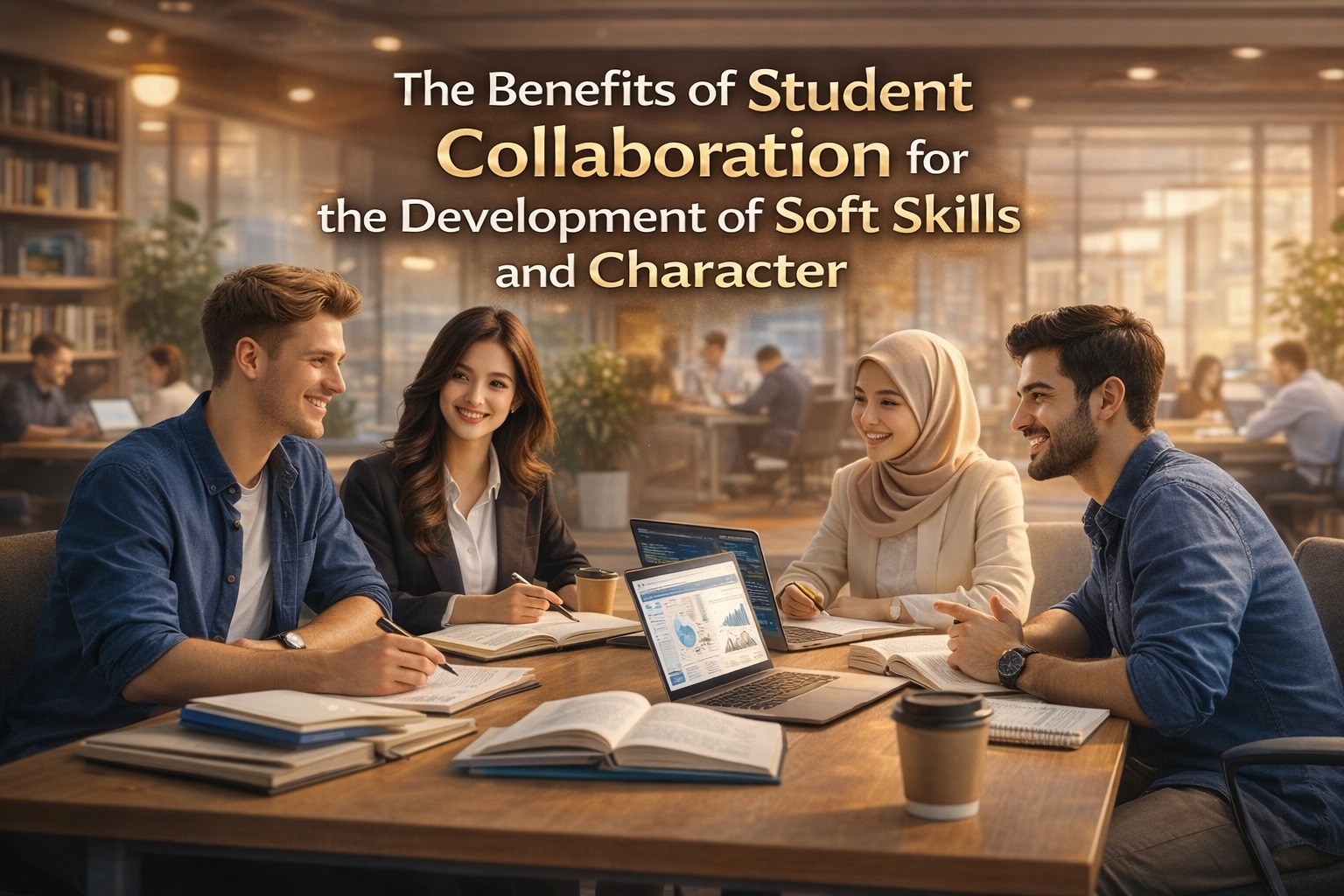
In the academic world, students are not only required to excel academically but also to possess strong soft skills and character. One of the most effective ways to develop these aspects is through collaboration among students. Collaboration not only helps in completing academic tasks and responsibilities but also serves as a form of social learning that shapes personality, attitudes, and essential life skills.
COLLABORATION AS A MEANS OF SOFT SKILL DEVELOPMENT
Soft skills are non-technical abilities that are highly needed in the workplace and social life. Through collaboration, students learn to communicate effectively, express ideas clearly, listen to others’ opinions, and resolve differences wisely. Group discussions, teamwork in projects, and participation in campus organizations train students to work collaboratively and professionally. These experiences become valuable assets that enable students to adapt to work environments that demand strong teamwork skills.
ENHANCING LEADERSHIP AND RESPONSIBILITY
Collaboration provides opportunities for students to develop leadership qualities. Within a group, students learn how to lead, coordinate tasks, and make collective decisions. In addition, collaboration fosters a sense of responsibility toward individual roles. Students realize that group success depends on each member’s contribution, encouraging discipline and commitment in completing tasks.
SHAPING POSITIVE STUDENT CHARACTER
Through collaboration, students learn to respect differences in background, perspectives, and abilities. Intensive interaction within groups nurtures tolerance, empathy, and mutual respect. Values such as honesty, hard work, and trust also grow as students become accustomed to working together toward shared goals. This process is essential in forming ethical individuals with strong integrity.
DEVELOPING PROBLEM-SOLVING SKILLS
In collaborative activities, students often face challenges and conflicts. These situations train critical thinking and collective problem-solving skills. Students learn to seek the best solutions through discussion, idea exchange, and compromise. Such abilities are not only useful in academic settings but also in future social and professional life.
PREPARING STUDENTS FOR THE WORLD OF WORK
The professional world requires individuals who can work effectively with others. Collaborative experiences during university life serve as real simulations of professional work environments. Students who are accustomed to teamwork are better prepared to face job demands, adapt to organizational culture, and build positive relationships with colleagues.
CONCLUSION
Student collaboration provides significant benefits for the development of soft skills and character. Through collaboration, students gain not only academic experience but also life lessons that shape personality, attitudes, and social skills. Therefore, a culture of collaboration should continue to be fostered within the campus environment so that students grow into intelligent, well-charactered individuals who are ready to face future challenges.
**Keywords:**
Tentang Penulis
Gusti Ayu Tita
Penulis — Universitas STEKOM
Penulis aktif yang berfokus pada isu-isu akademik, teknologi pendidikan, dan pengembangan sumber daya manusia di lingkungan kampus.