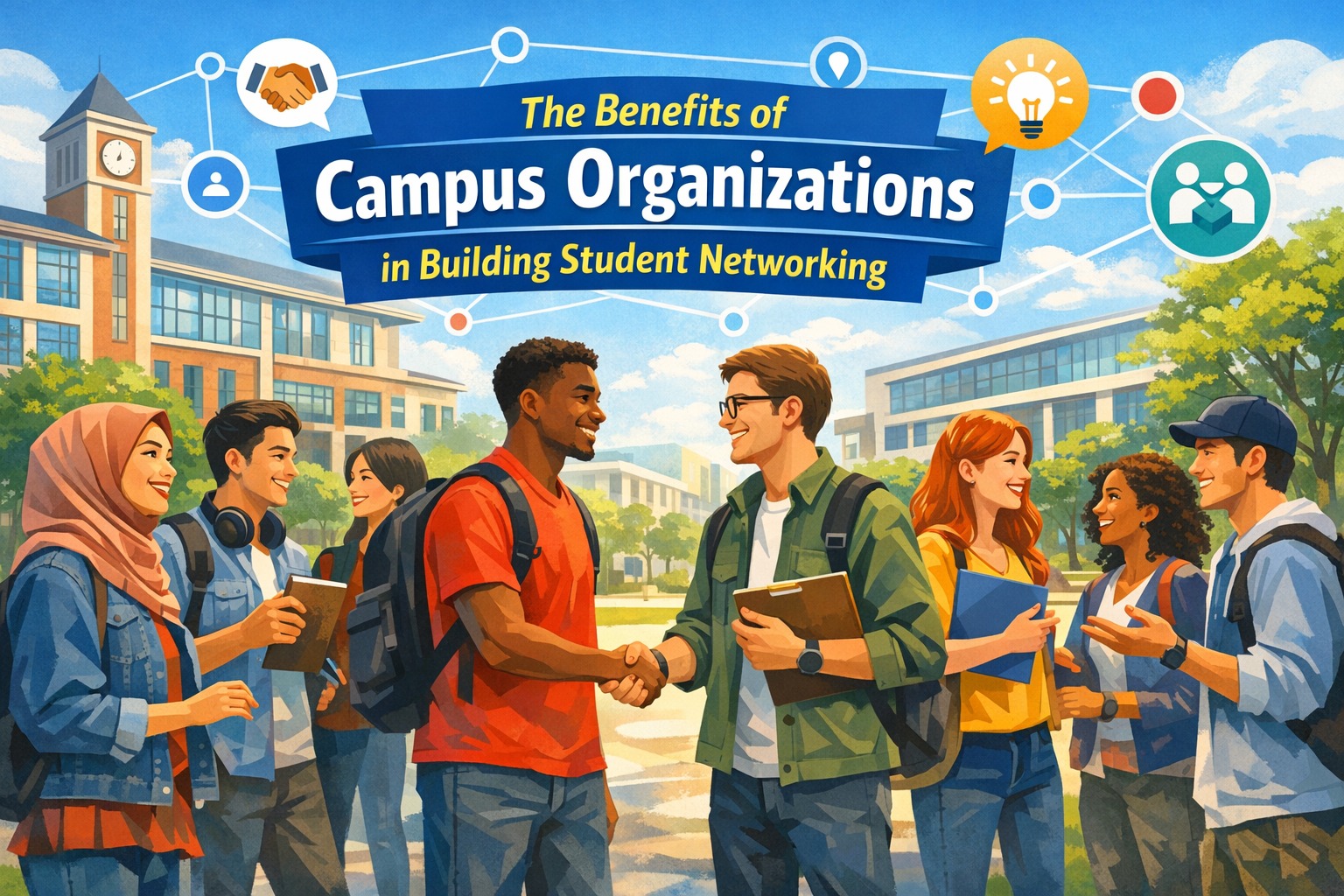
In today’s era of global competition, academic ability alone is no longer enough to support a student’s future. One of the most important factors that often determines career opportunities is networking. Campus organizations serve as a strategic platform for students to start building connections early, both inside and outside the campus environment. So, what are the benefits of campus organizations in developing student networking? Here is the explanation.
KAMPUS ORGANIZATIONS AS A NETWORKING HUB
Campus organizations bring together students from various majors, years, and backgrounds. These interactions open opportunities to connect, exchange ideas, and build long-term relationships. The more active a student is in an organization, the wider the network they can develop. Connections formed during college often continue into the professional world.
EXPANDING CONNECTIONS WITH SENIORS AND ALUMNI
Through campus organizations, students gain easier access to seniors and alumni. These connections are valuable because alumni typically have work experience and broad professional networks. Many students receive internship info, scholarships, and job vacancies through relationships built in organizations.
OPPORTUNITIES TO INTERACT WITH EXTERNAL PARTNERS
Many campus organizations collaborate with external parties such as companies, government institutions, communities, and non-profit organizations. Activities like seminars, training, and social programs give students direct exposure to professionals in various fields. These interactions broaden students’ perspectives and strengthen their network outside campus.
TRAINING COMMUNICATION AND RELATIONAL SKILLS
Networking is not just about knowing many people; it is about maintaining relationships. Through organizations, students learn how to communicate effectively, build trust, and work in teams. These skills are essential for maintaining long-term connections that benefit future careers.
NETWORKING AS A FUTURE INVESTMENT
Networks built during organizational activities can become long-term investments. In the future, these connections may open opportunities for collaboration, job recommendations, or business development. For students, campus organizations are more than extracurricular activities—they are strategic tools to prepare for a broader future.
CONCLUSION
The benefits of campus organizations in building student networking are significant and long-lasting. Through collaboration, interaction, and shared experiences, students can establish strong networks as preparation for entering the professional world. The more active and high-quality their involvement, the greater the opportunities they can gain in the future.
Tentang Penulis
Gusti Ayu Tita
Penulis — Universitas STEKOM
Penulis aktif yang berfokus pada isu-isu akademik, teknologi pendidikan, dan pengembangan sumber daya manusia di lingkungan kampus.